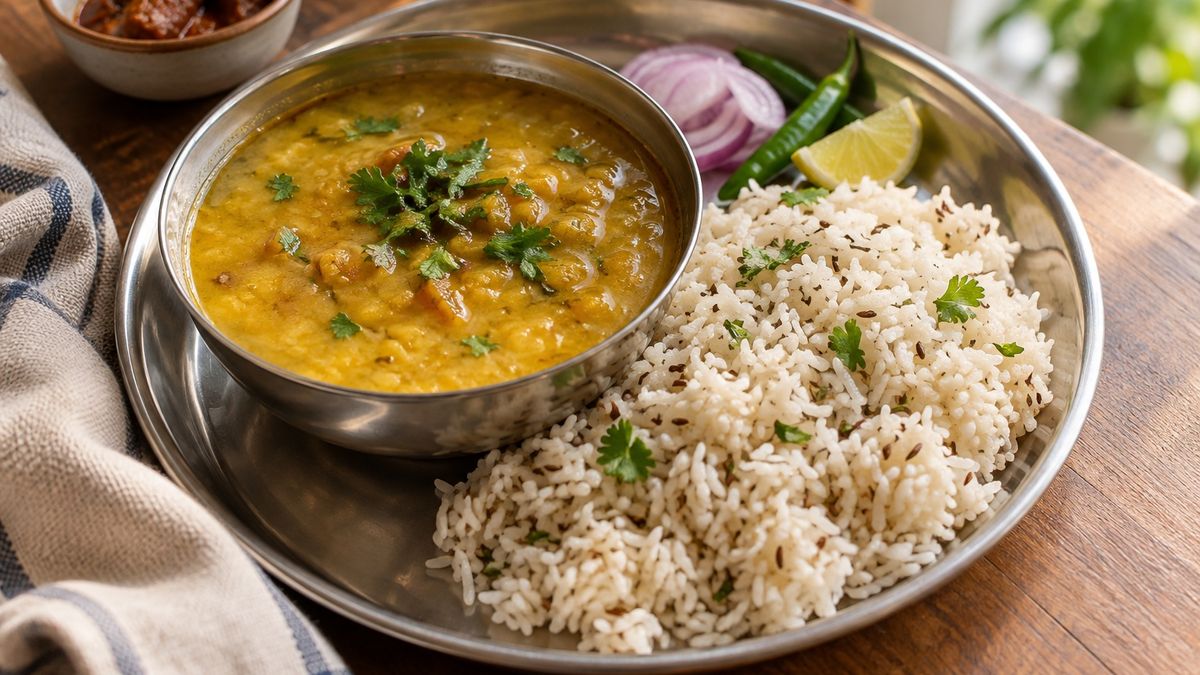
Why does my rice stick together?ભાત ચોંટી કેમ જાય છે?
Sticky rice is almost never a problem with the rice itself. It is loose starch sitting on the outside of each grain, which dissolves into the cooking water and then sets into a thin glue that welds the grains together as they cool. Too much water, stirring the pot, and cooking a few minutes past done are the three things that pull the most starch out.
What is going wrong
Rice was not rinsed
Milling leaves a dusting of broken starch on the surface of every grain. If you tip the rice straight into the pan, that starch stays in the water, thickens as it heats, and coats the finished grains in paste. The tell is the rinse water itself: the first change should run milky white, and if you did not rinse three or four times until it ran nearly clear, this is your cause.
Too much water in the pot
A grain can only absorb so much. Whatever is left over sits in the pan carrying dissolved starch, and it turns into a slick film across the bottom and through the rice. You can spot it straight away: there is loose cloudy liquid under the rice, or the rice falls off the spoon in a lump instead of in grains. Soaked ordinary rice needs about one and a half parts water to one part rice.
The rice was stirred while cooking
Once the grains have softened in hot water, dragging a spoon through them scrapes their surfaces against each other and rubs starch loose. That starch goes straight into the water and makes everything tackier. If you see half-broken grains and a foamy scum on top, the pot was stirred too much. Put the lid on and leave it alone until the water has gone.
New-crop rice, old-crop measurements
Freshly harvested rice still holds a lot of its own moisture, so it takes up less cooking water and softens much sooner. Cook it to the ratio that worked for last year's bag and it will come out sticky every time. If the rice started misbehaving right after you opened a new sack, that is the reason: cut the water by a quarter and halve the soaking time.
Cooked a few minutes too long
Past the point where the grain is done, it keeps swelling until the outer skin splits and the starch inside leaks out. No amount of fluffing will separate rice after that. Press a grain between your fingers: if it mashes to a smooth paste with no firmness at all, and there is no trace of a white core left, it went too far. Cut the heat while a faint core is still there.
What to do right now
Spread the rice thinly on a wide tray and leave it five to seven minutes under a fan. As the surface moisture evaporates the grains loosen on their own. Then separate them with a fork and trickle over half a teaspoon of ghee. If the grains have collapsed into mush they will not come apart, and the honest answer is to stop trying: turn it into tempered rice, rice cakes or curd rice. Never rinse cooked rice under water, which only makes it worse.
Getting it right next time
- Rinse three or four times until the water runs almost clear, then soak for fifteen to twenty minutes.
- If you soaked the rice, cut the water back to about one and a half parts per part of rice.
- High heat until it boils, then low, and keep the lid on instead of stirring.
- Rest it covered for five minutes off the heat before you touch it with a fork.
- With a new bag of rice, treat the first batch as a test and settle on your water measure from it.
Related questions
Does adding lemon juice keep the grains separate?
A few drops keep the rice looking whiter and a little glossier, but they do nothing about the real cause, which is loose surface starch. Rinsing, getting the water right and not stirring are what actually make the difference. If you want to add lemon, put two or three drops into the boiling water only, since more than that leaves a sour edge in the rice.
How should I adjust for a pressure cooker?
No steam escapes from a cooker, so you need less water than in an open pan. For soaked rice, about one and a quarter parts water per part rice and two whistles is enough, with the heat turned down after the first whistle. Let the pressure drop by itself, because lifting the weight early sends boiling water surging through the grains and breaks them.
Yesterday's rice heats up in hard lumps. What can I do?
Cold rice goes firm because the starch sets again as it chills. Loosening it takes moisture and gentle heat, not stirring. Sprinkle a tablespoon or two of water over it, cover it, and warm it slowly, or steam it in a sieve over simmering water. Dry-frying lumpy rice in a pan does not break the lumps up, it just hardens the outside.