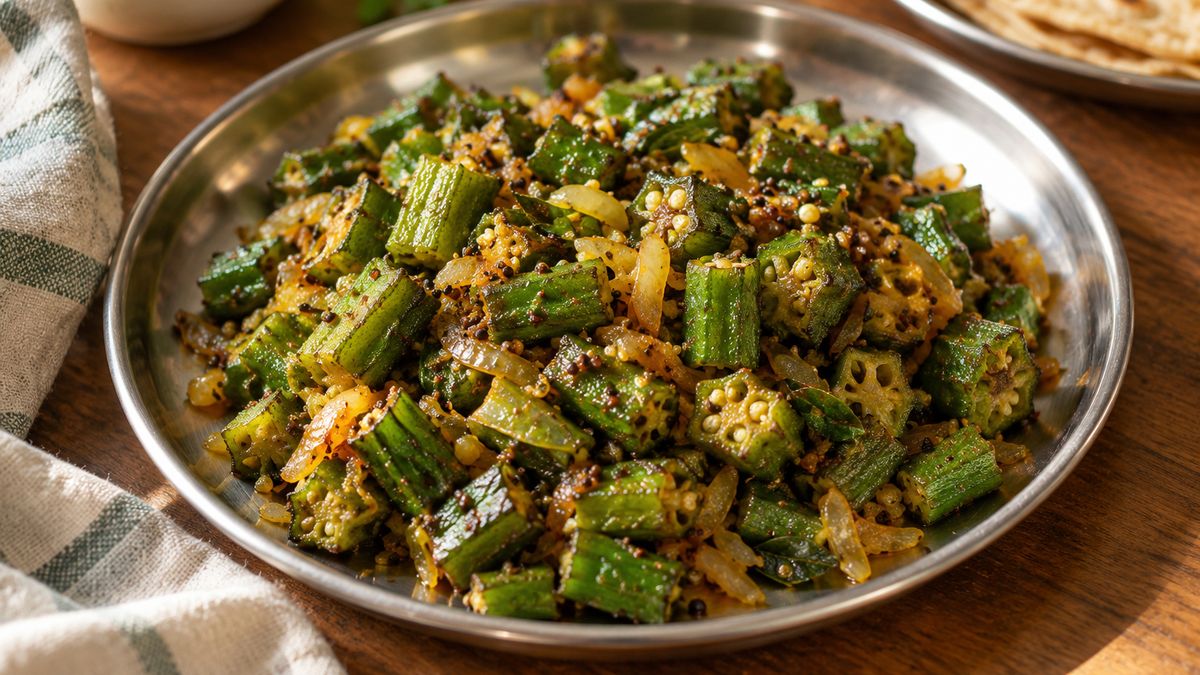
Why is my bhindi slimy?ભીંડા ચીકણા કેમ થાય છે?
Okra carries a naturally gluey juice inside the pod, and that juice dissolves in water. So anything that puts water around the pieces while they cook spreads the slime: a damp pod, a lid on the pan, or salt going in at the start. The whole technique comes down to one idea, which is never letting moisture collect around the okra.
What is going wrong
The pods were still damp when cut
Any water left on the skin after washing meets the cut surface immediately, and you can see the sticky threads form on the knife. That same film then spreads through the pan. If the blade gums up and the slices cling to one another as you chop, the okra was not dry. Wipe each pod with a cloth after washing and leave them spread out for ten or fifteen minutes before cutting.
Salt went in at the beginning
Salt pulls water out of vegetables. Added early, it draws juice out of the okra into the pan, the gluey substance dissolves into that juice, and the whole dish turns slippery. The giveaway is liquid pooling at the bottom within a couple of minutes of salting. Hold the salt back until the pieces have browned at the edges and feel dry to the spoon.
The pan was covered
With a lid on, the steam coming out of the okra cannot leave. It condenses on the lid, drips back down, and the vegetable ends up simmering in its own liquid, which is the one condition that guarantees slime. Lift the lid and you will see the drops hanging underneath. Okra should be cooked uncovered from start to finish.
Crowded pan, heat too low
Pile too much in at once and the pieces sit in layers, trapping moisture and shielding each other from the hot metal, so they steam instead of frying. If you never hear or smell proper browning and the colour stays flatly green, the pan is overloaded. Use a wide pan, keep the heat at medium-high, and cook in two batches if you have a lot.
No acid at the end
A little acidity stops the gluey juice from stringing together, so okra cooked without lemon, dried mango powder or kokum often feels more slippery than it needs to. Dry pods, an open pan and late salt do most of the work; if a trace of slime still remains, finish with half a teaspoon of amchur or a squeeze of lemon. Acid on its own cannot rescue okra that was cooked wet.
What to do right now
Take the lid off, spread the okra out in your widest pan, raise the heat, and leave it alone for two or three minutes so the moisture at the bottom cooks off and the edges firm up. Then add half a teaspoon of amchur or a squeeze of lemon with a pinch of salt and turn it once. Constant stirring drags the slime into threads, so keep your hands off it. If the pieces have gone soft from steaming, the sliminess will go but the bite will not.
Getting it right next time
- Wash, wipe and air-dry the okra as soon as you bring it home, and keep the knife and board dry too.
- Cut into larger pieces, since fine chopping exposes far more of the gluey interior.
- Wide pan, medium-high heat, no lid at any point.
- Salt and acid go in at the end, once the okra has browned.
- Cook a large quantity in two batches rather than filling the pan.
Related questions
Can I cut okra ahead and keep it in the fridge?
You can, but cut okra sweats in the fridge and beads with moisture the moment it comes out, and that moisture is exactly what makes it slimy. Whole dry pods wrapped in paper keep much better. If you must prepare it in advance, store the pieces in an open bowl rather than a sealed box and wipe them with a cloth before they go into the pan.
My okra soaks up a lot of oil. What am I doing wrong?
Oil soaks in when the pods are wet and the heat is low, because the surface never seals. Dry okra dropped into properly hot oil browns on the outside quickly and takes up far less. So the fix is usually heat and pan size rather than using less oil, since a crowded pan cools down and everything in it absorbs fat.
Stuffed okra turns slimy too. Why?
In stuffed okra the salted masala sits directly against the cut flesh, so juice is drawn out fast. Mixing a little dry-roasted gram flour into the stuffing helps because it absorbs that moisture as it is released. Arrange the stuffed pods in an uncovered pan on medium heat, let one side brown without touching them, then turn them carefully.