Bhinda nu Shaakભીંડાનું શાક
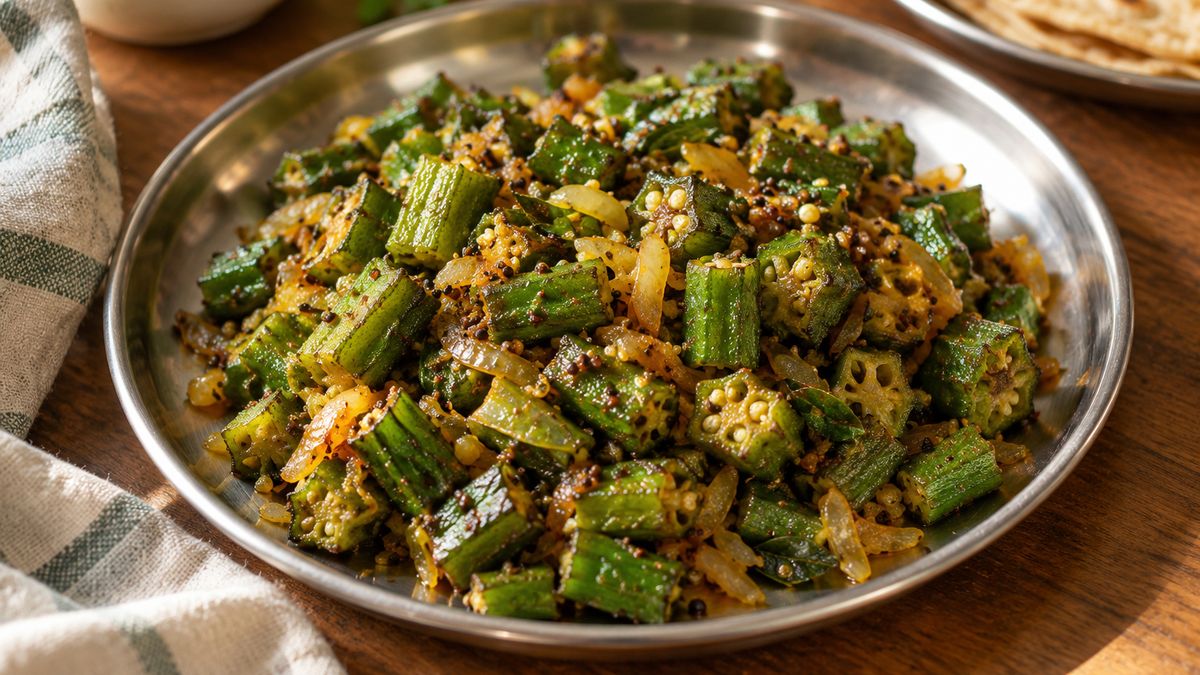
A dry, spiced okra sabzi is one of the most common dishes on a Gujarati dinner plate. Cooked properly it is not slimy at all, but slightly crisp at the edges, and it goes with rotli and dal-bhaat.
Ingredients
Tap an ingredient to tick it off while you shop or measure.
- 400 g okra (bhindi)
- 3 tbsp oil
- Mustard seeds, cumin, asafoetida
- ½ tsp turmeric, 1 tsp red chilli powder, 1 tsp coriander-cumin powder
- 1 tsp sugar, salt
- 1 tsp lemon juice
- Coriander
Method
- Wash the okra and wipe each piece completely dry before slicing. Moisture is what makes it slimy.
- Temper oil with mustard seeds, cumin and asafoetida.
- Add the okra and cook uncovered on medium heat for 8-10 minutes.
- Stir in the spices, sugar and salt and cook another 5 minutes.
- Finish with lemon juice and coriander and serve with hot rotli.
Tips
- Never cover the pan; trapped steam makes okra slimy.
- Add salt towards the end, not at the start.
- A spoon of crushed roasted peanuts at the end adds body.
Storing and reheating
The sabzi keeps four or five hours out and two days in the fridge, but okra softens as it sits and some of the sliminess returns. Reheat it in an open pan on high heat for two or three minutes. A microwave traps steam and makes it slippery again. Never add water when reheating.
What you can swap
- Half a teaspoon of amchur (dried mango powder) in place of lemon juice gives the same sourness without adding any liquid, so there is no risk of sliminess.
- The sugar can be left out, though a pinch of jaggery is what makes it taste Gujarati rather than plain.
- Ghee instead of oil browns the okra beautifully, but keep the heat lower because ghee burns faster.
- If you prefer whole dried chillies, add them to the tempering rather than with the powdered spices later.
What to serve with it
With hot rotli or bhakhri, alongside dal-bhaat and a glass of chhaas. Okra is at its most tender in summer and early monsoon, and in that season it appears on the Gujarati thali almost daily. It also works well with khichdi and kadhi.
Mistakes to avoid
- Do not wash and slice in the same breath. Any surface moisture left on the okra means no amount of frying will remove the slime. Wash, wipe and leave the pods spread out an hour before you cook.
- Do not crowd the pan. Use a wide kadhai so the okra sits in roughly one layer. Piled up, the bottom pieces steam instead of frying.
- Resist stirring during the first eight to ten minutes. Let the okra catch and brown on the base. Constant stirring breaks the pieces and releases more of the sticky fibre.
- Trim both ends of every pod, especially the stem end. That part stays tough and shows up as a woody bite in the finished dish.
Questions people ask
My knife gets sticky while cutting okra. What helps?
Wipe the knife and board with a dry cloth every few pods. Many cooks rub a little oil along the blade first, which stops the sap clinging and makes the chopping much faster.
How do I pick tender okra?
Bend the tip with your finger. A tender pod snaps cleanly; an older one bends without breaking. Avoid the big fat pods, where the seeds have already hardened.
Can I add onion or tomato to this sabzi?
Onion works if you fry it before the okra goes in. Skip tomato: the moisture it releases makes the okra slimy again. For sourness stay with lemon juice or amchur.