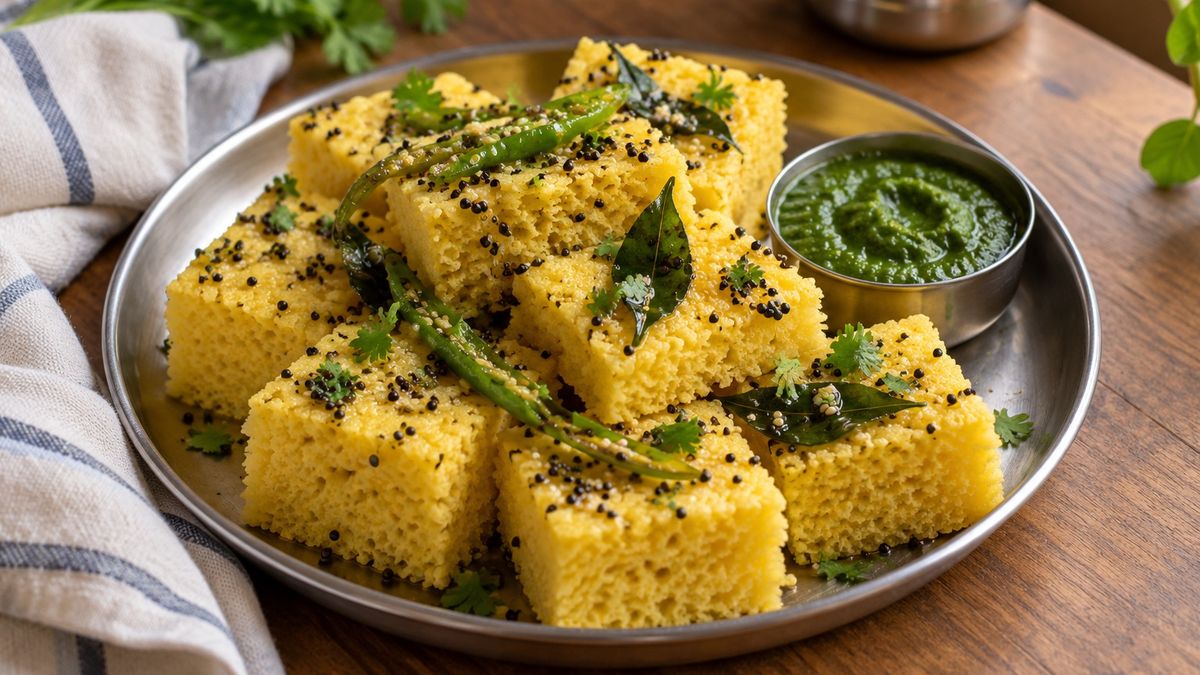
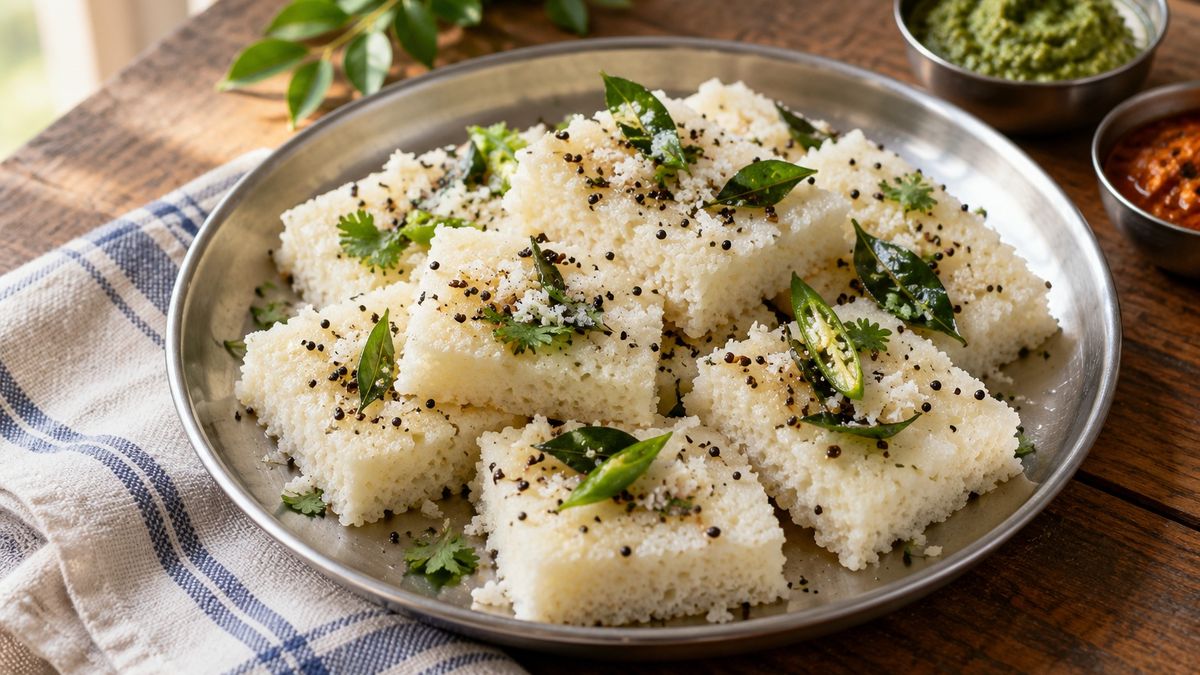
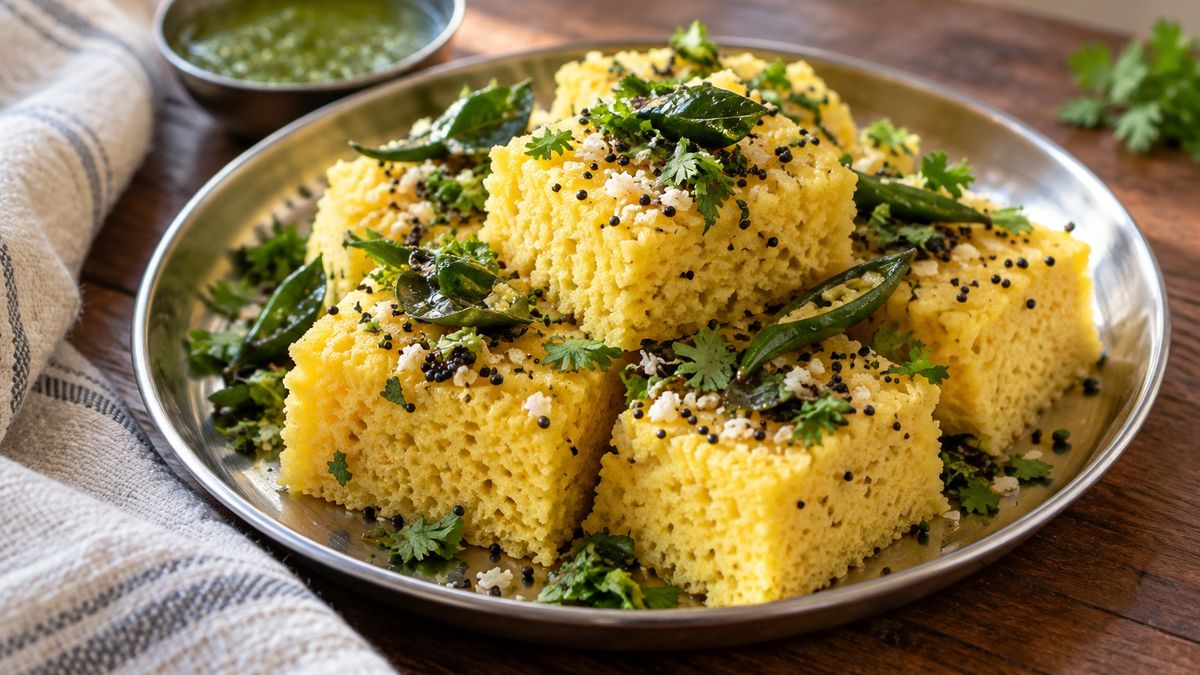
Why is my dhokla sticky?ઢોકળાં ચીકણાં કેમ થાય છે?
Dhokla is really a set foam: bubbles of gas held in a batter that firms up around them in the steam. If the batter is too loose to hold those bubbles, or the steaming stops before the batter has set, the bubbles collapse and what is left is a wet, sticky layer. Sticky dhokla almost always means too much water or too little steam.
What is going wrong
The batter was too thin
In a loose batter the bubbles rise and burst instead of staying put, while the heavier solids sink, and you get a gummy layer at the bottom. If the lower half of the cut piece is dense and wet while the top is light, the batter was thin. It should fall from the spoon in a thick ribbon rather than running off it. If it has gone thin, stir in a spoon of rice flour or fine semolina.
The batter over-fermented
Fermenting produces both gas and acid. Leave it too long and the acid builds up enough to slacken the batter so it can no longer hold the bubbles, which is why over-fermented dhokla rise in the steamer and then sink. A sharply sour smell and watery liquid separating on top are the signs. Eight to ten hours is enough, and less than that in hot weather.
Not steamed long enough
Steam is what sets the starch and the gram flour protein. Until they set, the inside is still batter. If your finger leaves a sticky dent or the knife comes out wet, it needed longer. Fifteen to twenty minutes in a steamer at a full rolling boil, and then the knife test, is the rule. Lifting the lid to check repeatedly lets the steam out and stretches the time further.
Eno added early or overmixed
Eno and soda release their gas the moment they meet liquid, and that gas has to be trapped in the batter, not lost to the air. Adding it before the steamer is ready, or beating the batter hard afterwards, drives the bubbles out and leaves the dhokla dense and sticky. Fold it in gently in one direction for five or six seconds and get the tray into hot steam immediately.
Condensation dripping from the lid
Steam collects on the lid and falls back onto the dhokla, and wherever it lands the surface goes wet and tacky. A blotchy, slippery top is the tell. Tie a cotton cloth under the lid to catch it, and once the tray is out, let it stand uncovered for five to ten minutes, because cutting dhokla while they are hot makes the cut faces feel sticky even when they are cooked through.
What to do right now
If only the middle is sticky, put the tray back into the steamer for another five to seven minutes, going by the knife test rather than the clock. That alone fixes it more often than not. Then let them cool uncovered before cutting. But if the batter itself was thin or the fermentation had gone too far, they will not come right now. Cut them up, temper mustard seeds and sesame over them, splash on water and warm them covered, and serve them as tempered dhokla.
Getting it right next time
- Keep the batter thick enough to fall from the spoon in a ribbon, not to pour.
- Ferment eight to ten hours, less in summer, and use it as soon as it smells properly sour.
- Add the Eno at the last moment, fold gently, and get it into the steamer at once.
- Put the tray in only when the water is already boiling hard, never into a cold steamer.
- Tie a cloth under the lid, and let the dhokla cool before cutting.
Related questions
My dhokla rise and then sink. What is happening?
The bubbles formed but the batter was not strong enough to hold them, which comes either from a thin batter or from over-fermentation. Thicken the batter slightly, shorten the fermentation, and steam at a proper rolling boil. Opening the lid to peek also drops the steam temperature, and risen dhokla will sag the moment that happens.
Can I make dhokla with fermentation alone, without Eno?
Yes, but the batter has to ferment properly and the proportions have to be right, since a rice and split gram batter generates its own gas over eight to twelve hours. Pour such a batter into the tray risen, without stirring it down. Eno is a shortcut for speed, and if you use it you should shorten the fermentation, or the batter will be too slack to hold anything.
What if my dhokla come out dry and firm instead?
That is the opposite mistake: batter too thick, steaming too long, or the pieces left uncovered after cooling. Stop steaming as soon as a knife comes out clean, and cover them once they have cooled. Before serving, sprinkle over a little lemon water and a mustard seed tempering, which puts some of the moisture back.