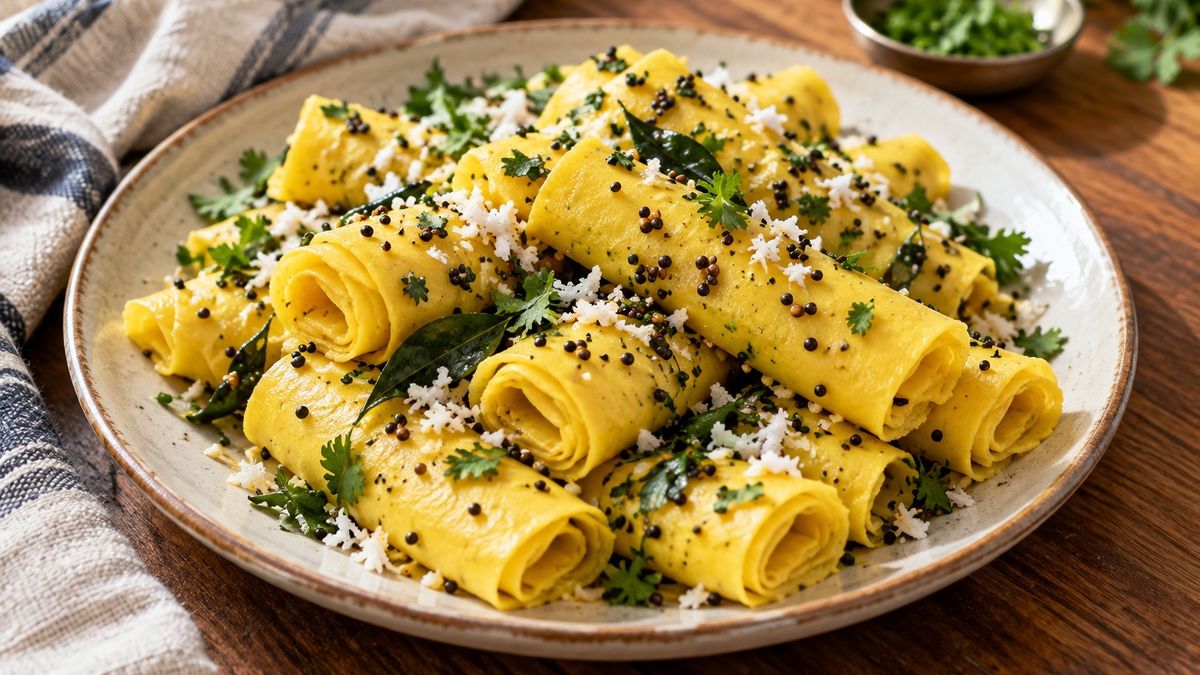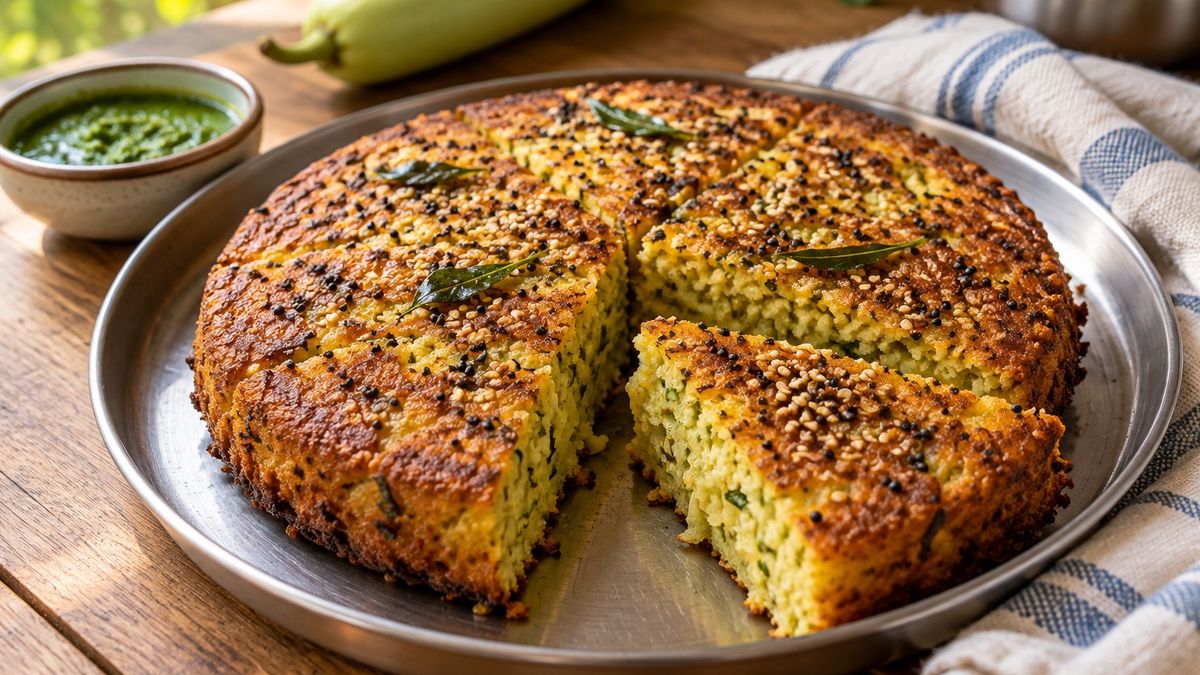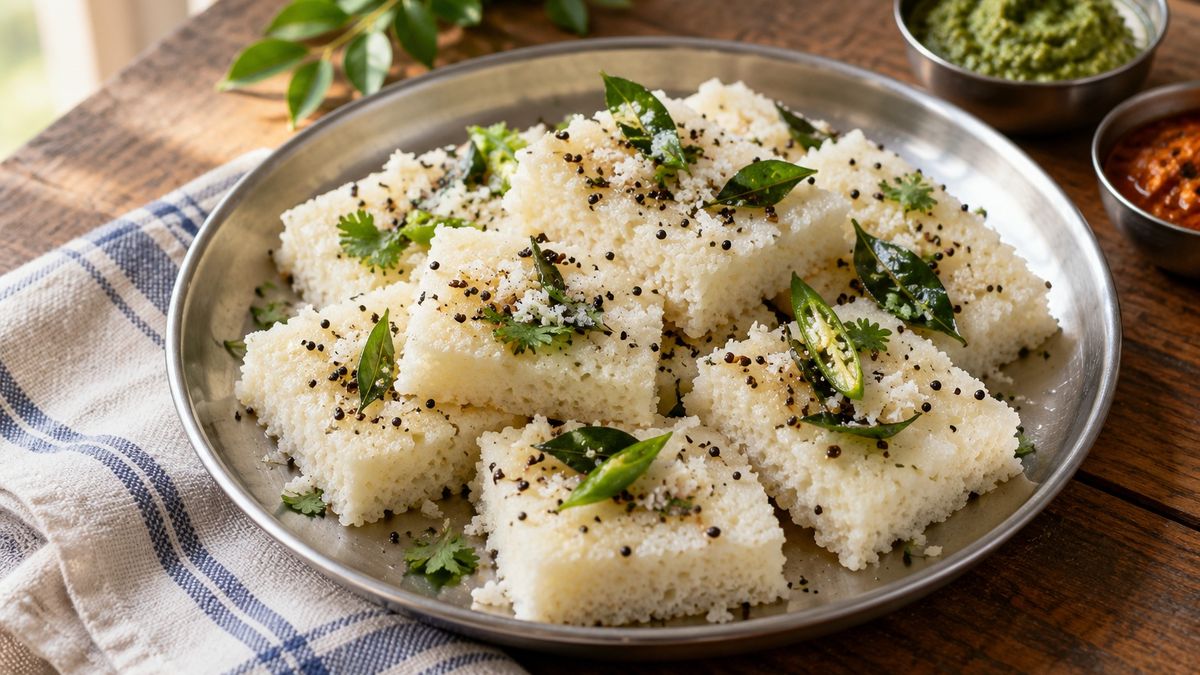
Idadaઈદડા
Idada are soft, savoury white cakes from the same fermented rice-and-urad batter as dhokla, steamed thicker and finished with pepper and a sesame tempering. They are light, barely oily and easy on the stomach.
Ingredients
Tap an ingredient to tick it off while you shop or measure.
- 1½ cups rice
- ½ cup urad dal
- ¼ cup sour yoghurt
- 1 tsp ginger-chilli paste, salt
- Tempering: oil, mustard seeds, sesame seeds, curry leaves
- Coarsely crushed black pepper
Method
- Soak the rice and dal for 5 hours, grind coarsely, mix with yoghurt and ferment 8-10 hours.
- Fold in salt and ginger-chilli paste gently.
- Pour into a greased plate and steam for 20 minutes.
- Sprinkle crushed pepper on top and cut into squares.
- Pour over a mustard-and-sesame tempering and serve with green chutney.
Tips
- Idada are never sweetened; that is what separates them from khaman.
- Be generous with the pepper, it carries the whole dish.
Storing and reheating
Idada are best the day they are steamed. They keep two days in an airtight box in the fridge but firm up as they chill, so re-steam them for four or five minutes in a sieve. A microwave dries the edges and makes them rubbery. Fermented batter holds for two days refrigerated, getting a little sourer each day.
What you can swap
- No urad dal? Whole white urad works; just soak it a little longer.
- Use idli rava in place of the rice and you skip the grinding altogether, while keeping the coarse texture.
- If your curd is not sour, add a teaspoon of lemon juice, or simply give the batter two or three hours more.
- If the batter has not risen in cold weather, a pinch of Eno just before steaming will lift it, though you lose a little of the tangy taste.
What to serve with it
A breakfast dish, or a light dinner, with green chutney and masala chai. Many homes also brush the top with oil mixed with chilli powder and salt. Leftover idada tossed in a mustard-seed tempering the next day make an almost new dish.
Mistakes to avoid
- Do not grind the batter too fine. Idada should have a slightly coarse crumb; a perfectly smooth batter steams into something dense and pasty.
- Do not beat the batter once it has fermented. You knock out the air you spent the night building. Fold in the salt and ginger-chilli gently.
- Do not fill the plate to the brim. The batter rises as it steams, so two-thirds full is right.
- Keep the steamer lid on for the first ten minutes. Let the steam out early and the middle sinks.
Questions people ask
Why won't my batter ferment?
Cold is the usual reason. Keep it in a closed cupboard or a switched-off oven, tie a cloth over the vessel, and add salt only after it has risen, since salt early on slows fermentation. The curd needs to be genuinely sour.
What is the difference between idada and khaman?
Khaman are made from gram flour, taste sweet and tangy, rise with Eno or soda and can be made in minutes. Idada are a fermented rice and urad dal batter, carry no sugar, and are finished with plenty of crushed pepper.
Why do my idada come out hard or rubbery?
Over-steaming, or steam that is too fierce. Twenty minutes is enough; test with a knife and if it comes out clean they are done. Hard steam sets a tough skin on the surface.