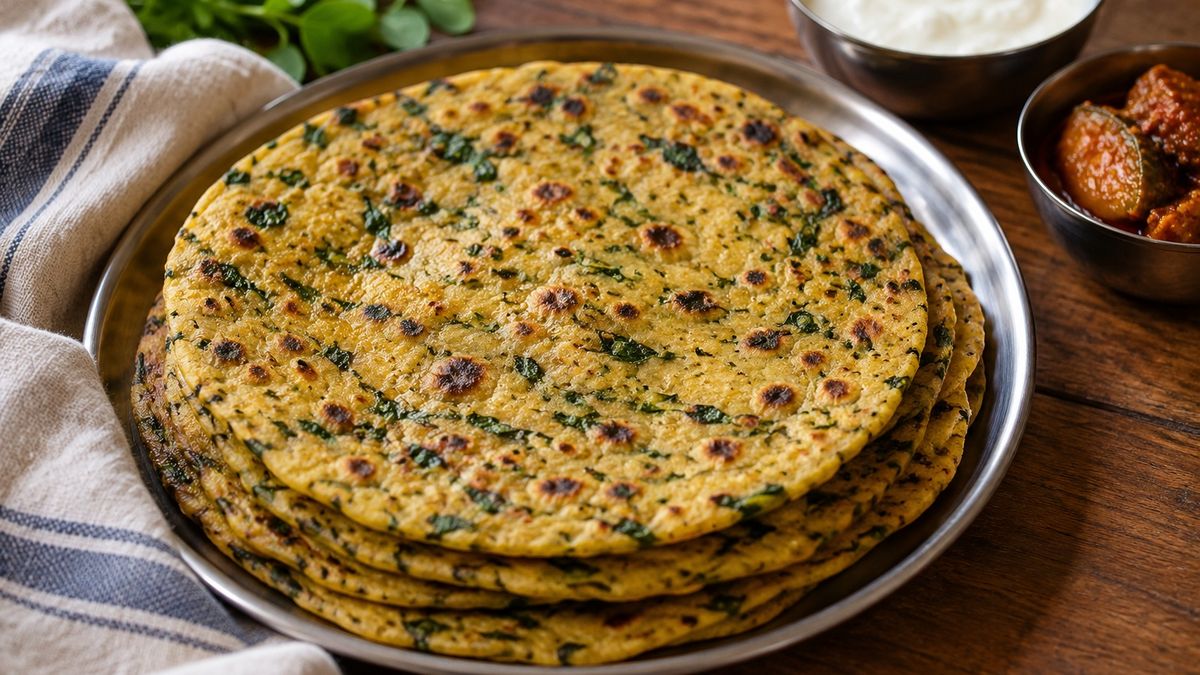
Why do thepla turn out hard?થેપલા કડક કેમ થાય છે?
Thepla stay soft because water and fat held in the dough keep the layer pliable. On the tawa that water turns to steam and leaves, so if the dough was short of water to begin with, or the thepla sits on the heat too long, what remains is a dry, brittle disc. Thepla that feel soft on the pan and go hard as they cool are telling you the steam escaped.
What is going wrong
The dough was kneaded too stiff
A stiff dough holds less water, so the little it has evaporates during roasting and the disc dries out. If the dough springs back as you roll or the edges keep cracking, it is too stiff. Thepla dough should be slightly softer than roti dough, soft enough that your finger sinks in, but not so wet that it sticks to your hands.
Not enough yoghurt or oil
Yoghurt brings both moisture and a little acidity to the dough, while oil sits between the layers of flour and stops them binding tightly, and together those two are what keep thepla pliable. Short of either, the thepla seem fine on the pan and turn papery once cool. Allow two or three spoons of yoghurt and a spoon of oil per bowl of flour.
The tawa was too hot
On an overheated tawa the surface firms up before the inside has cooked, so you leave it on longer to finish, and that extra time drives out all the moisture. Dark blotches on the outside with a doughy centre is the pattern. Keep the heat at medium and brush the oil on only after the first turn.
Roasted for too long
Once a thepla has been turned twice there is nothing more to gain; everything after that is just drying. Repeatedly pressing one side also squeezes the steam out. If it looks stiff and uniformly brown, it was overcooked. Take it off when small blisters rise on top and the underside has golden spots.
Left spread out after cooking
A hot thepla keeps releasing steam. Left on its own it loses that steam to the air and the layer dries. Stacked and covered, the same steam is reabsorbed and keeps the pile soft. If your first thepla is the one that goes hard, this is the reason. Stack each one as it comes off the pan and cover it with a cloth or put it in a box.
What to do right now
Hard thepla need their steam put back. Stack them, lay a slightly damp cotton cloth over the pile, and shut them in a box for ten minutes, which is often enough on its own. If not, flick a few drops of water onto one, put it on a medium tawa, cover it and warm it for half a minute. If the layer has dried right through and snaps when bent, it will not soften again. Eat those with yoghurt or tea, or crumble them into a sabzi.
Getting it right next time
- Knead slightly softer than roti dough and rest it covered for ten to fifteen minutes.
- Work two or three spoons of yoghurt and a spoon of oil into each bowl of flour.
- Keep the tawa at medium, and let it cool down if it starts smoking.
- Turn twice and take it off; do not keep roasting past that.
- Stack them straight off the pan and cover with a cloth or lid.
Related questions
How do I keep thepla soft for a journey?
Use a little more yoghurt and oil in the dough, and brush oil on both sides while roasting, since a film of oil slows moisture loss. But they must be completely cool before they go into a box, because packing them warm traps steam and leaves them damp and gummy. Layer a sheet of paper between them.
Can I knead thepla dough the night before?
You can, but a yoghurt dough grows more sour as it stands and the salt pulls water out of any greens, so it slackens. Keep it in the fridge, then take it out, work in a little dry flour and knead it again before rolling. If you are adding fenugreek or other greens, it is better to mix those in shortly before you roll.
My thepla are soft but absorb a lot of oil. Why?
Oil soaks into the dough when the tawa is cool instead of cooking it. Heat the tawa on medium first, put the thepla on dry, and only brush oil once one side has started to colour. The oil already in the dough is doing the work of keeping it soft, so very little is needed on the pan.