Khaman vs dhoklaખમણ અને ઢોકળામાં ફરક
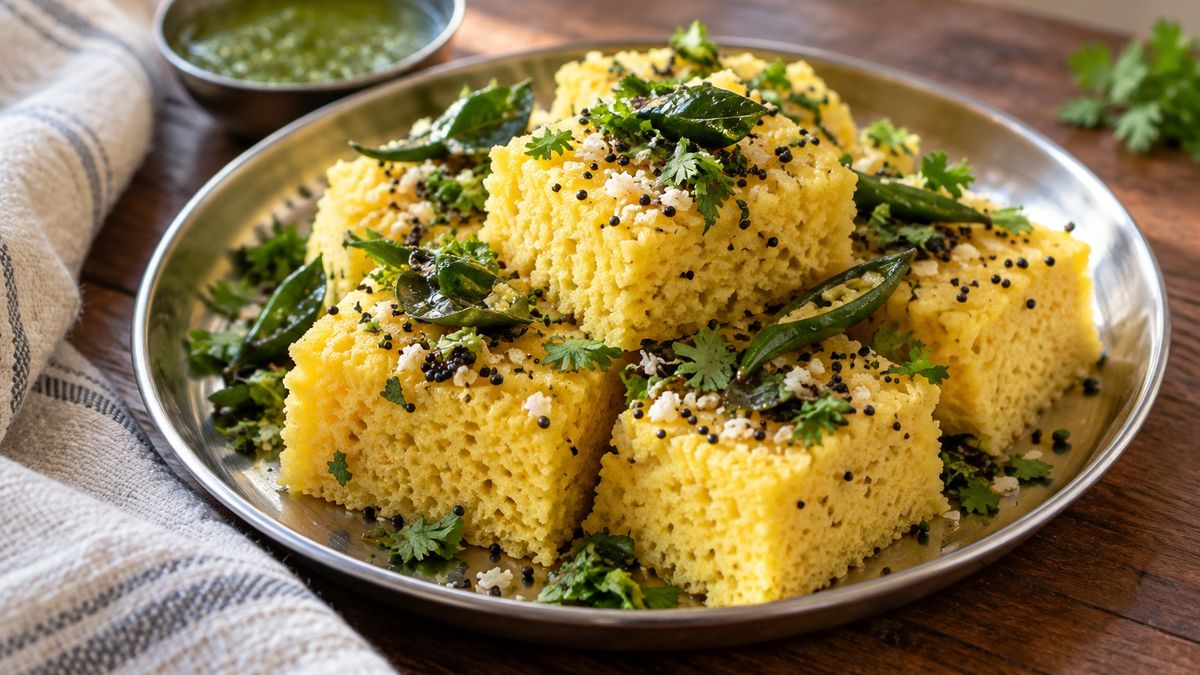
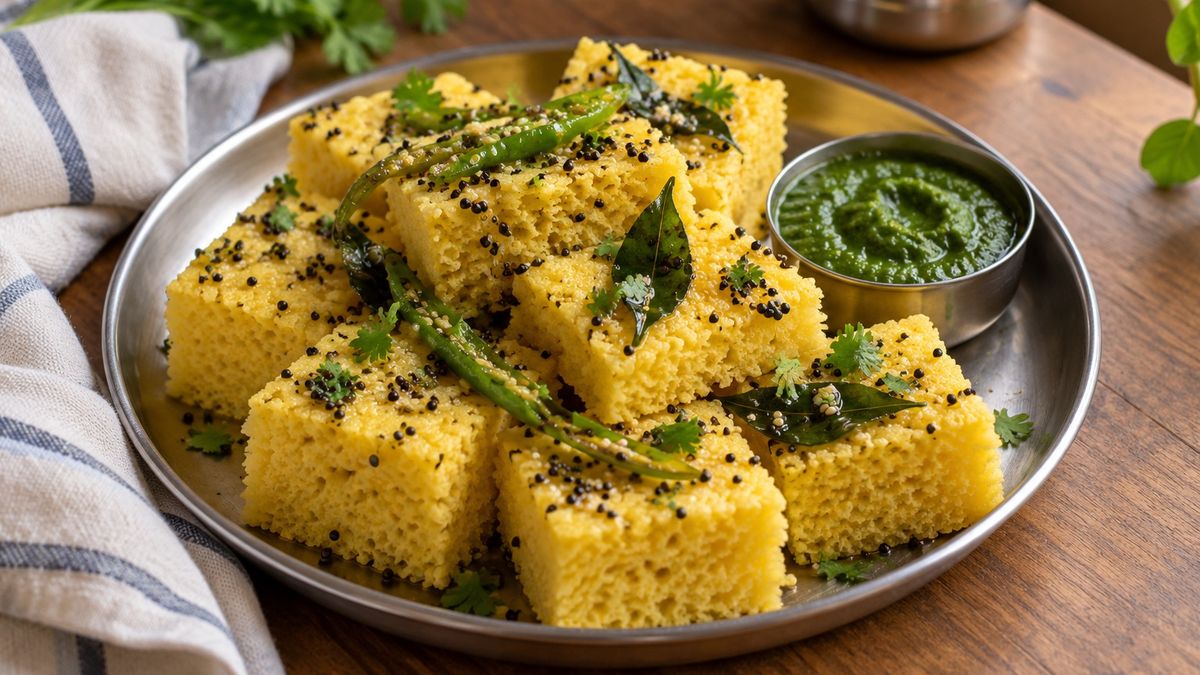
If you have only ever eaten this at a restaurant outside Gujarat, the soft yellow squares you were served as dhokla were almost certainly khaman. The two are different dishes with different batters: khaman is gram flour and is ready in half an hour, while white dhokla is a fermented rice and urad dal batter that needs most of a day. Everything else that separates them, from colour to sourness, follows from that one difference.
They rise in completely different ways
Khaman is chemically leavened. You whisk gram flour, water and souring agents into a batter, and only at the very end stir in Eno or soda. The moment that powder meets the wet batter it starts releasing gas, the batter fills with tiny bubbles, and hot steam sets the flour around those bubbles before they can escape. The whole reaction lasts a couple of minutes, which is why the tray has to go into the steamer immediately. White dhokla is biologically leavened. Soaked rice and urad dal are ground and left covered in a warm place, and the microbes already present in the batter slowly produce both gas and acid over eight to ten hours. Minutes versus hours is the whole story.
The confusions worth clearing up
The naming is the main problem. Shops and menus write dhokla and serve khaman, and the very light spongy kind is often sold as nylon khaman, which is still khaman. Idada cause the second confusion: they come from the same fermented batter as white dhokla but are steamed in a thicker layer, kept plain rather than sweetened, and often have cracked pepper in the batter. A third confusion comes from boxed instant mixes. Whatever the box says, most of them contain gram flour plus a fast-acting raising agent, so what you make is khaman. Finally, crumbled khaman tempered with mustard seeds, coconut and coriander is sev khamani, not a separate dish.
How to tell which is which in your own kitchen
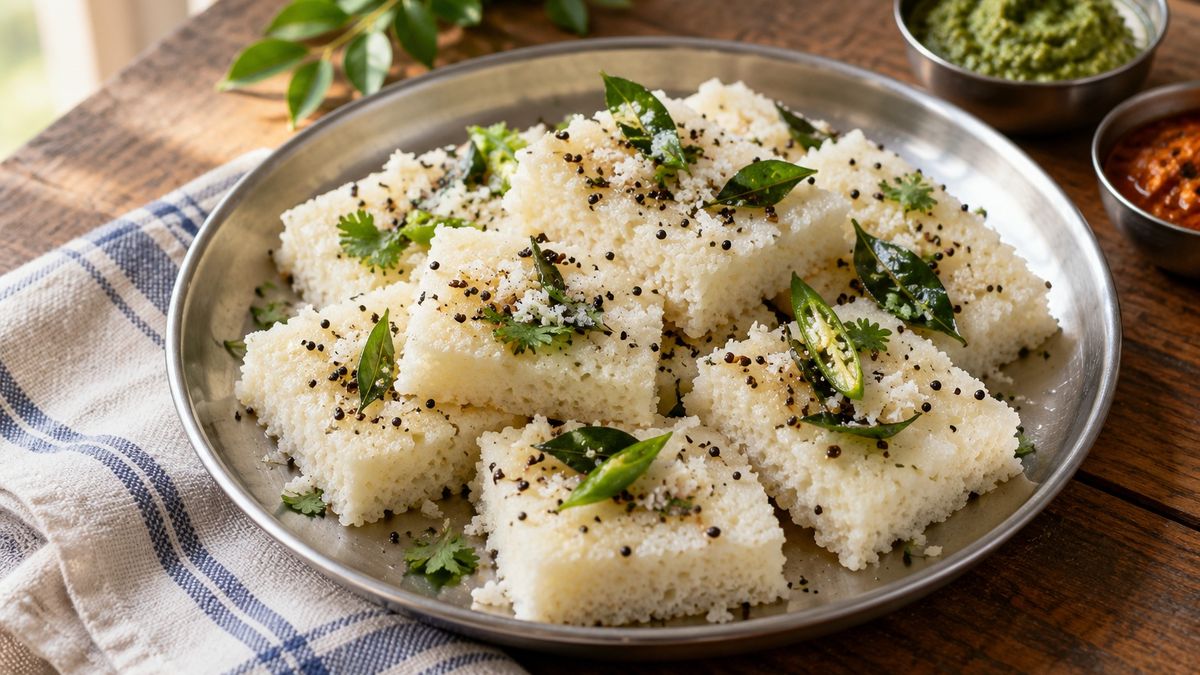
Smell the batter first. A fermented rice and dal batter has an unmistakable gentle sourness; a gram flour batter has none at all. Then look at the colour: khaman is turmeric yellow, dhokla and idada are a dull off white. The cut piece tells you more. Press khaman with a fingertip and it springs back; dhokla feels heavier and slightly damp, and crumbles rather than bounces. The finishing is also a giveaway. Khaman is spooned over with sweetened lemon water and topped with sesame, coconut and coriander, so the first taste is faintly sweet. Dhokla and idada get a plain mustard and chilli tempering and taste cleanly sour instead.
Choosing between them, and what you cannot substitute
In practice the clock decides. Guests already on their way means khaman, because nothing needs soaking. If you thought about it the day before and want something plainer and less sweet, make dhokla or idada. What you cannot do is swap the batters. Adding Eno to a fermented batter will not give you khaman, and leaving a gram flour batter out overnight will not give you dhokla's sourness. A fermented batter keeps two to three days in the fridge and turns a little sourer each day, which suits idada more than dhokla. A gram flour batter must never be held once the Eno is in, so mix only what fits in the steamer now.
Questions people ask
I have leftover fermented batter. Can I make khaman with it?
No. That batter is rice and urad dal, while khaman is gram flour, so there is no route from one to the other. Use the leftover for idada, or pour it thicker on a griddle as a savoury pancake. If you want khaman the same day, whisk a fresh gram flour batter instead; it only costs you about thirty minutes.
Does an instant dhokla packet make khaman or dhokla?
Almost always khaman. The packet contains gram flour with a fast raising agent, so it skips fermentation entirely, and that is khaman's method. Expect something yellow, spongy and slightly sweet. If you specifically want white, sour dhokla, there is no shortcut: you have to soak, grind and ferment a rice and dal batter at home.
What actually separates idada from white dhokla?
The batter is the same fermented rice and urad dal mix; the handling differs. Idada are steamed in a deeper layer, so each piece is taller and coarser in texture, and they are kept deliberately plain, often with cracked pepper worked into the batter. Dhokla is poured thinner, which gives a smoother, lighter piece that slices more neatly.
Outside Gujarat, the yellow squares sold as 'dhokla' are almost always khaman. They are two different dishes.
Different ingredients
Khaman is made from gram flour and comes together in half an hour. White dhokla is made from a fermented batter of rice and urad dal, which needs 8 to 10 hours to rise.
Taste and colour
Khaman is yellow, soft and slightly sweet. Dhokla is white, a little denser, and gently sour from the fermentation.
Which to make when
For unexpected guests or a snack in half an hour, make khaman. If you planned ahead and want something lighter and less sweet, make dhokla or idada.