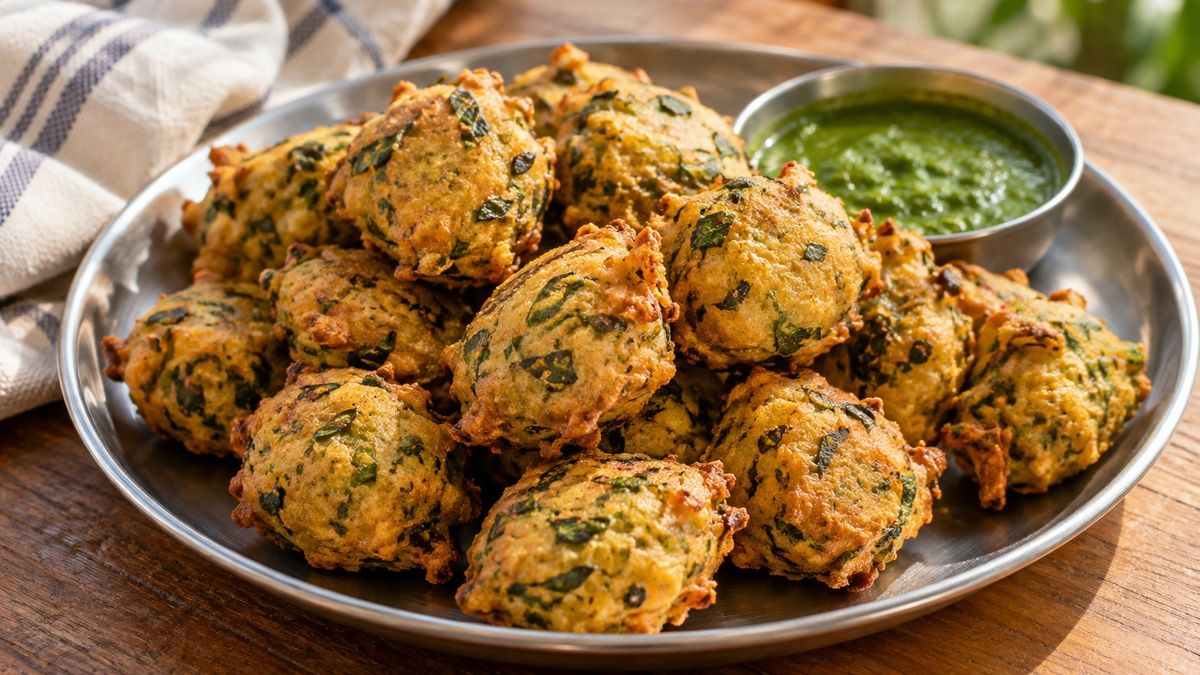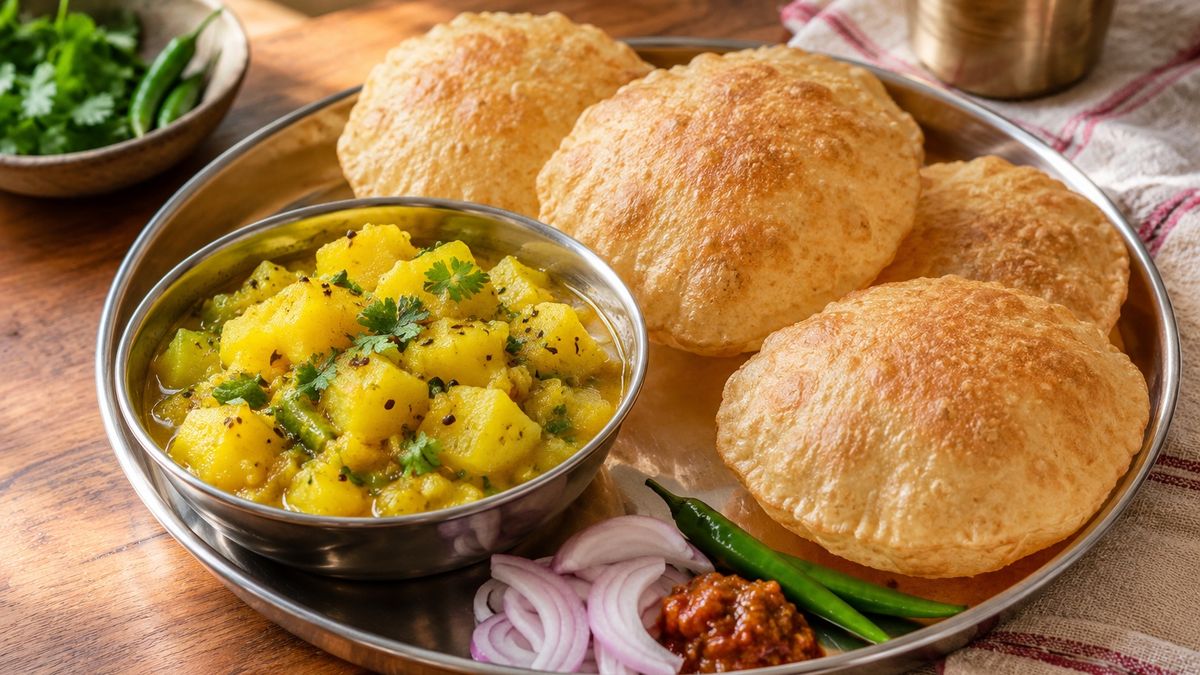
Bataka nu Shaak & Puriબટાકાનું શાક અને પૂરી
Potato curry with puffed puri is the traditional pairing for festival mornings and long journeys in Gujarat. The curry has no onion or garlic, which is why it is also the go-to dish for religious occasions.
Ingredients
Tap an ingredient to tick it off while you shop or measure.
- 4 boiled potatoes, broken by hand
- 2 tbsp oil, mustard seeds, cumin, asafoetida, curry leaves
- 1 tsp ginger-chilli paste
- Turmeric, coriander-cumin powder, 1 tsp jaggery, salt
- Lemon and coriander
- Puri: 2 cups wheat flour, 1 tsp oil, salt, oil for frying
Method
- Temper oil with mustard seeds, cumin, asafoetida, curry leaves and ginger-chilli paste.
- Add turmeric and coriander-cumin powder, then the potatoes.
- Add 2 cups water, jaggery and salt, and simmer 10 minutes until slightly thickened.
- Finish with lemon and coriander.
- For the puri, knead a firm dough, roll small discs and fry in hot oil, pressing gently so they puff.
Tips
- Break the potatoes by hand rather than cutting; the rough edges hold the gravy.
- Keep the puri dough firm. Soft dough soaks up oil.
Storing and reheating
The potato curry holds five or six hours at room temperature and two days in the fridge. As it sits the potatoes soak up the gravy and it thickens, so add a quarter cup of water when reheating. Do not store the puris with it. They go limp overnight and turn hard rather than crisp when reheated.
What you can swap
- No jaggery? Half a teaspoon of sugar will do, but you lose the darker colour and the rounder sweetness jaggery gives the gravy.
- If you have no ginger-chilli paste ready, pound an inch of ginger with two green chillies in a mortar. A quantity this small just spins around in a mixer.
- Curry leaves are worth skipping rather than substituting. Add a little extra asafoetida and the tempering still smells right.
- Mix two tablespoons of fine semolina into the puri flour. The puris stay crisp noticeably longer and do not soften as fast.
What to serve with it
In Gujarati homes this is a Sunday morning meal, and the classic food to carry on a journey. Serve it with sweet-sour pickle, papad and curd. Cold puris with this curry are a train-travel tradition because the flavour settles rather than fades.
Mistakes to avoid
- Do not roll all the puris and stack them up. Rolled puris left waiting dry out at the surface and refuse to puff. Roll one, fry it, roll the next.
- Check the oil before you start. A pinch of dough should rise to the top straight away. If it drifts up slowly the oil is too cool and the puris will drink it.
- Stop stirring once the potatoes are in the gravy. Extra stirring breaks them down and the curry turns pasty instead of staying brothy with distinct pieces.
- Add the lemon only after the heat is off. Lemon juice boiled in the gravy turns slightly bitter rather than fresh.
Questions people ask
Why are my puris not puffing up?
Usually one of three things: the dough was too soft, the disc was rolled unevenly so air escapes through the thin spot, or the oil was not hot enough. Also press the puri gently under the oil with a slotted spoon as it fries. That pressure is what makes it balloon.
How thick should the gravy be?
For eating with puris it should drop slowly off a spoon. Too thin and it will not sit on the puri at all. To thicken, mash one boiled potato into it. To loosen, add hot water, never cold.
Can leftover puris be made crisp again?
Partly. Half a minute on a dry tawa on each side brings back some crispness, but never the freshness of a just-fried one. A better use is to crush them for a quick bhel or a churma-style sweet.