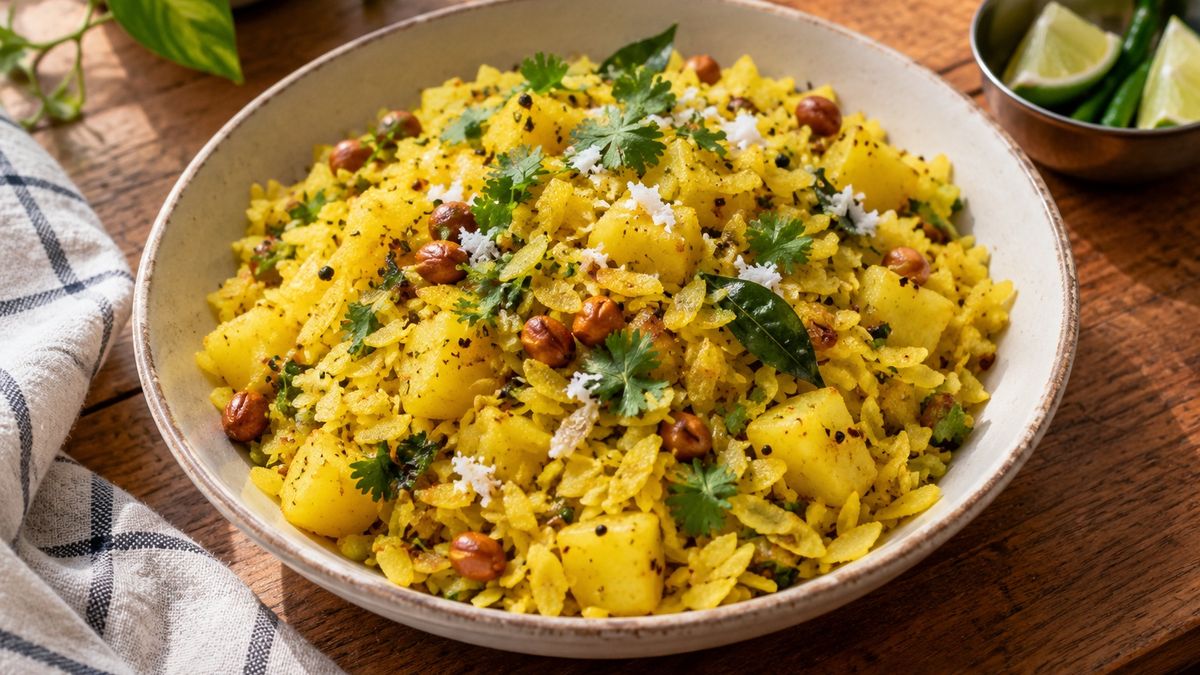
Bataka Pohaબટાકા પૌંઆ
Poha is the quickest Gujarati snack: flattened rice rinsed soft, tossed with potato, mustard seeds and curry leaves, finished with lemon and coriander. Twenty minutes from start to plate, and just as good at breakfast as at teatime.
Ingredients
Tap an ingredient to tick it off while you shop or measure.
- 2 cups thick poha (flattened rice)
- 1 potato, cut small
- 2 tbsp oil
- Mustard seeds, cumin, asafoetida, curry leaves
- 2 green chillies, ½ tsp turmeric
- 1 tsp sugar, salt
- Lemon, coriander, sev and pomegranate to finish
Method
- Rinse the poha in a colander and let it drain for 5 minutes. Never soak it in standing water.
- Crackle mustard seeds, cumin, asafoetida, curry leaves and chillies in oil.
- Add the potato, cover and cook until tender.
- Stir in turmeric, salt and sugar, then fold in the poha gently.
- Cover and steam on low heat for 3-4 minutes.
- Squeeze over lemon and top with coriander, sev and pomegranate.
Tips
- Use thick poha; thin poha turns to mush.
- Let the rinsed poha sit uncovered for 5 minutes so the grains stay separate.
- The spoon of sugar is what makes it taste Gujarati.
Storing and reheating
Eat poha within half an hour of making it. Left out it dries and the grains go hard. It keeps a day in the fridge but firms up as it cools. To reheat, sprinkle over two spoons of water, cover and steam on low for three minutes. Add the sev, lemon and pomegranate only at the plate.
What you can swap
- No pomegranate? Freshly grated coconut or roasted peanuts work. You lose the sweet-sour pop but the poha does not feel unfinished.
- In place of sev, use crushed farsi puri or any dry chavanu. Sev goes limp within five minutes of hitting warm poha, so scatter it on individual plates, never into the pan.
- Instead of potato use peas, finely diced carrot or boiled sweet potato. Boil peas first; raw peas will not cook through in the few minutes the poha is on the heat.
- If you can only find thin poha, do not rinse it in a colander. Flick water over it with your fingers until just damp, otherwise it collapses into paste.
What to serve with it
This is the standard Gujarati weekday breakfast, eaten with masala chai, and it reappears at evening tea. Serve with green chutney or a little raw chopped onion on the side and a wedge of lemon. Leftovers go into school tiffins.
Mistakes to avoid
- Never let water pool in the colander. Poha sitting in standing water starts breaking down within two minutes. Rinse under a running tap and drain immediately.
- Mix the salt, turmeric and sugar into the oil and spices before the poha goes in. Sprinkled over the top they never distribute, and you get mouthfuls that are salty next to mouthfuls that taste of nothing.
- Do not stir with a spoon. Lift from the bottom and fold. Soaked poha is fragile and stirring shreds it into bits.
- Squeeze the lemon only after the heat is off. Lemon juice hitting a hot pan loses its fragrance and the sourness turns slightly bitter.
Questions people ask
Why is my poha dry and hard?
It did not take up enough water. Press a grain after rinsing; if it crumbles it is still dry, so flick over more water and wait. After five minutes a grain should squash softly between your fingers. Also do not skip the covered steaming at the end, which is what finishes the softening.
Can mushy poha be rescued?
Only partly. Spread it on a wide plate and leave it under a fan for ten minutes so the surface moisture goes. Then toss it in a kadhai with a spoon of oil on high heat for two minutes. It will not become fluffy, but it becomes edible.
Is bataka poha made without onion?
This version is, and that is the Gujarati way. Potato, asafoetida and curry leaves carry the flavour instead. If you want onion, fry it after the tempering until soft, and then cut the asafoetida back a little so the two do not fight.