Bhakhriભાખરી
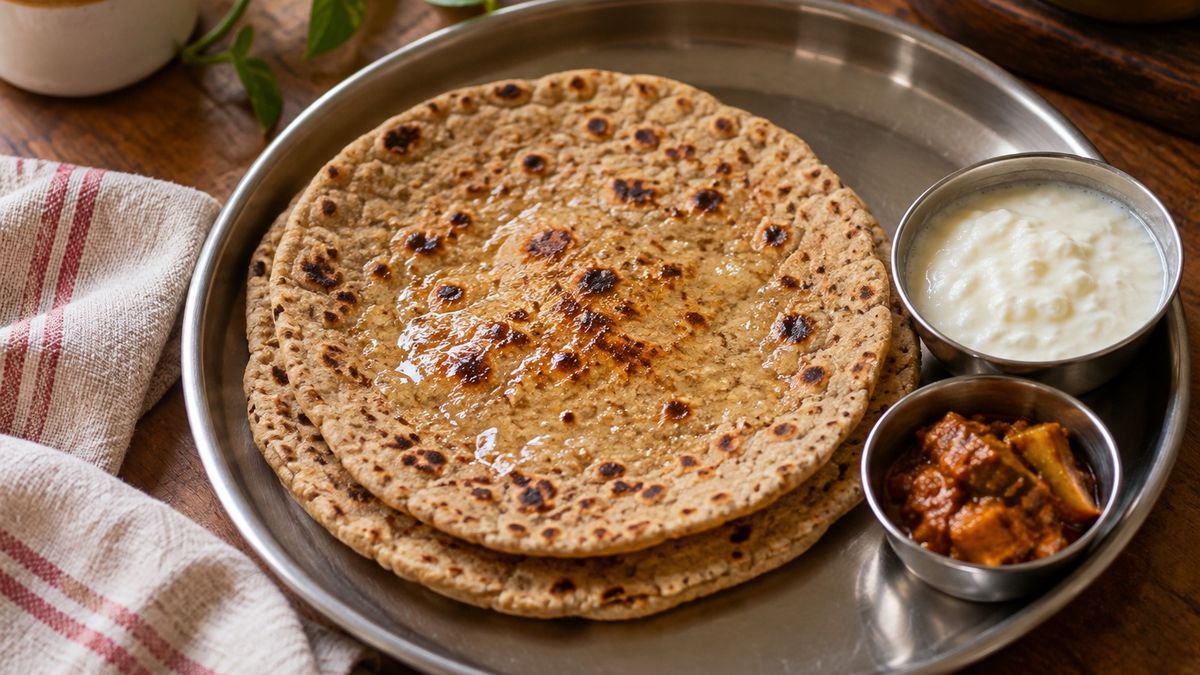
Thicker and crisper than rotli, bhakhri is eaten with ghee, chhundo or any sabzi. It keeps for two or three days, which is why it travels as often as thepla does.
Ingredients
Tap an ingredient to tick it off while you shop or measure.
- 3 cups wheat flour, coarse if available
- 4 tbsp ghee or oil, for the dough
- 1 tsp salt
- A pinch of carom seeds (optional)
- About 1 cup water
- Ghee for roasting
Method
- Rub the ghee and salt into the flour until a fistful holds its shape.
- Add water little by little and knead a firm dough, much stiffer than rotli dough.
- Roll thick rounds and prick them all over with a fork.
- Roast slowly on a tawa with ghee, pressing with a spoon.
- Take them off when both sides are spotted golden and crisp.
Tips
- Too little fat in the dough gives hard bhakhri instead of crisp ones.
- Keep the heat low, or the inside stays raw.
Storing and reheating
Cool crisp bhakhri completely on a rack before storing, and they keep happily for ten to fifteen days in an airtight tin. Packed warm, the trapped steam softens them and the ghee starts to smell stale. If they do go soft, turn them on a low tawa for a couple of minutes and the crispness comes back.
What you can swap
- If you cannot get coarse bhakhri flour, mix two or three tablespoons of fine semolina into ordinary atta for that grainy bite.
- Oil works instead of ghee in the dough, though you get fewer flaky layers. Avoid butter; its water content makes bhakhri hard.
- No ajmo? Use crushed cumin or sesame seeds. Sesame pressed onto the surface before roasting tastes especially good.
- Replace half a cup of the wheat flour with jowar flour for a lighter, crisper bhakhri.
What to serve with it
With morning tea, or at midday with chaas and pickle. Spread with ghee and jaggery it is the classic thing to hand a child. Because it keeps so well, it is the first thing packed for a journey or a train meal, alongside a dry sabzi.
Mistakes to avoid
- Do not keep working the dough after the ghee goes in. Bhakhri dough is used straight away; it does not need the long rest rotli dough gets.
- Do not roll them thin. Thickness is what lets the inside go crumbly and crisp. Rolled thin, they end up as khakhra.
- Never skip the fork holes. Without them the bhakhri puffs up and the inside stays raw.
- Smear the ghee on, do not pour it. Sitting in a pool of ghee the bhakhri fries instead of roasting and tastes greasy.
Questions people ask
Why is my bhakhri hard rather than crisp?
Too much water in the dough, or too much heat. The dough should be stiff enough that rolling takes some effort, and it needs ten to twelve minutes on a low flame while you press it with a spoon. Rushed on high heat it colours outside and stays raw and hard within.
How long does bhakhri keep?
Ten to fifteen days in an airtight tin, as long as it was fully crisp and fully cold when you put it away. A richer dough with plenty of ghee is best finished within a week in hot weather, before the fat turns.
What is the difference between bhakhri and khakhra?
Bhakhri is rolled thick, carries more fat in the dough, and is pressed as it roasts so the inside goes short and crumbly. Khakhra is rolled very thin and pressed dry on a khakhra press until it is paper-crisp.