Cabbage Shaakકોબીનું શાક
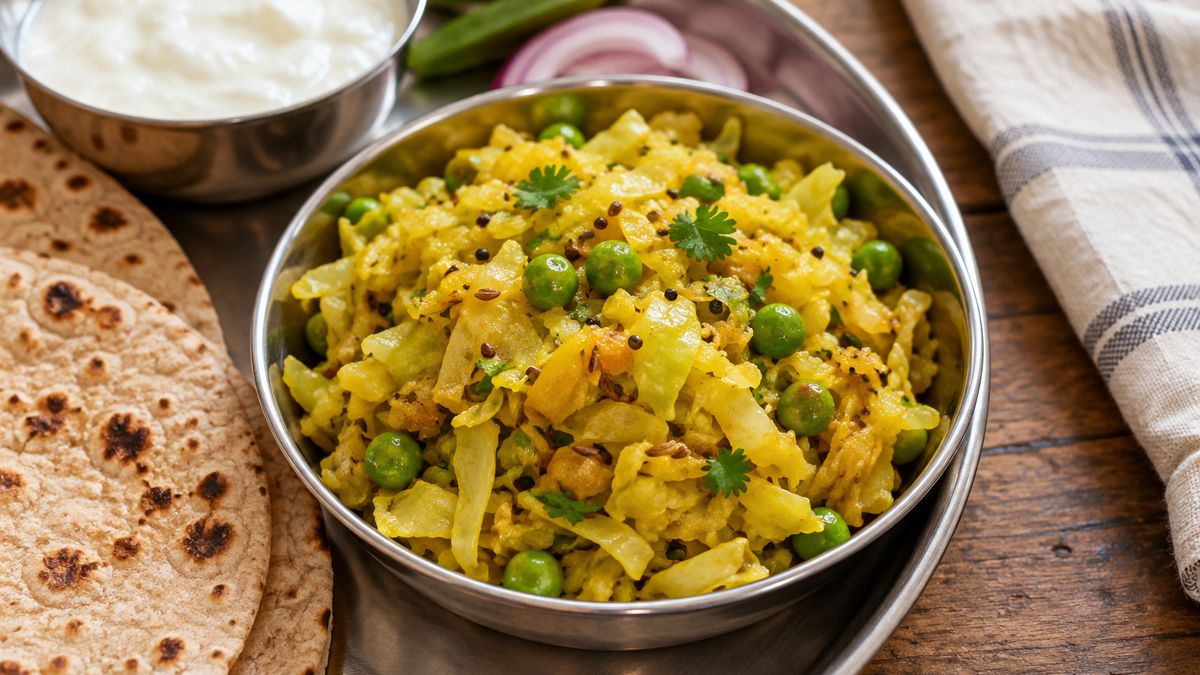
A dry, gentle sabzi of cabbage and peas. Twenty minutes, very little oil, and it sits happily next to dal and rice any day of the week.
Ingredients
Tap an ingredient to tick it off while you shop or measure.
- Half a cabbage, finely shredded
- ½ cup green peas
- 2 tbsp oil, mustard seeds, cumin, asafoetida
- 1 tsp ginger-chilli paste
- Turmeric, coriander-cumin powder, 1 tsp sugar, salt
- Lemon and coriander
Method
- Temper oil with mustard seeds, cumin and asafoetida, then add the ginger-chilli paste.
- Add the cabbage and peas and toss on high heat for 2 minutes.
- Stir in turmeric, coriander-cumin powder, sugar and salt.
- Cover and cook on low for 8-10 minutes. No water needed.
- Finish with lemon and coriander and serve with rotli.
Tips
- Don't overcook it; cabbage should keep a little bite.
- A spoon of crushed roasted peanuts lifts it noticeably.
Storing and reheating
This is a dry sabzi, so it holds four or five hours out of the fridge; after that the cabbage weeps and starts to smell. It keeps two days refrigerated, though water collects in the bowl and the crunch is gone. Reheat uncovered on high heat for two or three minutes, stirring, so the moisture cooks off. Add lemon and coriander fresh.
What you can swap
- In place of peas use sweetcorn, grated carrot, finely diced capsicum or boiled chana. Carrot goes in at the same time as the cabbage, since it needs about the same time.
- No ginger-chilli paste? Add two finely chopped green chillies and grated ginger straight into the tempering. It actually tastes fresher than the paste.
- Half a teaspoon of jaggery works in place of the sugar. The sugar is not there to make the sabzi sweet; it mutes cabbage's faint bitterness, so do not leave it out entirely.
- A handful of fresh grated coconut stirred in at the end makes the sabzi feel more substantial. If using desiccated coconut, toast it first, or it stays gritty.
What to serve with it
This is everyday rotli-shaak food. On a thali it sits alongside dal, rice, rotli and a glass of chaas. Because there is no gravy it is the safest sabzi for a tiffin box; nothing leaks and it holds until lunchtime.
Mistakes to avoid
- Do not shred the cabbage, salt it and leave it on the counter. It gives up its water within ten minutes and then the sabzi steams instead of frying.
- Cut away the thick white core. It does not soften in the same time as the leaves and you get hard raw bits in otherwise cooked sabzi.
- Do not shred the cabbage in a mixer or food processor. The pieces come out uneven and half of it gets bruised to pulp. A knife and thin slices is the only way.
- Resist adding water after the tempering. Cabbage releases plenty of its own, and extra water turns the whole thing into a soggy mass.
Questions people ask
Why does my cabbage sabzi turn watery?
Usually the salt went in too early, or the heat was too low. Toss the cabbage on high for the first two minutes and only then add the spices and salt. If water has already pooled, take the lid off, raise the heat and keep stirring; it dries out in three or four minutes.
Can I add onion to this?
Yes. After the tempering, fry finely chopped onion until it turns pink, then add the cabbage. If you do add onion, cut the asafoetida back, as the two compete. The traditional Gujarati version is made without onion at all.
Why do the cut edges go black?
Cabbage darkens where it is exposed to air, and an iron knife makes it worse. Shred it just before cooking, or drop it into cold water for five minutes and drain. If the cabbage is already heavily blackened or slimy it is old, and it will smell off once cooked.