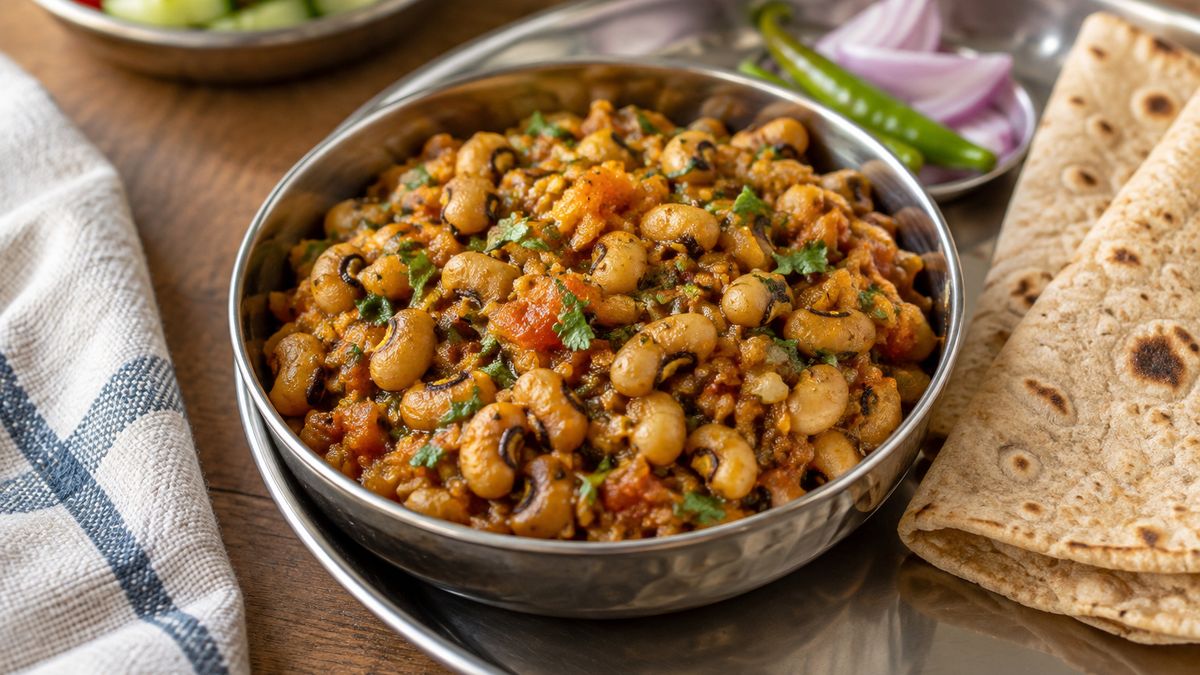
Chawli Shaakચોળીનું શાક
A dry sabzi of fresh cowpea beans with peanuts and coconut. Quick, light, and one of those everyday dishes nobody thinks to write down.
Ingredients
Tap an ingredient to tick it off while you shop or measure.
- 400 g fresh cowpea beans (chawli), chopped
- 2 tbsp oil, mustard seeds, cumin, asafoetida, curry leaves
- 1 tsp ginger-chilli paste
- 2 tbsp crushed roasted peanuts, 2 tbsp grated coconut
- Turmeric, coriander-cumin powder, 1 tsp sugar, salt
- Lemon and coriander
Method
- Temper oil with mustard seeds, cumin, asafoetida and curry leaves, then add the ginger-chilli paste.
- Add the beans, turmeric, salt and ¼ cup water, cover and cook 12 minutes.
- Stir in the coriander-cumin powder, sugar, peanuts and coconut.
- Cook uncovered for 3-4 minutes until the water dries off.
- Finish with lemon and coriander and serve with rotli.
Tips
- Use tender beans; older ones are stringy.
- Add the coconut at the end or it browns and turns bitter.
Storing and reheating
This is a dry, tempered shaak, so it sits out for five or six hours without trouble. Covered in the fridge it keeps two days, though the beans fade from green to olive and the crushed peanuts draw moisture and make it pasty. Reheat uncovered on high heat for a couple of minutes; a microwave turns the beans rubbery. Squeeze the lemon fresh every time.
What you can swap
- No fresh cowpea pods? French beans cook the same way, but faster, so give them eight minutes instead of twelve.
- If you have no fresh coconut, use desiccated, but dry roast it for thirty seconds first. Raw desiccated coconut has a gritty bite in a shaak.
- No crushed peanuts? Use crushed roasted sesame, or two tablespoons of ground roasted chana. Ground chana absorbs more, so keep the water slightly higher.
- Half a teaspoon of jaggery can replace the sugar. Do not leave the sweetness out altogether, though: cowpea has an earthy flavour that only lifts with a little sugar behind it.
What to serve with it
An everyday thali vegetable, eaten with hot rotli, dal, rice and a glass of chhaas. When fresh cowpea comes into the market at the end of the monsoon and into early winter, it appears twice a week in Gujarati kitchens. With no gravy, it also travels well in a tiffin.
Mistakes to avoid
- Do not boil the beans in a lot of water. A quarter cup and a lid is enough. Steaming keeps both colour and flavour.
- Resist lifting the lid to check. Every time you do, the steam escapes, the beans take twice as long, and they shrivel on top while they wait.
- Do not squeeze the lemon in while the flame is on. Add it after the gas is off, or the lemon turns bitter against the heat.
- Do not chop too small. Half-inch pieces hold their shape; finely cut pods collapse within twelve minutes.
Questions people ask
My beans are still tough after cooking. Why?
They were old. Once the seeds inside have swollen and the pod has thickened, the strings have set and no amount of cooking will soften them. Bend one pod at the shop: if it snaps cleanly it is tender, if it bends it is past its best.
Can I add potato to this?
Yes, and many homes make it only as chawli-bataka. Add small potato cubes along with the beans and raise the water to half a cup. If you do add potato, add an extra tablespoon of crushed peanuts, otherwise the shaak tastes flat.
Can I use dried cowpea beans instead?
That becomes a different dish. Dried chawli is soaked overnight, boiled and made into a gravy. This recipe is for the fresh green pods, where the point is to dry off all the water and finish with a dry shaak.