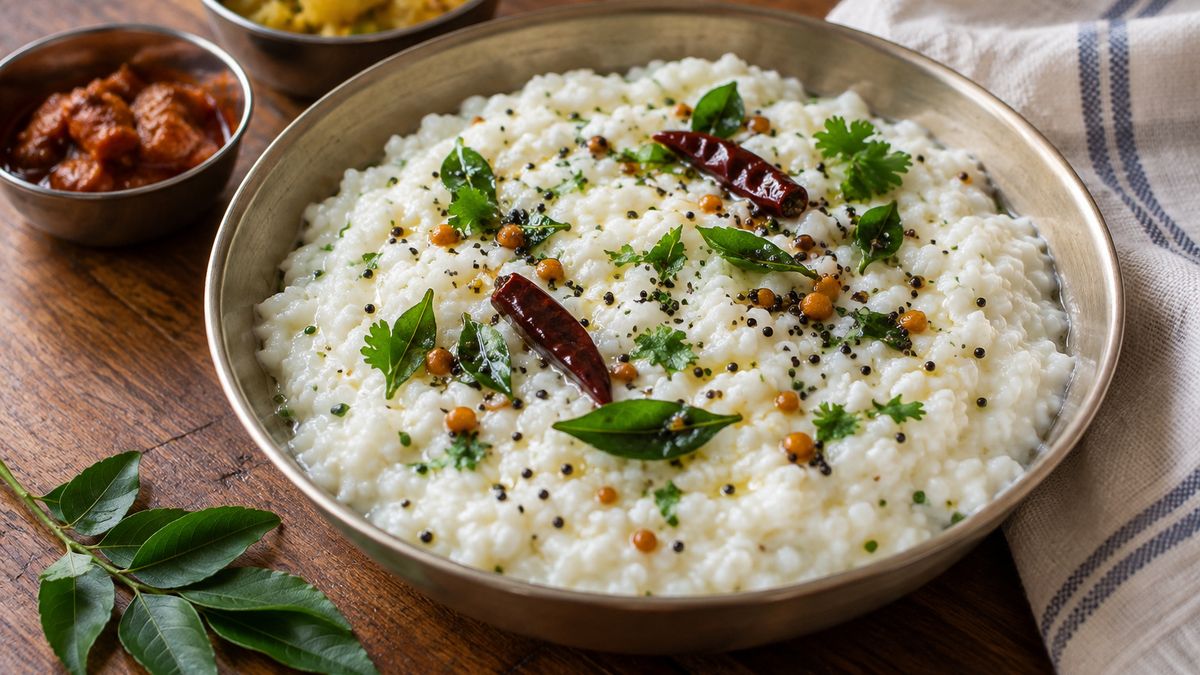
Curd Riceદહીં ભાત
Rice mashed with yoghurt and finished with a gentle tempering. It is what South Indian meals end with, and what everyone eats in summer or when their stomach is unsettled.
Ingredients
Tap an ingredient to tick it off while you shop or measure.
- 2 cups cooked rice
- 1½ cups yoghurt, ¼ cup milk
- Tempering: oil, mustard seeds, urad dal, asafoetida, curry leaves, 1 dried chilli
- 1 tsp finely chopped ginger
- Salt, coriander
- Pomegranate or grapes, optional
Method
- Mash the warm rice slightly with a spoon, then let it cool.
- Stir in the milk, then the yoghurt and salt. Adding yoghurt to hot rice makes it sour.
- Temper mustard seeds, urad dal, asafoetida, curry leaves and a dried chilli in oil.
- Add the ginger and pour the tempering over the rice.
- Finish with coriander, and pomegranate if you like.
Tips
- The splash of milk stops it turning sour by the next day.
- Mashing the rice a little gives a much better texture.
Storing and reheating
Keep curd rice in the fridge, where it is good for a day. Left out in summer it starts souring within two or three hours. Never reheat it, as the yoghurt splits and goes grainy. Take it out fifteen to twenty minutes before eating and loosen it with a spoon or two of milk. Water just dilutes the flavour.
What you can swap
- Instead of milk, stir in two tablespoons of malai or fresh cream. The rice tastes richer and sours even more slowly.
- No urad dal for the tempering? Chana dal works, slightly firmer but still crunchy. With neither, use coarsely crushed peanuts.
- In place of pomegranate try green grapes, soaked raisins, grated carrot or finely diced cucumber. Add cucumber only at serving, since it leaks water.
- If raw ginger tastes too sharp for you, add it to the hot tempering for ten seconds. The bite goes and the fragrance stays.
What to serve with it
In a South Indian meal curd rice comes last, after the sambar and rasam, to close the plate. It is the standard summer and travel food, carried in tiffins on long journeys. Serve with lemon or mango pickle, fried chillies or papad.
Mistakes to avoid
- Do not start with sour yoghurt. Curd rice keeps getting sourer by the hour once it is made, so it needs fresh, mild curd at the start.
- Do not whisk the yoghurt smooth and thin. Break up the lumps with a spoon and stop there. Over-whisking makes the curd release water and the rice turns soupy.
- Do not pour a crackling hot tempering straight into the yoghurt. Let it stand off the heat for ten seconds first, or the curd curdles where it lands.
- Hold back the salt until shortly before serving. Salt draws water out of the yoghurt and speeds up souring.
Questions people ask
Why does my curd rice turn sour?
Either the yoghurt was already sour, the salt went in far too early, or the yoghurt met the rice while it was still warm. Any two of those together and it sours within a couple of hours. Fresh curd, cooled rice and a splash of milk will keep it mild into the next day.
How much yoghurt for a cup of rice?
About three-quarters of a cup of yoghurt per cup of cooked rice. It should coat the rice generously without turning soupy. Remember that the rice drinks up yoghurt as it sits, so mix it looser than you want it and it will be right by the time you eat.
Can I use leftover rice from the fridge?
Yes, but mash it well with two spoons of milk first. Cold rice is hard and lumpy, and yoghurt stirred straight into it leaves pockets of dry grain. Once mashed it will need a little more milk and yoghurt than freshly cooked rice would.