Dal Bhaat Rotli Shaakદાળ ભાત રોટલી શાક
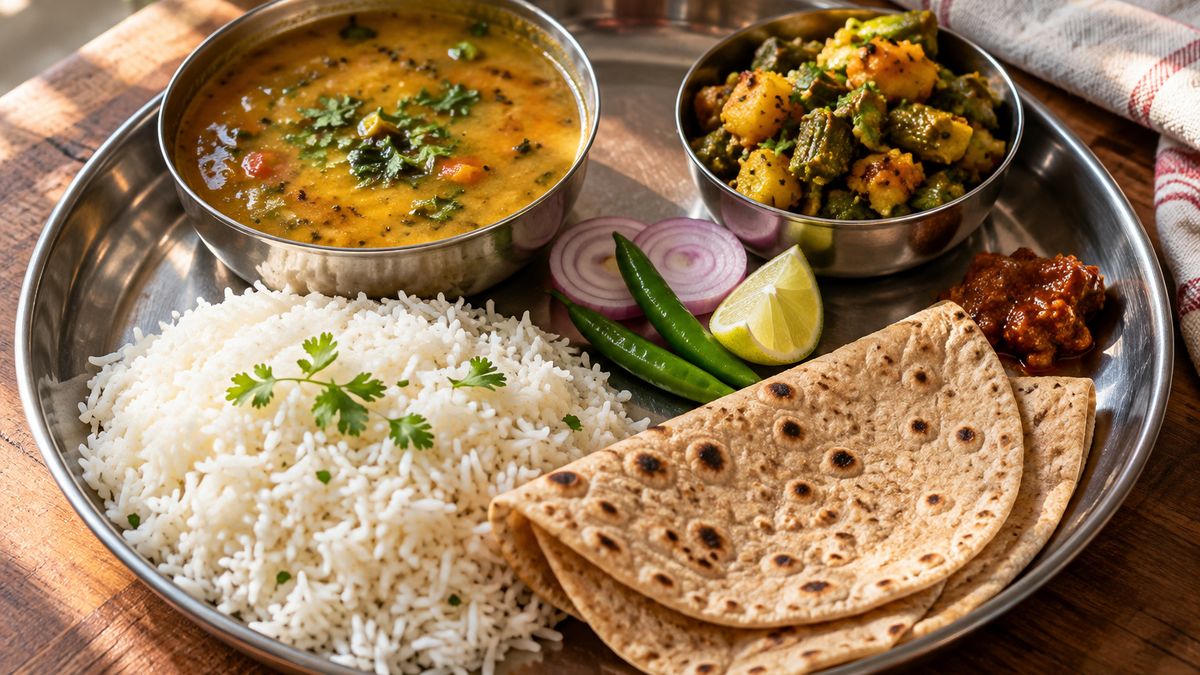
This is the backbone of a Gujarati meal: sweet-and-sour toor dal, steamed rice, hot rotli and one vegetable. The recipe below is for the dal, the part that makes the plate taste Gujarati.
Ingredients
Tap an ingredient to tick it off while you shop or measure.
- 1 cup toor dal
- 2 tbsp tamarind pulp, 2 tbsp jaggery
- 1 tsp ginger-chilli paste
- Turmeric, coriander-cumin powder, salt
- Tempering: ghee, mustard seeds, cumin, fenugreek, asafoetida, curry leaves, cloves, cinnamon, dried chilli
- Peanuts, kokum or tomato, coriander
Method
- Pressure cook the dal with turmeric for 4 whistles and whisk it smooth.
- Thin with 3 cups water, add tamarind, jaggery, ginger-chilli paste and salt, and simmer 10 minutes.
- Add the peanuts and kokum.
- Temper ghee with all the whole spices and pour into the dal.
- Finish with coriander and serve with rice, rotli and a sabzi.
Tips
- Gujarati dal is meant to be thin and pourable, not thick.
- The balance of jaggery and tamarind is the whole recipe; taste and adjust at the end.
Storing and reheating
Dal made with jaggery should not sit out more than four or five hours in hot weather, or it turns sour. It keeps two days in the fridge, thickening as it chills, so add hot water and give it one proper boil before serving. Keep rice in a separate box, and line the rotli box with a cloth to keep them soft through the day.
What you can swap
- No kokum? Use an extra teaspoon of tamarind pulp or a chopped tomato. The sourness is less deep but it works.
- Sugar can stand in for jaggery, but use a little less. Sugar is a sharper sweetness; jaggery is rounder.
- Out of tamarind, stir in half a teaspoon of amchur or some lemon juice after the heat is off.
- The peanuts can simply be left out. If you want them, add raw peanuts while the dal simmers, never at the end.
What to serve with it
This is the everyday Gujarati lunch. Rotli and sabzi first, then dal and rice with a spoon of ghee poured over. Papad, chaas, kachumber and pickle go alongside. In many homes the dal-bhaat comes at the end of the meal; at night people eat lighter, with khichdi and kadhi instead.
Mistakes to avoid
- Do not add tamarind or jaggery before the dal has been whisked smooth. Once acid is in, the dal stops breaking down and you are left with whole lentils.
- Four or five fenugreek seeds is the limit. More than that and the dal turns bitter.
- In the tempering, wait for the mustard seeds to finish crackling before anything else goes in, and add curry leaves and asafoetida last so they do not scorch.
- Do not boil the dal after the coriander goes in. Take it off the heat first, or the fresh smell disappears.
Questions people ask
How thin should Gujarati dal be?
Thin enough to pour in a stream from a ladle. Roughly three cups of water to one cup of cooked dal is right. Rice soaks the dal up, so anything that looks right in the pan will feel too thick on the plate.
Why does my dal taste bitter?
Usually too much fenugreek, or the fenugreek and asafoetida burning in the tempering. Too many cloves and too much cinnamon also weigh the flavour down; one or two cloves and a small piece of cinnamon are plenty.
Can I make it without jaggery?
You can, but it stops being Gujarati dal. The jaggery is not only there for sweetness; it ties the tamarind and the chilli together. If you want it less sweet, halve the jaggery and halve the tamarind along with it.