Fansi Dhokliફણસી ઢોકળી
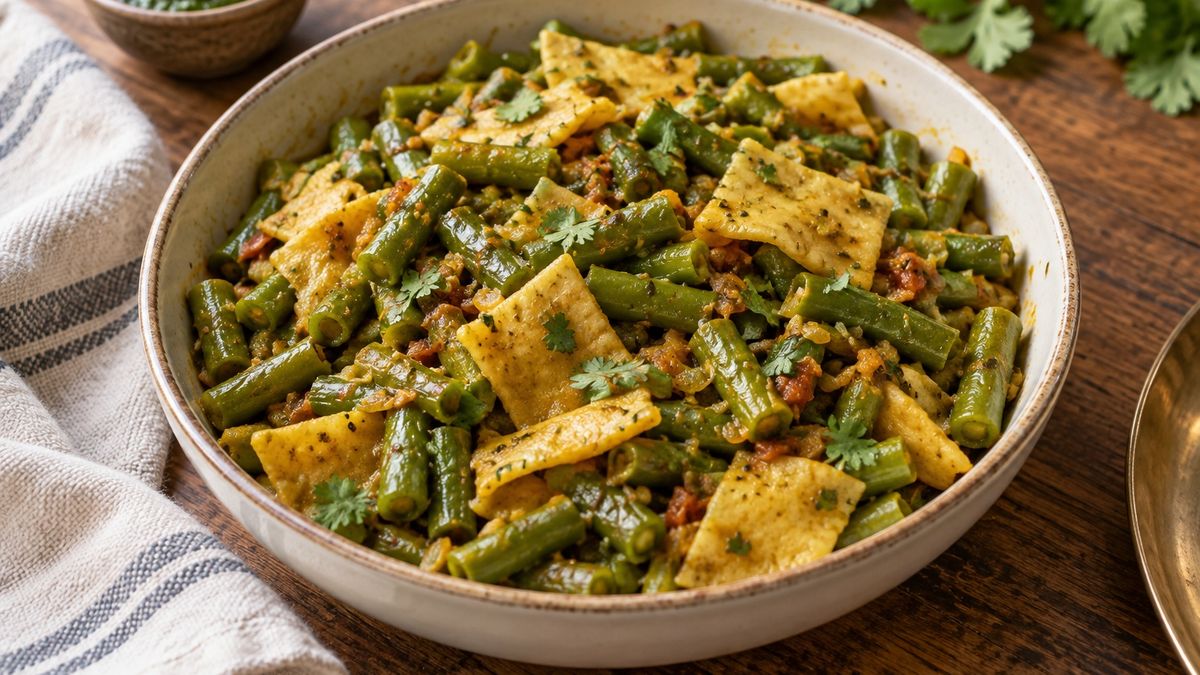
French beans cooked with small gram-flour dumplings dropped into the pan. A sabzi and something substantial in the same dish, which is why it turns up on busy days.
Ingredients
Tap an ingredient to tick it off while you shop or measure.
- 300 g French beans, chopped
- Dhokli: ½ cup gram flour, ¼ cup wheat flour, turmeric, chilli, carom seeds, oil, salt
- 2 tbsp oil, mustard seeds, cumin, asafoetida, curry leaves
- 1 tsp ginger-chilli paste
- Turmeric, coriander-cumin powder, 1 tsp jaggery, salt
- Lemon and coriander
Method
- Knead a firm dough from the dhokli ingredients and shape small balls or flat discs.
- Temper oil with mustard seeds, cumin, asafoetida and curry leaves, then add the ginger-chilli paste.
- Add the beans, turmeric, salt and ½ cup water, cover and cook 10 minutes.
- Add the dhokli, cover and cook 8-10 minutes until they are done through.
- Stir in the coriander-cumin powder and jaggery and rest 2 minutes.
- Finish with lemon and coriander and serve with rotli.
Tips
- Keep the dumplings small or the centres stay raw.
- Allow enough water; the dhokli soak up a surprising amount.
Storing and reheating
It keeps two days in the fridge, but the dhokli go on absorbing liquid, so by the next day the sabzi looks dry and the dhokli swollen. Reheat with a quarter cup of hot water on low heat, stirring gently. Do not reheat twice over; the dhokli dissolve into paste. Unrefrigerated, five or six hours is the limit.
What you can swap
- In place of French beans use valor papdi, guvar or fresh tuvar lilva. Guvar needs about five extra minutes; lilva cook fast, so add them at the same time as the dhokli.
- More gram flour in the dhokli makes them hard; more wheat flour and they dissolve into the gravy. Two parts gram flour to one part wheat is the ratio to stick to.
- Sugar works in place of jaggery, though the colour will not be as deep. Either way add it at the end; put in early it catches on the base of the pan.
- No carom seeds? A pinch of crushed fennel or cumin in the dhokli dough works. The carom is there for aroma, and without anything in its place the dough tastes flat.
What to serve with it
An everyday lunch sabzi with rotli and chaas. Because of the dhokli it is filling on its own, so there is no need to make dal alongside. For a light evening meal it works as a complete one-pot dinner.
Mistakes to avoid
- Do not knead the dhokli dough as soft as rotli dough. It needs to be firm; soft dough dissolves in the gravy and turns the whole sabzi into thick paste.
- Do not skip topping and tailing the beans and pulling off the side strings. Older French beans have a tough fibre along the edge that stays chewy however long it cooks.
- Once the dhokli are in, stop stirring with a spoon. Shake the pan to fold things together, or the dhokli break up and disappear into the gravy.
- Do not squeeze lemon into the sabzi while it is still boiling. Jaggery and lemon boiled together leave a bitter edge. Add the lemon after the heat is off.
Questions people ask
My dhokli are raw in the middle. Why?
Either they were rolled too thick or the gravy was not actually simmering. Keep them about as thick as a thumbnail and press a dimple in the centre with your finger so steam gets in. Cook covered on medium; on a low flame the dhokli never cook through.
Is this the same as dal dhokli?
No. In dal dhokli the dough pieces are simmered in thin tuvar dal, and it is a soupy dish eaten in place of rice. Here the dhokli cook in a sabzi with very little liquid, and it is eaten as a sabzi with rotli.
Can the dhokli be shaped in advance?
An hour or two covered is fine, no longer. They dry out, crack at the edges and then fall apart in the gravy. Better to keep the kneaded dough covered and shape the dhokli while the beans are cooking.