Gobi Parathaગોબી પરાઠા
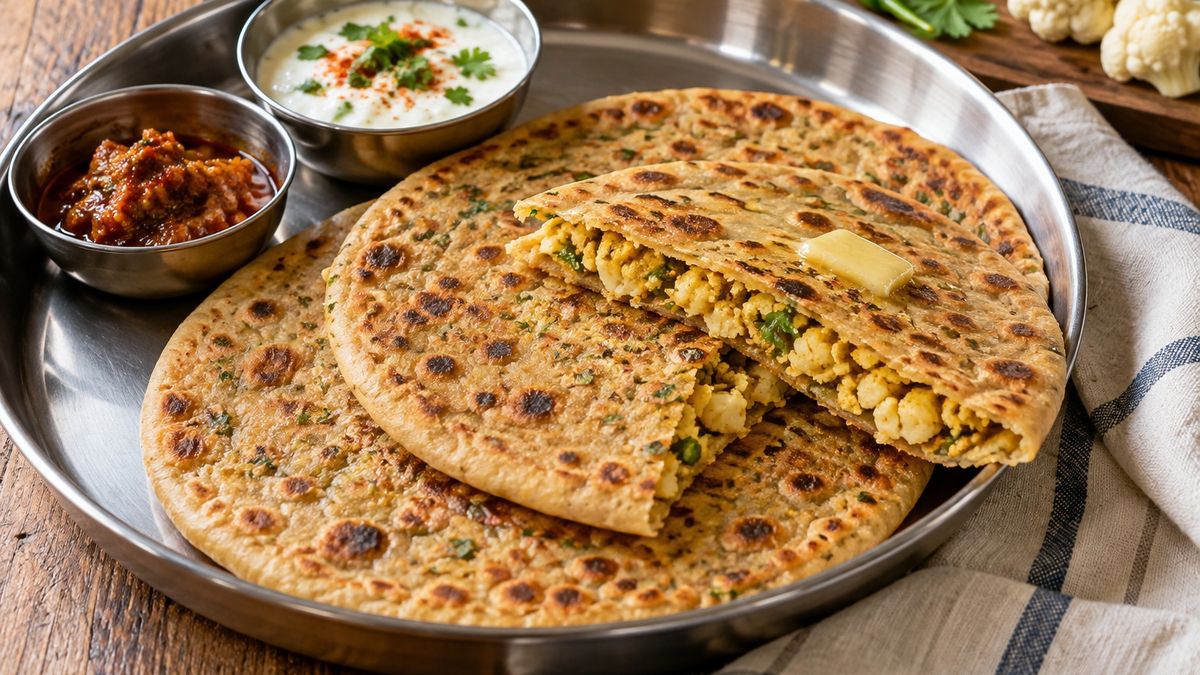
Parathas stuffed with grated, spiced cauliflower. They belong to winter, when cauliflower is cheap and sweet, and they are the trickiest paratha to get right because of the water in the vegetable.
Ingredients
Tap an ingredient to tick it off while you shop or measure.
- 3 cups wheat flour
- 1 medium cauliflower, finely grated
- 2 green chillies, 1 tsp ginger
- 1 tsp coriander-cumin powder, ½ tsp garam masala, a pinch of carom seeds
- Coriander and salt
- Ghee for roasting
Method
- Grate the cauliflower, salt it lightly, rest 10 minutes and squeeze out all the water by hand.
- Mix in the chillies, ginger, spices and coriander.
- Stuff balls of soft dough with the filling and seal them.
- Roll gently; heavy pressure pushes the filling through.
- Roast with ghee until golden on both sides and serve with yoghurt.
Tips
- Squeezing the water out is the whole recipe.
- If the filling still feels wet, add a spoon of roasted gram flour.
Storing and reheating
Wrapped in a cloth, these stay soft four or five hours. They keep two days in the fridge, stacked with butter paper between them so they do not stick. Reheat on a tawa with a little ghee on both sides; a microwave makes parathas leathery. Do not store the raw filling once salted, as it keeps releasing water.
What you can swap
- No cauliflower? Grated mooli or cabbage both work. Each needs the same hard squeeze to get the water out, and with mooli it is worth increasing the carom seeds a little.
- Two tablespoons of maida or gram flour in the wheat flour gives a dough that rolls more easily and tears less.
- In place of garam masala, use a pinch of crushed anardana or amchur. The sourness suits cauliflower and keeps the filling from tasting heavy.
- Butter or oil can replace the ghee, but oil-roasted parathas go firm once cool. If these are going into a tiffin box, use ghee.
What to serve with it
In north India this is breakfast: paratha with curd, a knob of white butter, pickle and a cup of chai. In Gujarati homes it tends to become a one-dish dinner instead, served with curd and chhundo or a sharp mango pickle.
Mistakes to avoid
- Add the salt to the filling just before stuffing. Mix it in and leave it standing and the cauliflower releases water again, which then forces its way out while you roll.
- Go easy on the dry dusting flour. Excess flour burns on the tawa and leaves bitter black specks on the paratha.
- Do not roll parathas from fridge-cold dough. Cold dough does not stretch and splits in the middle. Leave it out for half an hour first.
- Keep the tawa on medium. On high heat the outside browns quickly while the cauliflower inside stays raw, and raw cauliflower has an unmistakable smell.
Questions people ask
My parathas tear while rolling. What is going wrong?
Either too much filling or filling that is still wet. Use no more filling than the ball of dough itself. After sealing, press the ball flat with your palm first and only then take the rolling pin to it. Going straight in with the pin splits the centre.
Can I grate the cauliflower in a mixer?
Better not to. A mixer turns it into a wet pulp and no amount of squeezing gets that moisture out. Use the coarse side of a hand grater, which keeps the shreds separate and lets the filling bind dry.
Can the filling be made ahead?
You can grate the cauliflower, squeeze it and keep it in a box in the fridge for a day, but add the salt and spices only when you are about to make the parathas. Salted early, it keeps weeping even in the fridge and becomes unusable as a stuffing.