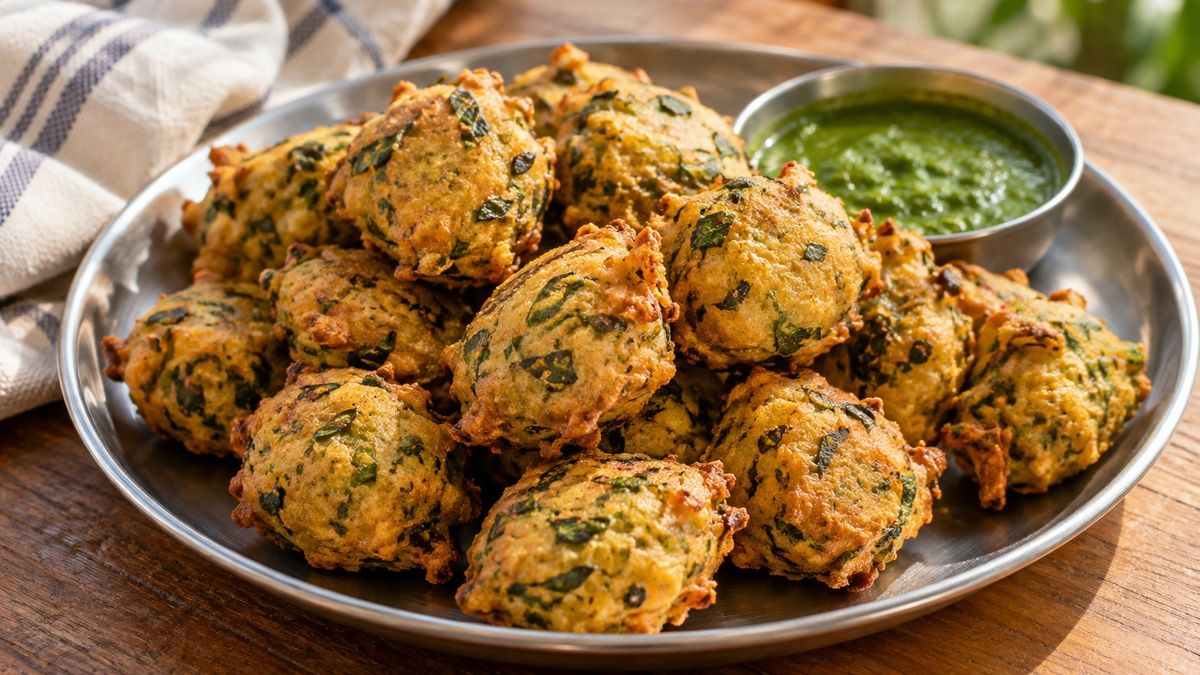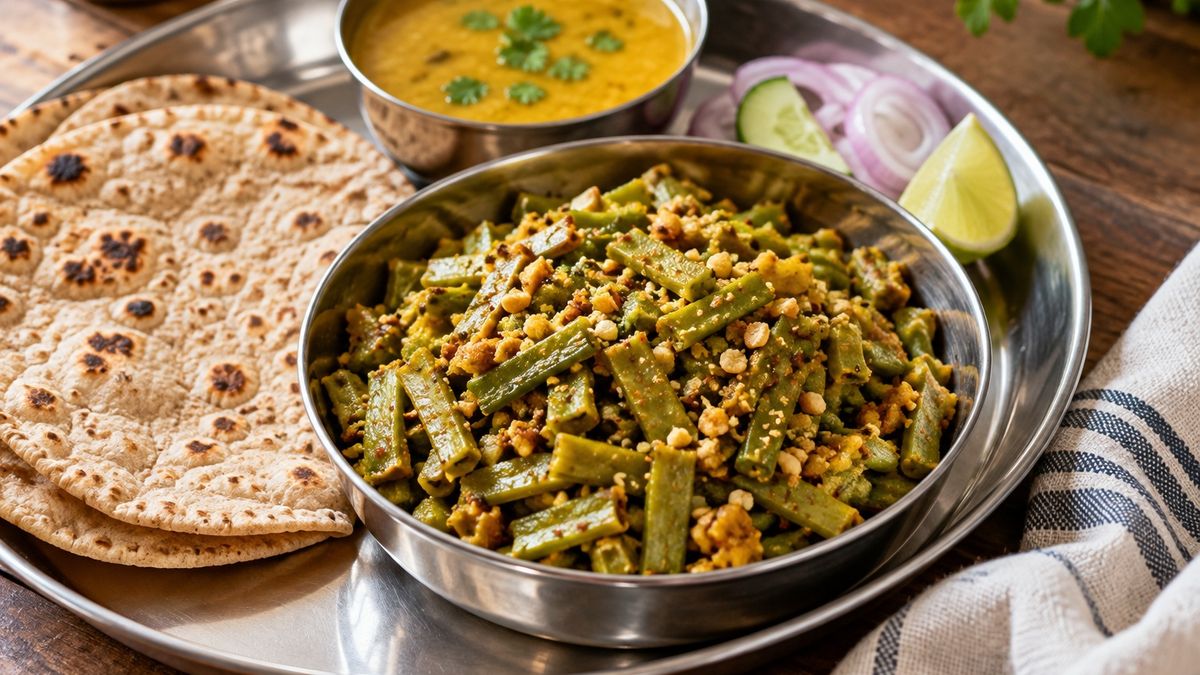
Guvar Shaakગવારનું શાક
Cluster beans cooked the Gujarati way, with crushed peanuts and a little jaggery. Guvar has a faint bitterness of its own, and the jaggery and peanuts are exactly what balance it.
Ingredients
Tap an ingredient to tick it off while you shop or measure.
- 400 g cluster beans (guvar), strings removed and chopped
- 3 tbsp crushed roasted peanuts
- 2 tbsp oil, mustard seeds, cumin, asafoetida, curry leaves
- 1 tsp ginger-chilli paste
- Turmeric, coriander-cumin powder, 1 tsp jaggery, salt
- Lemon and coriander
Method
- Wash the beans, pull off the strings and chop them small.
- Temper oil with mustard seeds, cumin, asafoetida and curry leaves, then add ginger-chilli paste.
- Add the guvar, turmeric, salt and ¼ cup water, cover and cook 12-15 minutes.
- Stir in the crushed peanuts, coriander-cumin powder and jaggery, and cook 5 minutes more.
- Finish with lemon and coriander and serve with rotli.
Tips
- Don't skip destringing; the strings are unpleasant to eat.
- If the bitterness is strong, add a little more jaggery.
Storing and reheating
It sits out five or six hours, and keeps two days covered in the fridge. Guvar is actually slightly softer on day two, and the jaggery and peanut flavour has sunk in, so this is one of those shaak that improves overnight rather than suffering. Reheat uncovered on high heat, stirring, and squeeze fresh lemon over it then.
What you can swap
- No jaggery? A teaspoon of sugar works, but jaggery's deeper flavour masks guvar's bitterness better. With sugar you will need slightly more of it.
- Two tablespoons of ground roasted chana can replace the peanuts. It absorbs more liquid, so sprinkle in a couple of tablespoons of water if the shaak looks dry.
- No ginger-chilli paste? Add grated ginger and finely chopped chillies straight into the tempering. It tastes fresher than the paste.
- If the bitterness bothers you, stir in a quarter cup of chhaas and cook it off. The sourness of buttermilk cuts bitterness well.
What to serve with it
An everyday dry vegetable, eaten with hot rotli or bajra rotla, alongside dal, rice and chhaas on the thali. It appears often after the monsoon, when guvar is cheap and tender. Leftovers are good the next day with thepla.
Mistakes to avoid
- Do not let the chopped guvar stand around. The cut edges darken and the finished shaak looks dull. Chop and get it into the pan.
- Do not add more water. A quarter cup with the lid on is enough. Guvar releases its own moisture, and beans boiled in extra water end up bland and soggy.
- Do not add the crushed peanuts with the tempering at the start. Even on low heat they scorch and turn bitter. They go in once the guvar is cooked.
- Do not drop the jaggery into a bubbling pan and stir straight away. Lower the heat, add it and let it melt. On high heat it catches on the base and darkens.
Questions people ask
Why does my guvar taste bitter?
Thick, older pods carry much more bitterness. Pick tender ones, the kind that snap when you bend them. If all you can get is bitter, increase the jaggery a little, add a quarter cup of chhaas, or stir in two tablespoons of curd and cook it off.
How long does guvar take to cook?
Tender guvar is done in twelve to fifteen minutes with the lid on. It should squash under pressure without falling apart. In a pressure cooker, one whistle is enough; two and it collapses.
Is there an easier way to string them?
Snap off both ends of the pod and pull downwards. The string comes away with the tip. Tender guvar has almost no string at all, so choosing thin pods at the shop halves this job.