Kachoriકચોરી
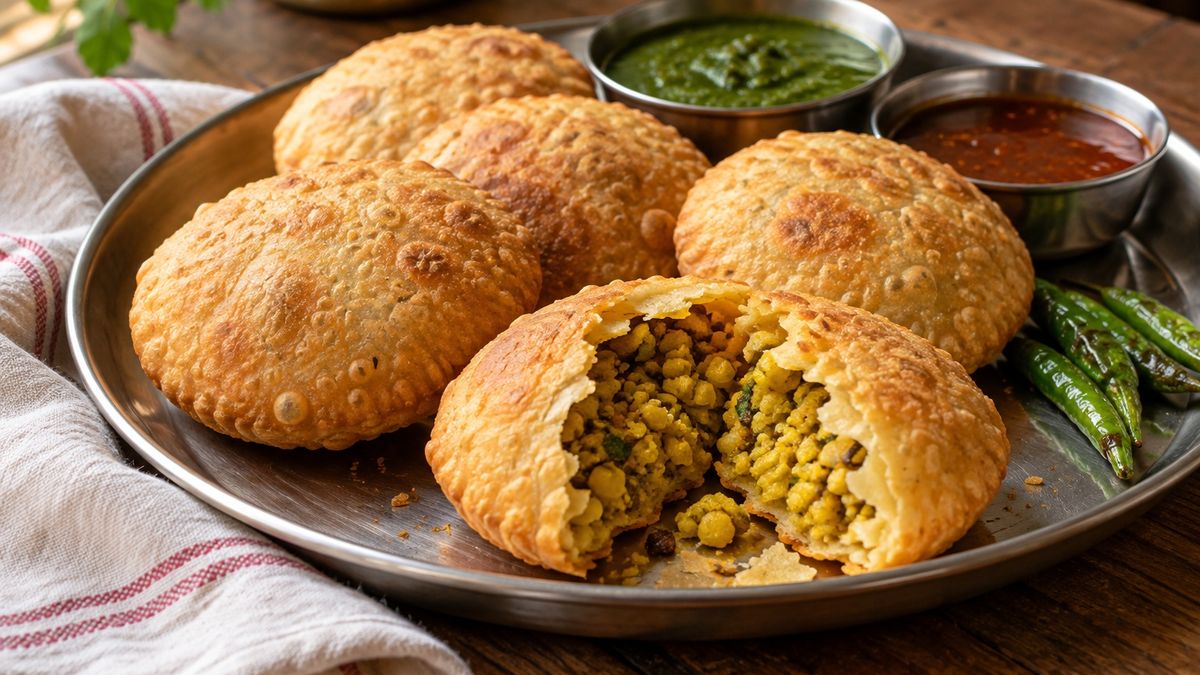
Khasta kachori: a flaky shell around a dry, heavily spiced moong dal filling. Frying them slowly is the entire secret, and it is the step everyone rushes.
Ingredients
Tap an ingredient to tick it off while you shop or measure.
- Pastry: 2 cups plain flour, 5 tbsp ghee or oil, salt
- Filling: 1 cup moong dal, soaked 3 hours
- 1 tsp ginger-chilli paste, asafoetida, fennel, coriander seeds
- 1 tsp coriander-cumin powder, ½ tsp garam masala, dried mango powder
- 2 tbsp oil, salt
- Oil for deep frying
Method
- Rub the ghee into the flour with salt until a fistful holds together, then knead a soft dough and rest 20 minutes.
- Grind the soaked dal coarsely, without water.
- Temper asafoetida, fennel and crushed coriander seeds in oil, add the dal and all the spices, and cook 6-8 minutes until dry. Cool it.
- Roll small discs, fill, seal tightly and flatten gently.
- Fry on low heat for 12-15 minutes. Rushing leaves the pastry raw and flat.
- Serve with date-tamarind and green chutney.
Tips
- The oil should be just hot enough that the kachori rises slowly, not instantly.
- The filling must be completely dry or the kachori bursts.
Storing and reheating
The dry filling makes kachori good keepers. Cooled completely and boxed, they last two or three days at room temperature and a week in the fridge. Never box them warm, as the steam softens the pastry. To crisp them again, give them six or seven minutes in a 180C oven; a microwave turns the crust leathery.
What you can swap
- Urad dal in place of moong gives you the Rajasthani style, sharper and heavier. Green peas also make a good filling, but they hold more water so need longer cooking to dry out.
- To avoid all plain flour, use half wholewheat. The pastry comes out firmer, so add another half tablespoon of fat to the rub.
- No amchur? Half a teaspoon of crushed dried pomegranate seeds (anardana) does the job. Do not use lemon juice, which adds moisture and makes the kachori split.
- Oil works instead of ghee in the pastry. You still get flaky layers, just without the short, crumbly bite ghee gives.
What to serve with it
A traditional Gujarati Diwali and festival snack, served with date-tamarind and green chutney. They are also eaten with morning tea, and many households crush a cold one into a bowl and top it with curd, chutney and sev to make a quick chaat.
Mistakes to avoid
- Do not seal them with dry edges. Wet the rim with a fingertip of water, then pleat and press firmly, or they open along the seam in the oil.
- Do not roll them thick in the middle and thin at the rim. Pressing them out with your fingers works better than a rolling pin, which gives uneven thickness.
- Do not knead the dough hard or for long. Kachori pastry wants a soft, barely worked dough; working it develops gluten and the shell turns chewy instead of flaky.
- Do not fill the kadai. These fry slowly, so four or five at a time; any more and the oil cools and they drink it up.
Questions people ask
Why are my kachori flat instead of puffed?
Almost always too little fat rubbed into the flour. There should be enough ghee that a fistful of the floured mixture holds its shape when you squeeze it. Too much water in the dough has the same effect, so keep it soft but not sticky.
My kachori burst while frying. What went wrong?
Air was sealed inside along with the filling, and it expands in the hot oil. Press the air out with your fingers as you close each one, and keep the sealed side down when you flatten it so the seam is not stretched thin.
Can kachori be baked?
They can, brushed with ghee at 180C for twenty-five to thirty minutes. The shell crisps up but you lose the blistered crust and the inner layers that frying gives. For a festival, fry them.