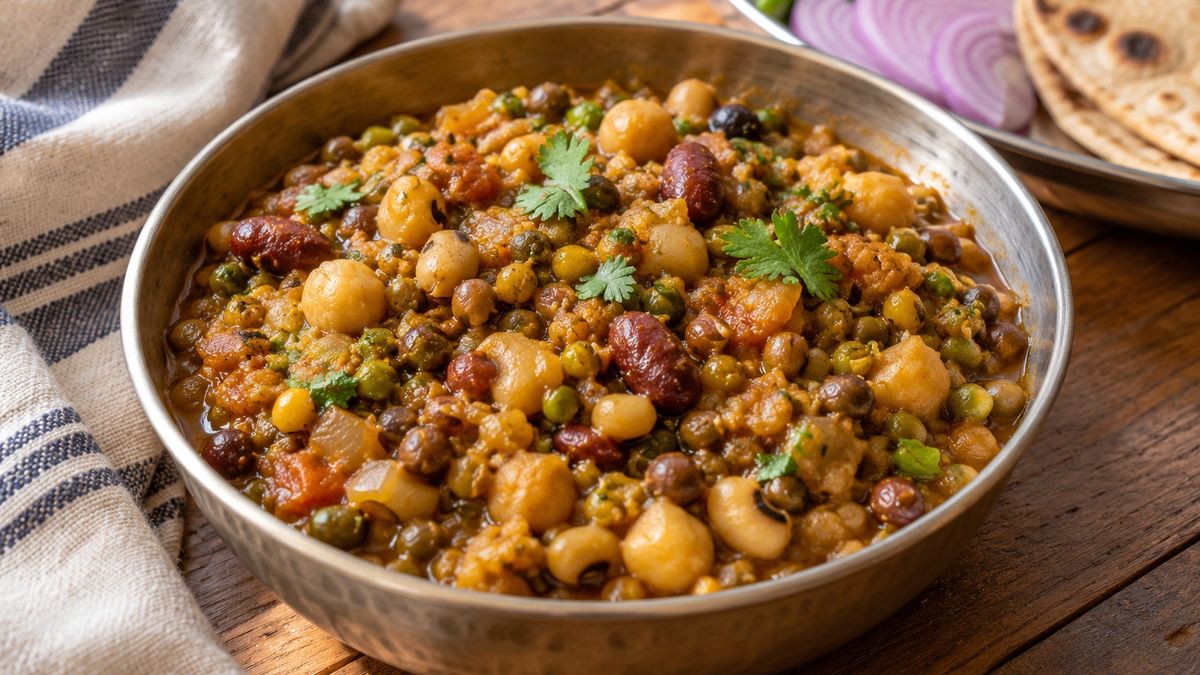
Katholકઠોળ
The Gujarati way with any pulse: black-eyed beans, val, chickpeas or moth beans simmered in a light, sweet-and-sour gravy, eaten with rotli.
Ingredients
Tap an ingredient to tick it off while you shop or measure.
- 1 cup dried pulses (black-eyed beans, val or chickpeas), soaked overnight
- 2 tbsp oil, mustard seeds, cumin, asafoetida, curry leaves
- 1 tsp ginger-chilli paste
- 1 tomato
- Turmeric, coriander-cumin powder, 1 tsp jaggery, salt
- Lemon and coriander
Method
- Pressure cook the soaked pulses with salt for 4-5 whistles until soft.
- Temper oil with mustard seeds, cumin, asafoetida and curry leaves, then add the ginger-chilli paste.
- Add the tomato and ground spices and cook 3 minutes.
- Add the cooked pulses with their water and the jaggery, and simmer 10 minutes.
- Finish with lemon and coriander and serve with rotli or bhakhri.
Tips
- Sprouting the pulses first means they cook softer and a little faster.
- Keep the gravy loose; it thickens as it cools.
Storing and reheating
Kathol tastes better the next day once the spices settle. Do not leave it out more than five or six hours, as pulse gravies sour quickly. It keeps three days in the fridge and a month in the freezer. Reheat with a quarter cup of water and bring it to a proper boil rather than just warming it through, then add fresh coriander and lemon again.
What you can swap
- Each pulse needs its own timing. Chickpeas: soak overnight, 6-7 whistles. Black-eyed beans: 5-6 hours, 4 whistles. Val: 8 hours, 4-5 whistles. Moong: 4 hours, 3 whistles. Do not apply one recipe to all of them.
- No tomato? Half a teaspoon of tamarind pulp or two kokum pieces, added only once the pulses are soft.
- Sugar can replace jaggery, but use half as much. It will not give you the darker colour or the rounder sweetness jaggery brings to the gravy.
- Without a pressure cooker, simmer covered in a pot for an hour and a quarter to an hour and a half. A pinch of baking soda speeds it up, but too much and the pulses dissolve and the gravy goes slimy.
What to serve with it
Eat it with hot rotli, bhakhri or puri, with rice and chaas alongside, and lemon and raw onion on the side. Many Gujarati families avoid kathol through the four months of Chaturmas, so it appears more often in the weeks either side.
Mistakes to avoid
- Throw away the soaking water instead of cooking the pulses in it. Fresh water gives a cleaner taste and sits lighter.
- Do not add jaggery, tomato or lemon before the pulses are soft. Acid firms up the skins, and after that no amount of simmering will soften them.
- Old stock will never soften, however long you soak or cook it. When buying, look for glossy beans of even colour and avoid dull, shrivelled ones.
- Do not rush the pulses in straight after the spices. Cook the tomato and ground spices for a full three minutes, or the raw taste of turmeric and coriander-cumin stays in the gravy.
Questions people ask
Why are my pulses still hard after cooking?
Three usual reasons: old stock, not enough soaking time, or acid added too early. The last is the most common. To rescue them, add a pinch of baking soda and give two or three more whistles, accepting that some will break down.
Can I cook kathol without soaking?
Not chickpeas or val, which never soften properly unsoaked. Moong and black-eyed beans can get by on two hours in hot water if you are in a hurry. With no time at all, use extra water in the cooker and double the whistles.
How do I make kathol easier to digest?
Be generous with the asafoetida in the tempering and add a pinch of carom seeds, which is exactly why Gujarati cooking pairs both with pulses. Discard the soaking water and use plenty of ginger. A squeeze of lemon at the table helps too.