Khichuખીચું
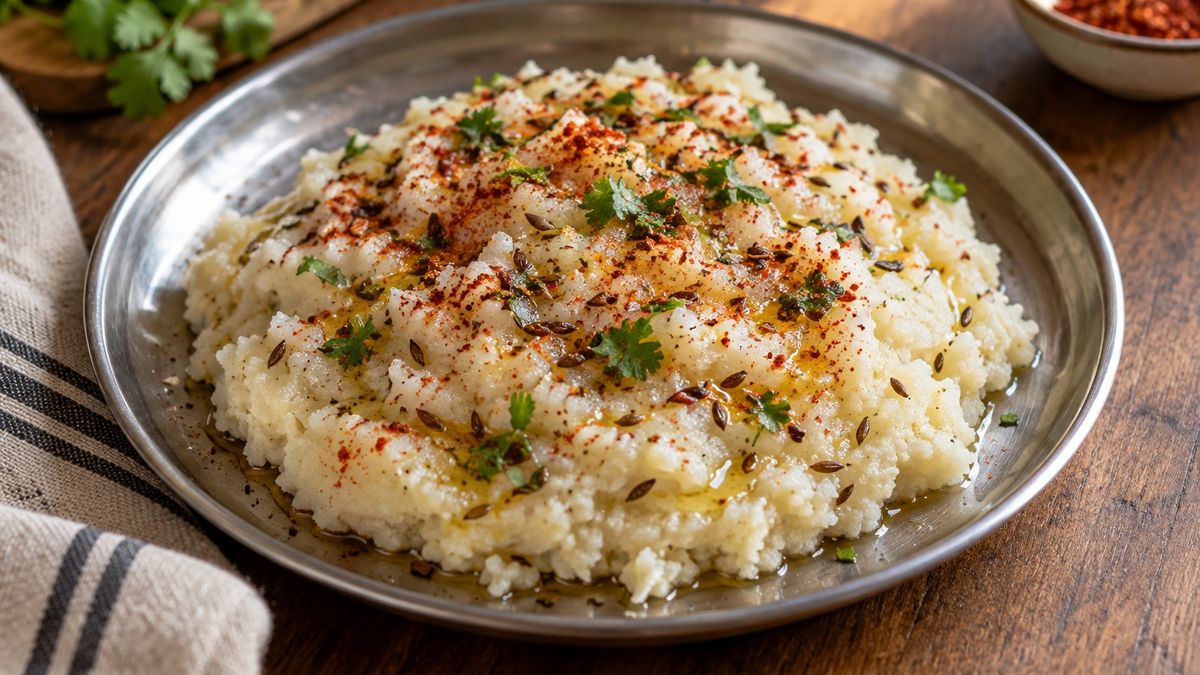
Rice flour cooked into a soft, steaming dough, eaten hot with oil and chilli powder poured over it. It is the same mixture papads are made from, and it belongs to rainy evenings.
Ingredients
Tap an ingredient to tick it off while you shop or measure.
- 1 cup rice flour
- 2½ cups water
- 1 tsp cumin, a pinch of asafoetida
- 2 green chillies, finely chopped
- ½ tsp papad khar (optional)
- Salt
- To serve: oil and red chilli powder
Method
- Boil the water with cumin, asafoetida, chillies, salt and papad khar.
- Lower the heat, tip in all the rice flour at once and stir fast.
- Cover and cook on low for 5 minutes.
- Mash well with a wooden spoon until no lumps remain.
- Serve hot with oil and red chilli powder poured over the top.
Tips
- Khichu is only good hot; it stiffens as it cools.
- It works without papad khar, though the taste is slightly different.
Storing and reheating
Khichu is not a dish you keep. Twenty minutes on the plate and it cools into something rubbery. Keep the pan covered over a vessel of hot water until you eat. Leftovers last a day in the fridge; to bring them back, steam the pieces in a sieve for four or five minutes. Avoid the microwave, which dries the edges hard.
What you can swap
- Use bajra flour in place of rice flour and you get bajri khichu, which is darker, heavier and a winter thing. It needs a little more water and noticeably more effort to mash smooth.
- No papad khar is not a problem. A pinch of baking soda gives some softness, but it does not reproduce the slippery smoothness or the particular smell that papad khar brings.
- Instead of green chillies, half a teaspoon of red chilli powder can go into the boiling water. The heat spreads evenly through the khichu, but you lose the fresh bite of green chilli.
- Groundnut oil is the best thing to pour over the top. Ghee works, though it makes the khichu feel heavier. Mix a pinch of red chilli powder into the oil before pouring.
What to serve with it
A monsoon and winter evening dish. The hot khichu goes onto a thali, you make a well in the middle, pour in oil and red chilli, and eat it with your fingers. Chaas or a papad on the side.
Mistakes to avoid
- Do not add the flour until the water is at a full boil. In water that is merely hot the flour seizes into lumps straight away, and those lumps will not mash out later.
- Never let it cool before mashing. Work it with a wooden spoon while it is hot, pressing it down against the pan. Mashing cold khichu is close to impossible.
- Do not guess the water. One cup of flour to two and a half cups of water is the ratio. Too little and the khichu is dry and cracked; too much and it slumps into paste.
- Keep the heat low while it cooks covered. On high heat it catches on the base and the burnt smell runs through the whole batch.
Questions people ask
My khichu is lumpy. What should I do?
Tip all the flour into boiling water at once and stir immediately and fast; adding it gradually is what makes lumps. If lumps have already formed, cover and steam for five minutes, then press and mash with the back of a wooden spoon against the side of the pan.
What is papad khar and do I need it?
Papad khar is the alkaline salt used in papad making. It makes khichu slippery, soft and slightly different in taste. It is not essential; khichu is good without it, just not quite the same. If you use it, keep to half a teaspoon, since more turns the taste salty and bitter.
The khichu has gone cold and hard. Can I save it?
Break it into pieces and steam them in a sieve for four or five minutes and they soften up. The other option is to shallow fry the pieces on a tawa with a little oil until crisp on both sides, which turns them into something to eat with tea.