Lilva Kachoriલીલવા કચોરી
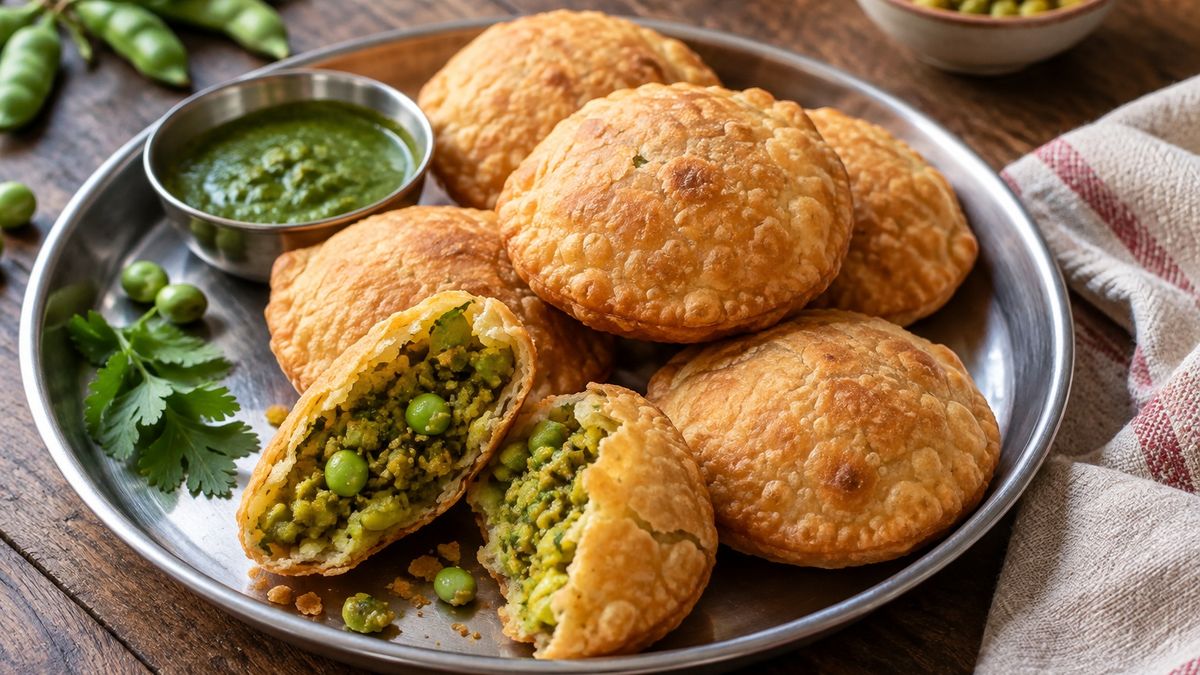
When fresh pigeon peas (lilva) arrive in winter, Surat and Vadodara start frying lilva kachori: a crisp pastry shell around a green, coarsely crushed filling of fresh tuvar seeds, coconut and green chilli. Best eaten hot with date-tamarind chutney.
Ingredients
Tap an ingredient to tick it off while you shop or measure.
- For the pastry: 2 cups plain or wheat flour, 4 tbsp hot oil, salt
- Filling: 2 cups fresh pigeon peas (lilva), coarsely crushed
- ½ cup grated fresh coconut
- 1 tsp ginger-chilli paste
- 1 tsp sugar, lemon juice, salt
- Cumin, sesame seeds, asafoetida, garam masala
- Oil for deep frying
Method
- Rub the hot oil and salt into the flour and knead a firm dough with water. Rest 20 minutes.
- Temper cumin, sesame seeds and asafoetida in oil, add the crushed lilva and sauté 5-7 minutes.
- Mix in coconut, ginger-chilli, sugar, salt, garam masala and lemon juice, then cool the filling.
- Roll small discs, fill, seal well and flatten gently.
- Fry on low-medium heat until golden. Rushing leaves the pastry raw inside.
- Serve hot with date-tamarind chutney.
Tips
- Crush the lilva coarsely; a smooth paste loses the texture.
- Fill only after the mixture has cooled, or the kachori burst while frying.
- Frozen tuvar lilva works when fresh is out of season.
Storing and reheating
Fried kachori keep a day at room temperature and three days in the fridge. Do not eat them cold from the fridge: eight minutes in a 180C oven, or turning them on a low tawa, brings the pastry back. Uncooked shaped kachori freeze well on a tray for a month and go straight from the freezer into medium-hot oil, no thawing needed.
What you can swap
- No fresh lilva? Use frozen pigeon peas, boiled five minutes and drained before crushing. Unboiled, the filling tastes raw.
- Green peas work too, but they are sweeter, so cut the sugar and add a little more lemon.
- If using desiccated coconut instead of fresh, sprinkle two tablespoons of milk over it and leave ten minutes, otherwise the filling is dry.
- In place of garam masala, use your own coriander-cumin powder with a pinch of ground clove and cinnamon. Keep the spicing light so the lilva still comes through.
What to serve with it
Made only in the winter lilva season, which is why it counts as a special dish in Gujarati homes. Eaten as an afternoon or evening snack with date-tamarind chutney and masala chai, and often made for Diwali and Uttarayan guests.
Mistakes to avoid
- Roll the pastry to an even thickness. Thin edges with a thick centre split at the edges while frying.
- Do not drop them into very hot oil. The kachori should rise slowly to the surface. Smoking oil sets the crust instantly and the inside stays raw.
- Do not fry too many at once. The oil temperature drops and the pastry soaks up oil and eats greasy.
- Keep the filling away from the edge when sealing. A clean rim seals properly and will not burst in the oil.
Questions people ask
Why do my kachori burst while frying?
Three causes: the filling went in warm, filling got caught in the seal, or the dough was soft. Firm dough, cooled filling and a clean rim are what stop it.
Plain flour or wheat flour for a crisp shell?
Plain flour gives a crisper, flakier shell. Wheat flour is a little harder and heavier but tastes more homemade. Half and half gets you both. Either way the four tablespoons of hot oil rubbed into the flour are essential.
Should lilva be shelled or used in the pod?
Lilva are the seeds taken out of the pigeon pea pod, so you use only the shelled seeds. The thin skin on each seed does not need removing; it disappears into the coarse crush.