Masala Bhaatમસાલા ભાત
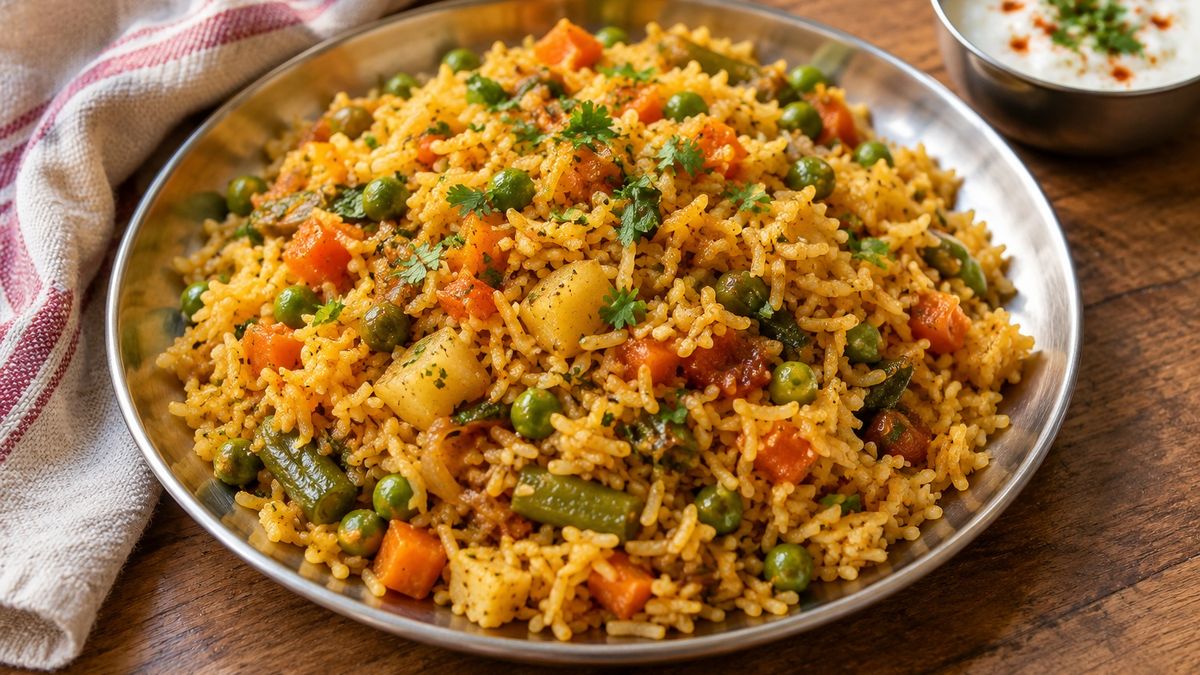
Rice cooked in one pot with vegetables and whole spices. With kadhi or plain yoghurt beside it, this is a complete meal and almost no washing up.
Ingredients
Tap an ingredient to tick it off while you shop or measure.
- 1½ cups rice, soaked 20 minutes
- 1 cup chopped vegetables (peas, carrot, beans, potato)
- 1 onion, 2 tomatoes
- Cinnamon, cloves, bay leaf, cumin
- 1 tsp ginger-chilli paste
- 1 tsp coriander-cumin powder, ½ tsp turmeric, 1 tsp garam masala
- 3 tbsp oil or ghee, salt, coriander
Method
- Crackle cumin and the whole spices in oil, then fry the onion until golden.
- Add ginger-chilli paste and tomatoes and cook until soft.
- Stir in the vegetables and ground spices and cook 3 minutes.
- Add the drained rice, fold gently, then pour in 3 cups hot water with salt.
- Cover and cook on low for 15 minutes, then rest, covered, for 5 minutes.
- Fluff with a fork, add coriander and serve with kadhi or yoghurt.
Tips
- Never stir cooked rice; loosen it with a fork.
- Water depends on the rice: twice the volume for ordinary rice.
Storing and reheating
Masala bhaat keeps two days in the fridge. Do not leave it sitting hot in the cooker, where the trapped steam turns the grains gluey. Spread it on a plate, cool it, then box it. To reheat, sprinkle over two spoons of water, cover and steam on low for five minutes. Dry reheating just hardens the rice.
What you can swap
- With basmati, cut the water to one and a half times the rice rather than double. The grains stay long and completely separate, which looks a little out of place in this dish.
- Goda masala in place of garam masala turns it into a Maharashtrian masale bhaat: darker and deeper, but effectively a different dish.
- No whole spices? Add half a teaspoon of garam masala with the cumin at the start and another half teaspoon at the end.
- Go easy on watery vegetables like bottle gourd and tomato. Stick to peas, carrot, beans and potato, and consider two tablespoons of cashews or peanuts.
What to serve with it
Masala bhaat with kadhi is the settled Gujarati pairing. Without kadhi, serve plain curd, papad and chaas. Many homes make it as a one-pot dinner or when guests turn up unannounced, and it travels well in a tiffin.
Mistakes to avoid
- Drain the soaked rice properly, five minutes in a colander. The water clinging to it is not in your measurement and it is what turns the rice to mush.
- Use hot water only. Cold water breaks the grains and you end up with some raw and some collapsed in the same pot.
- Do not overdo the tomato. Its acidity leaves the grains firm at the centre and stretches out the cooking time.
- Keep the lid on for the first ten minutes. Every peek lets out steam, and after that your water measurement no longer holds.
Questions people ask
Why does my masala bhaat turn sticky?
Either too much water, or undrained soaked rice, or stirring after the rice went in. Fold the rice through once, add the water, put the lid on, and keep the spoon out of the pot after that.
Can I make masala bhaat in a pressure cooker?
Yes. Do the tempering and vegetables in the cooker itself, then add the rice and hot water, using one and a half times water to rice rather than double. Switch off after two whistles and let the pressure drop on its own before opening.
What is the difference between pulav and masala bhaat?
A pulav leans on whole spices and a light fragrance, with separate grains. Masala bhaat uses ground spices freely, coriander-cumin, turmeric and garam masala, which gives a darker colour and a slightly wet, cohesive rice that is right for eating with kadhi.