Paneer Parathaપનીર પરાઠા
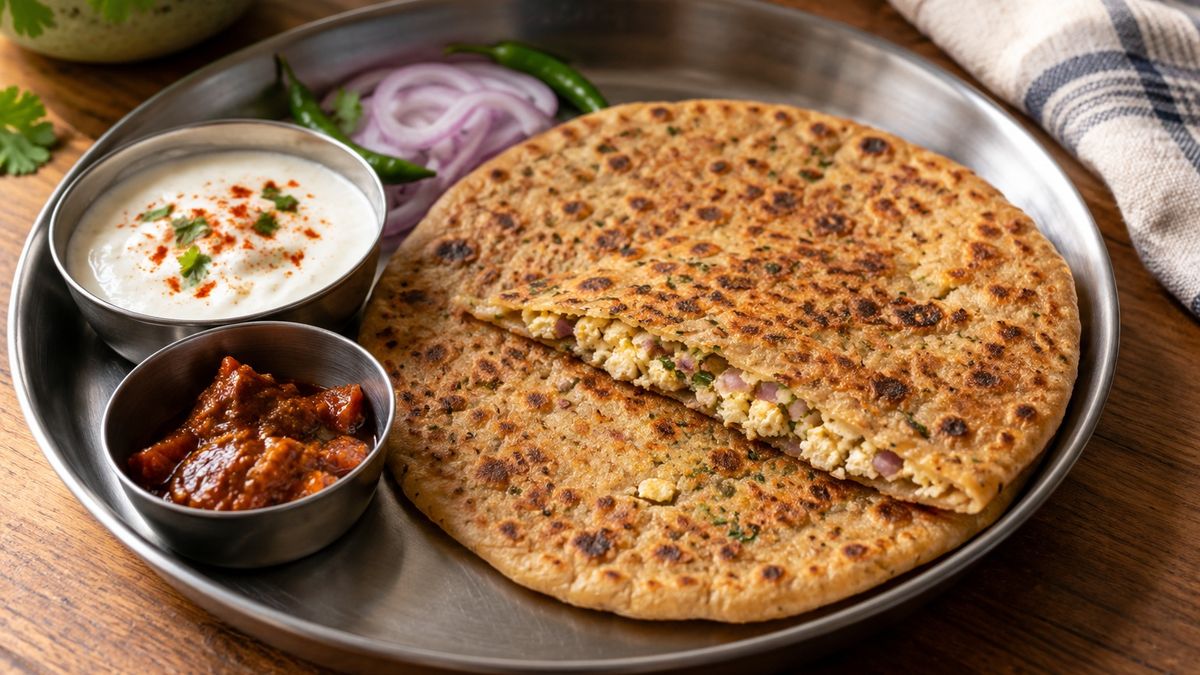
Parathas stuffed with grated, lightly spiced paneer. Lighter than aloo paratha and far higher in protein, which makes them a good school-morning breakfast.
Ingredients
Tap an ingredient to tick it off while you shop or measure.
- 3 cups wheat flour
- 250 g paneer, grated
- 1 onion (optional), 2 green chillies, ginger
- ½ tsp garam masala, 1 tsp coriander-cumin powder, a pinch of dried mango powder
- Coriander and salt
- Ghee or butter for roasting
Method
- Knead a soft dough and rest it, covered, for 20 minutes.
- Mix the grated paneer with chillies, ginger, spices, coriander and salt. Salt at the last moment, or the filling weeps.
- Fill each ball of dough and seal it completely.
- Roll gently and roast on a hot tawa with ghee on both sides.
- Serve hot with yoghurt, chhundo or pickle.
Tips
- Grate the paneer fine; big pieces tear the paratha.
- If using onion, salt it first and squeeze out the water.
Storing and reheating
Wrapped in a cloth, cooked parathas stay soft four or five hours, which suits a tiffin. They keep two days in the fridge and should be reheated on a tawa with ghee; a microwave turns the paneer chewy and rubbery. Do not make the filling far ahead, as paneer weeps, and even in the fridge do not hold it more than two or three hours.
What you can swap
- Shop paneer is often firm. Soak it in warm water for ten minutes and squeeze it before grating, and it softens right up.
- If the filling feels slack, mix in a tablespoon of roasted gram flour. It takes up the moisture and adds good flavour.
- No amchur? Lemon juice works, but mix it into the spices first rather than pouring it onto the grated paneer.
- Crush a pinch of kasuri methi between your palms into the filling for a dhaba-style taste.
What to serve with it
A breakfast dish, with butter and curd. In Gujarati homes it appears on Sundays or when guests come, served with chhundo. Because paneer is mild it is the paratha children actually eat, so it travels well in a lunch box with masala chai or chaas.
Mistakes to avoid
- Do not mash the paneer into a paste. It should stay shredded; mashed paneer makes the filling claggy and the paratha heavy.
- Keep watery things like tomato or cabbage out of the filling. Paneer gives up moisture of its own, and anything extra tears the paratha.
- Do not use frozen paneer straight from the freezer. Thaw it fully and squeeze it out, or water leaks onto the tawa.
- Keep the heat moderate. On a fierce flame you get dark spots outside while the paneer in the middle is still cold.
Questions people ask
Can I make the filling the day before?
Better not. Standing paneer releases water and the filling goes loose. Grate the paneer and measure the spices separately, then combine them and add the salt about ten minutes before you roll.
Why does the filling leak out?
The paneer was coarsely grated, the filling was wet, or the ball was not sealed. Grate fine, salt at the last moment, and roll with light pressure working from the centre outwards.
Can I freeze them?
Cooked parathas freeze well with butter paper between them; thaw and reheat on a tawa. Raw stuffed parathas are not worth freezing, because as they thaw the water from the paneer soaks into the dough.