Paneer Sabji & Parathaપનીરનું શાક અને પરાઠા
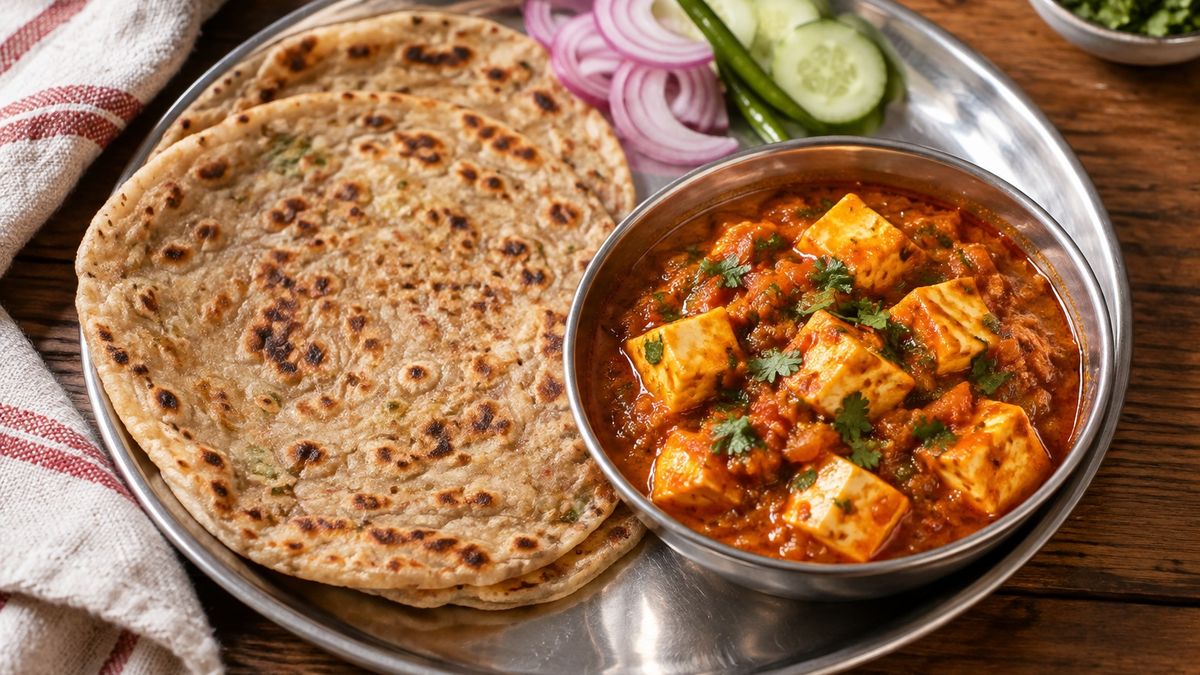
Paneer in a rich tomato-cashew gravy with ghee parathas is the dish Gujarati families make when guests arrive. It is mild enough for children and still feels festive.
Ingredients
Tap an ingredient to tick it off while you shop or measure.
- 250 g paneer, cubed
- 3 tomatoes, 1 onion, 8-10 cashews
- 1 tsp ginger-garlic paste
- 1 tsp red chilli powder, ½ tsp turmeric, 1 tsp coriander-cumin powder, ½ tsp garam masala
- 2 tbsp butter or oil, ¼ cup cream
- Dried fenugreek leaves, salt, coriander
- For the paratha: wheat flour and ghee
Method
- Simmer the onion, tomatoes and cashews in a little water, cool and blend to a smooth paste.
- Fry the ginger-garlic paste in butter, add the purée and cook until the oil separates.
- Add the spices and ½ cup water and simmer 5 minutes.
- Add the paneer, cream and crushed dried fenugreek and cook only 3-4 minutes.
- Roast the parathas in ghee and serve with the sabji, topped with coriander.
Tips
- Overcooking paneer makes it rubbery; add it at the very end.
- Soaking the paneer in warm water for 10 minutes keeps it soft.
Storing and reheating
The gravy keeps two days in the fridge, but paneer left sitting in it goes firm, so many cooks store the gravy alone and add the paneer at serving. Reheat gently with a splash of milk or water, without boiling. Parathas keep two days in the fridge once cool; warm them on a tawa on both sides, since a microwave leaves them limp.
What you can swap
- No cashews? Use 2 tbsp melon seeds or 8 to 10 blanched almonds. The gravy comes out just as thick and rich.
- Instead of cream, whisk in ¼ cup fresh curd, but lower the heat and stir as it goes in or it will split. Milk malai works too.
- No kasuri methi? Dried fenugreek leaves or a pinch of ground fenugreek will do. Use it sparingly, it turns bitter.
- For a no-onion-no-garlic version, double the cashews, use four tomatoes instead of three, and swap ginger-garlic for plain ginger with a pinch of asafoetida.
What to serve with it
Not an everyday sabji but a dish for guests or a Sunday lunch. Besides paratha it goes with bhakhri, naan or jeera rice. A plate of raw onion salad, lemon and papad alongside makes it a full meal.
Mistakes to avoid
- Let the simmered tomato and onion cool before blending. Hot mixtures build pressure in a mixer and can push the lid off.
- If you want a restaurant-smooth gravy, pass the purée through a sieve right after blending. That one step makes a real difference.
- Do not throw the spices straight into the purée. Cook the purée until the oil separates first, then add the spices, or the raw tomato sourness sits on top of them.
- Keep the paratha dough soft and use as little dusting flour as you can. Excess dry flour makes the paratha stiff on the tawa.
Questions people ask
Why is my gravy not restaurant red?
The colour comes from Kashmiri chilli, not ordinary hot chilli powder. Use ripe red tomatoes and bloom the chilli in the butter for a second or two before the purée goes in. Home gravy will never look quite like a shop's, which uses colour and far more butter.
How do I keep the paneer soft?
If you are using shop paneer, soak the cubes in warm salted water for ten minutes, then drain and add them. And once they are in the gravy, do not cook longer than three or four minutes. The paneer only needs to heat through.
Can I make the gravy ahead?
Yes. The cooked tomato, onion and cashew base keeps four days in the fridge or a month in the freezer. At serving, reheat it and add water, spices, paneer and cream. This is how to handle it when guests are coming.