White Sauce Pastaવ્હાઇટ સોસ પાસ્તા
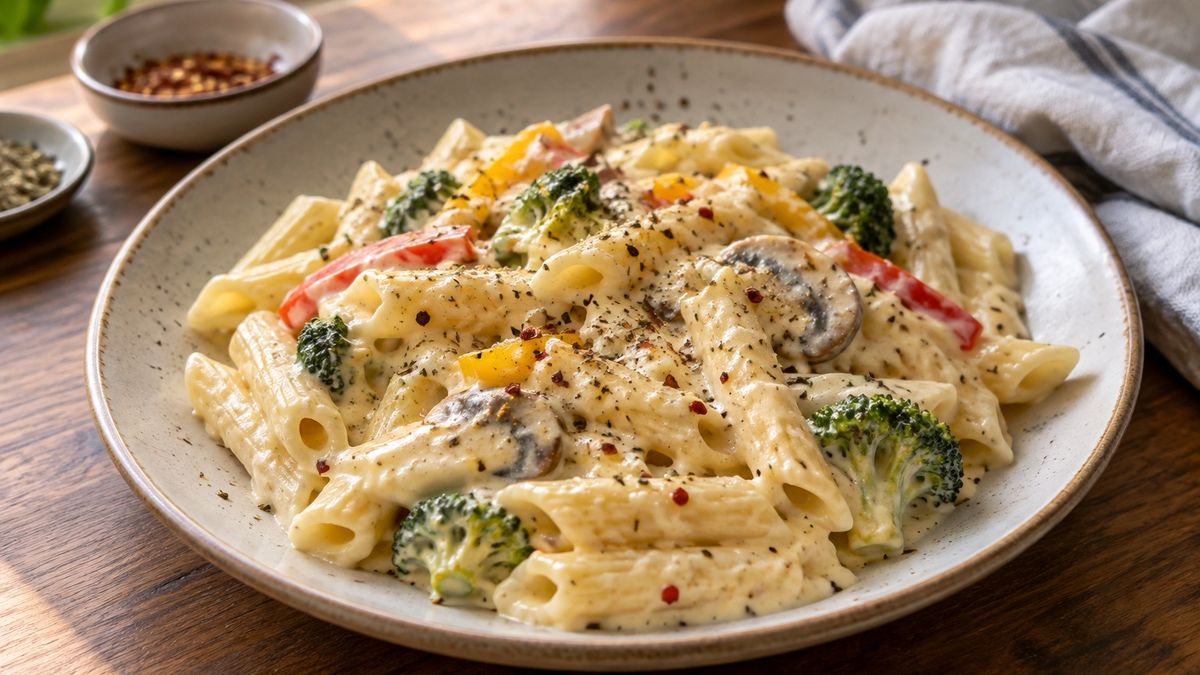
Pasta and vegetables in a béchamel of butter, flour and milk. Mild rather than spicy, which is exactly why small children ask for it.
Ingredients
Tap an ingredient to tick it off while you shop or measure.
- 250 g pasta
- 3 tbsp butter, 3 tbsp plain flour
- 2½ cups milk
- 1 cup vegetables (capsicum, carrot, sweetcorn, broccoli)
- 4 garlic cloves, finely chopped
- ½ tsp crushed pepper, oregano, salt
- ½ cup grated cheese
Method
- Boil the pasta in salted water and drain.
- Fry the garlic in butter for 30 seconds, add the flour and cook 2 minutes on low without letting it colour.
- Add the milk a little at a time, stirring constantly, until the sauce is smooth and thick.
- Season with pepper, oregano, salt and the cheese.
- Fold in the sautéed vegetables and the pasta.
- Serve hot; the sauce thickens as it cools.
Tips
- Adding the milk all at once gives lumps; go slowly.
- If it thickens too much, loosen with warm milk.
Storing and reheating
This is a milk-based sauce, so do not leave it out more than two hours, less in summer. It keeps two days in the fridge. As it cools the sauce sets around the pasta and the pasta swells and softens. Reheat on low with a quarter cup of warm milk, stirring. A microwave on full power splits the sauce and leaves it oily.
What you can swap
- To avoid maida, dissolve two tablespoons of cornflour in a little cold milk and stir it into the hot milk at the end. The sauce comes out glossier and thinner, without the creamy body that a flour roux gives.
- Oil can replace the butter, but the difference in flavour is obvious. Half butter and half oil is a reasonable middle path.
- Do not throw away half a cup of the pasta cooking water. When the sauce gets too thick, loosen it with that instead of milk; it thins the sauce and helps it cling to the pasta.
- Shape matters. Penne, fusilli and macaroni hold the sauce; white sauce slides off spaghetti and pools at the bottom of the bowl.
What to serve with it
In Indian homes this is usually a dinner made on request by the children rather than part of a traditional meal. Serve it with garlic bread or plain toast, and chilli flakes and oregano to scatter over. It tends to appear on birthdays and holidays.
Mistakes to avoid
- Do not drain the pasta and leave it bare. Toss it with a spoon of oil or leave a little water clinging to it; bare drained pasta clumps into a solid lump within five minutes.
- Do not boil the pasta until completely soft. Take it off a minute before the packet time, because it goes on cooking once it is in the sauce.
- Go lightly on the salt in the sauce. Cheese is salty on its own, so taste after the cheese goes in and only then decide.
- Do not add the cheese over high heat. Take the pan off or turn the flame right down. In a boiling sauce the cheese turns stringy and releases oil.
Questions people ask
Why did my white sauce split or turn grainy?
Either the heat was too high or the milk was cold. After cooking out the flour, turn the flame right down and add milk at room temperature or slightly warm, a little at a time. If it has already gone grainy, pass it through a strainer and then thicken it again on low heat.
Can the sauce be made ahead?
Yes, though it thickens considerably as it cools. Whisk in warm milk a little at a time over low heat when you come back to it. To stop a skin forming, press a lid or a sheet of film right down onto the surface of the sauce while it cools.
Can the sauce taste good without cheese?
It can, but the seasoning has to work harder. Double the garlic, be generous with crushed pepper, and add oregano and a pinch of grated nutmeg. A spoon of malai or fresh cream stirred into the milk gives the sauce body without any cheese at all.