Punjabi Kadhi Pakoraપંજાબી કઢી પકોડા
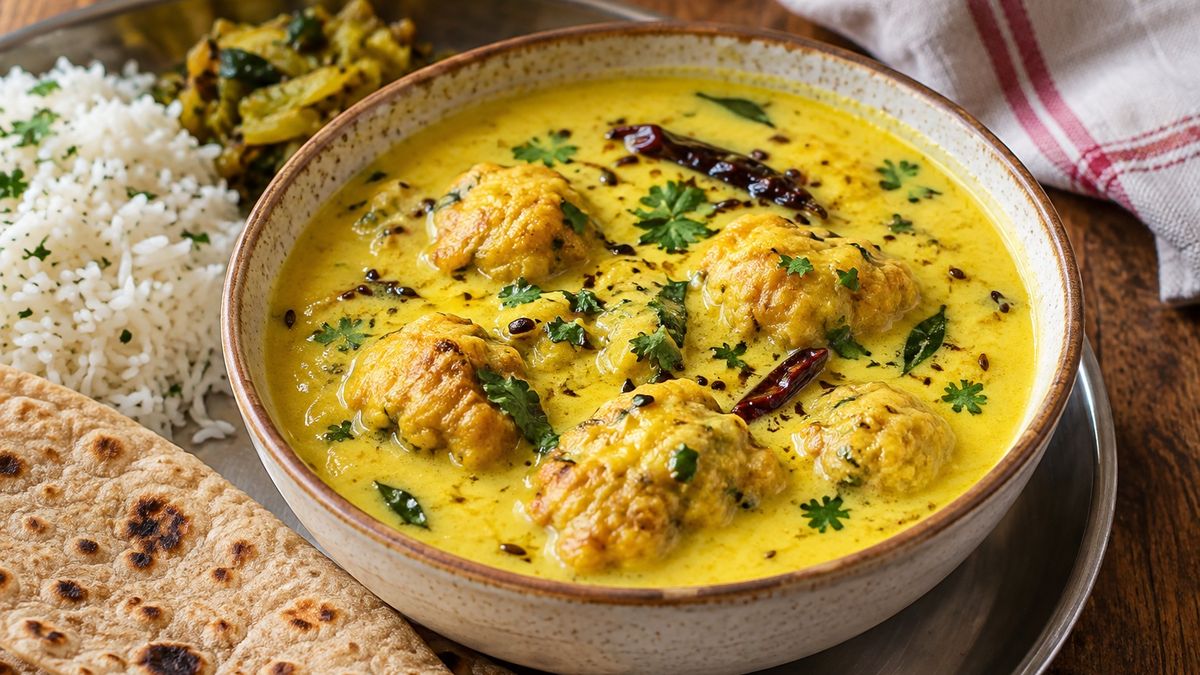
Gujarati kadhi is thin and gently sweet; Punjabi kadhi is thick, tangy and full of gram-flour fritters. It is eaten with rice, not as a side.
Ingredients
Tap an ingredient to tick it off while you shop or measure.
- For the kadhi: 1 cup sour yoghurt, ½ cup gram flour, 4 cups water
- 1 onion, ginger-garlic, turmeric, chilli powder, salt
- For the pakora: 1 cup gram flour, 1 onion, chillies, carom seeds
- Tempering: ghee, mustard seeds, fenugreek, cumin, asafoetida, dried chilli
- Oil for frying, coriander
Method
- Whisk the yoghurt, gram flour and water until completely smooth.
- Fry the onion and ginger-garlic in oil, add the mixture and bring to a boil while stirring constantly.
- Simmer for 40-45 minutes until the kadhi thickens.
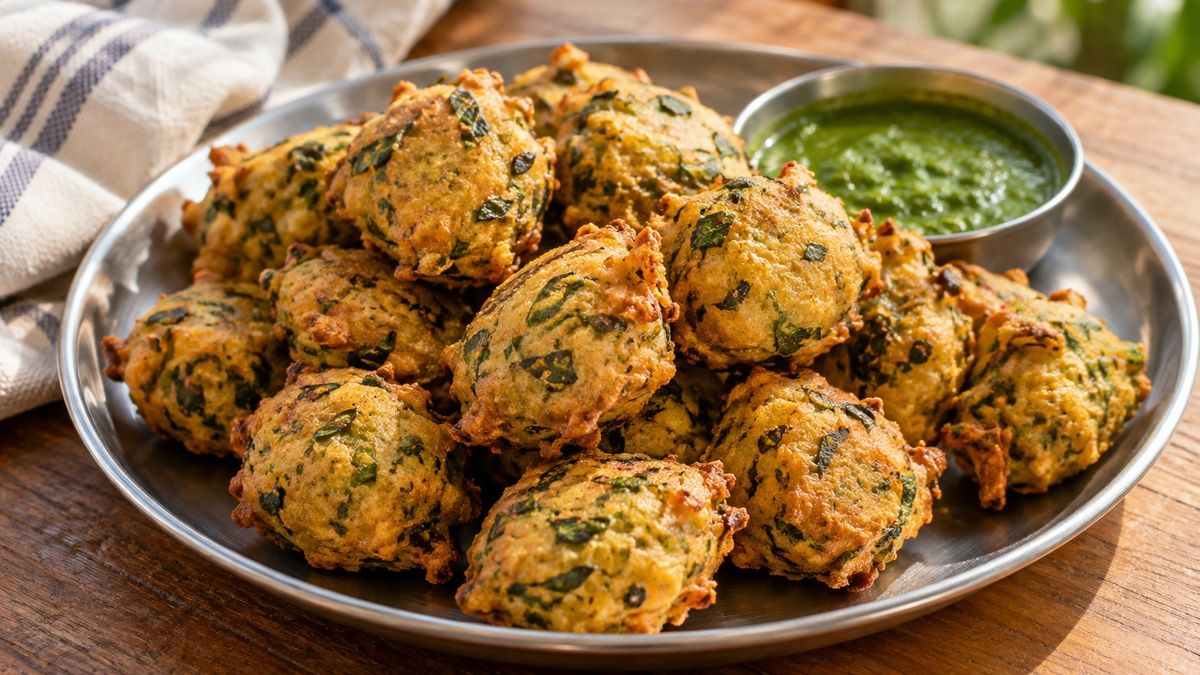
- Meanwhile make a thick pakora batter and fry small fritters.
- Drop the pakoras into the kadhi and let them soak for 10 minutes.
- Pour over a ghee tempering and serve with rice.
Tips
- Add the pakoras at the end or they dissolve.
- The longer the kadhi simmers, the better it tastes.
Storing and reheating
It keeps three days in the fridge and tastes more settled the next day. The kadhi thickens as it cools, so loosen it with hot water rather than cold. Reheat it on low heat, stirring, without letting it boil hard. If you expect leftovers, keep the pakoras separate; left sitting in the kadhi they dissolve completely.
What you can swap
- If your curd has not soured, stir in a teaspoon of lemon juice or leave it out overnight. Sour curd is the whole flavour of this dish.
- Not in the mood to fry pakoras? Serve the kadhi plain with fried boondi scattered over; plenty of Punjabi homes do it that way.
- No fenugreek seeds? Leave them out of the tempering rather than substituting something else, which would change the taste.
- No ghee? Temper in oil, but spoon half a teaspoon of ghee over at the end. That aroma is what makes it kadhi.
What to serve with it
In Punjabi homes kadhi is eaten with hot rice, not roti: a mound of rice, the kadhi poured over, and a pinch of butter on top. Alongside go an onion-and-lemon salad, papad and mango pickle. For many families this is fixed Sunday lunch.
Mistakes to avoid
- Do not add salt, and do not stop stirring, until the kadhi has come to its first boil. Salt at that stage, or a pause in stirring, will split the curd.
- Do not cover the pan during that first boil. The kadhi climbs the sides and boils over.
- Lower the flame once it has boiled. On high heat it catches at the bottom and the whole pot tastes scorched.
- Do not drop the fried pakoras in dry. Dip them in hot water for a minute, squeeze gently to push out the oil, then add them. The pakoras go soft and the kadhi stays clean.
Questions people ask
Why did my kadhi split?
The curd and gram flour were not whisked smooth, the stirring stopped before the first boil, or salt went in too early. The gram flour is what holds the curd together, so make sure there is not a single lump in the mix.
Why does my kadhi taste of raw flour?
It has not simmered long enough. Gram flour needs a slow forty to forty-five minutes to cook out. A finished kadhi coats the back of a spoon, has darkened slightly, and shows oil floating on the surface.
What is the difference between Punjabi and Gujarati kadhi?
Gujarati kadhi is thin and slightly sweet, made from buttermilk, simmered only a few minutes and served without pakoras. Punjabi kadhi is thick, made from sour curd and a good amount of gram flour, simmered long, and has fritters in it.