Rajma Chavalરાજમા ભાત
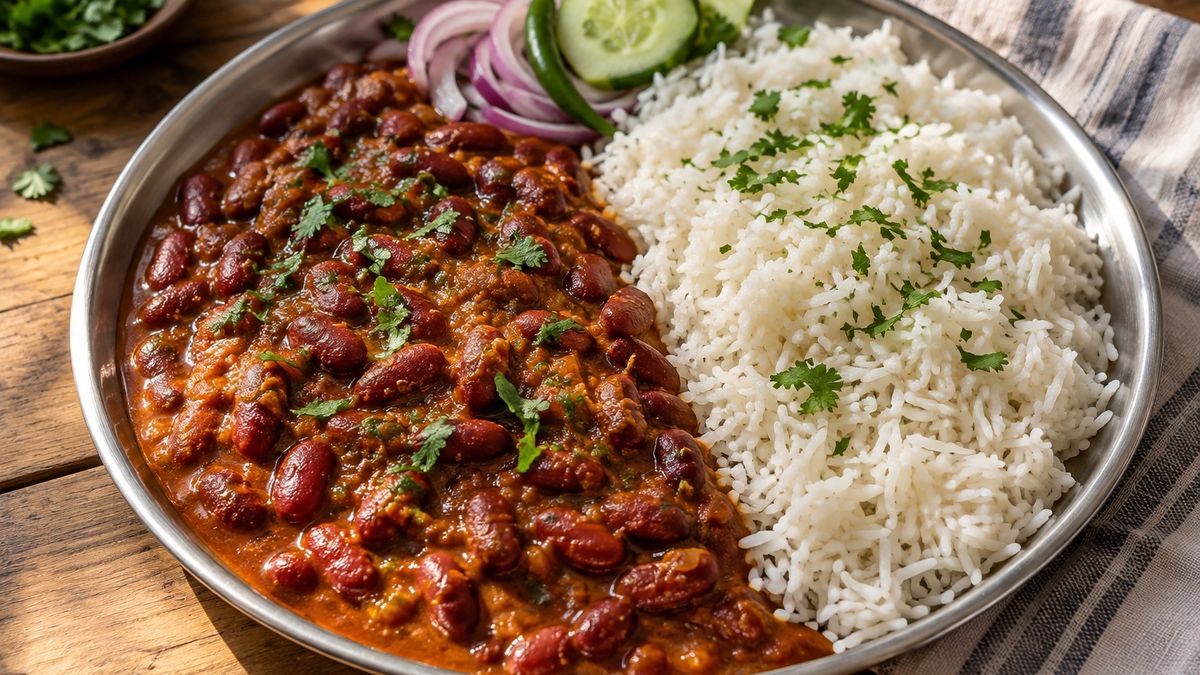
Rajma chaval came from north India and is now a regular in Gujarati homes as well: kidney beans in a thick onion-tomato gravy, spooned over hot rice.
Ingredients
Tap an ingredient to tick it off while you shop or measure.
- 1½ cups rajma (kidney beans), soaked overnight
- 2 onions, 3 tomatoes
- 1 tsp ginger-garlic paste
- 1 tsp red chilli powder, 1 tsp coriander-cumin powder, ½ tsp garam masala, ½ tsp turmeric
- Oil, cumin, bay leaf, asafoetida
- Salt, coriander and steamed rice
Method
- Pressure cook the soaked rajma with salt for 6-7 whistles until completely soft.
- Heat oil with cumin, bay leaf and asafoetida and fry the onions until golden.
- Add ginger-garlic paste and tomato purée and cook until the oil separates.
- Add the spices and the beans with their water and simmer 20 minutes, mashing a few beans.
- Finish with coriander and serve over hot rice.
Tips
- The beans must be properly soft; undercooked rajma is hard to digest.
- A long, slow simmer is what thickens the gravy and deepens the flavour.
Storing and reheating
The rajma gravy keeps three or four days in the fridge and tastes better on day two; it freezes for a month. It thickens a lot as it cools, so add water when reheating. Keep the rice separate, and do not leave cooked rice out more than a couple of hours in warm weather, since rice spoils faster than the beans do.
What you can swap
- Smaller Kashmiri or chitra rajma soften faster than the big beans and give a thicker gravy. Black-eyed peas can be used without soaking at all.
- With no pressure cooker, soaked rajma need an hour and a half to two hours in an open pot. A pinch of baking soda cuts that down.
- If your tomatoes are bland, use two tablespoons of tomato puree with half a teaspoon of tamarind pulp to get both colour and sourness.
- To cook it without onion and garlic, double the asafoetida, grate the tomatoes in and mash a few more beans to give the gravy body.
What to serve with it
In north Indian homes this is Sunday lunch: gravy ladled over hot rice with raw onion, lemon and curd alongside. It has become a regular on Gujarati menus too, where it is eaten with ghee-smeared rotli as readily as with rice.
Mistakes to avoid
- Never skip the soak. Without eight to ten hours in water, rajma simply do not soften properly, however many whistles you give them.
- Do not throw away the cooking liquid. That starchy water is what gives the gravy body and colour; without it the sauce stays thin and flat.
- Do not undercook the tomato masala. It has to fry until the oil separates, or a raw tomato smell runs through the whole pot.
- Do not mash all the beans. Five or six spoonfuls is enough; the rest should stay whole.
Questions people ask
My rajma are still hard after pressure cooking. Why?
Usually the beans are old; anything over a year will not soften no matter how long you cook it. The other causes are too short a soak, or acid such as tomato going into the cooker before the beans were tender.
Can I use canned rajma?
You can. Drain and rinse them, add them once the masala is ready and simmer only ten minutes. You lose the starchy cooking water, so mash a few beans to thicken the gravy instead.
The gravy is too thin. How do I thicken it?
Simmer it uncovered on low for another ten minutes and mash some beans against the pan with the back of a spoon. There is no need for flour; the beans' own starch does the work.