Tomato Rasamટામેટા રસમ
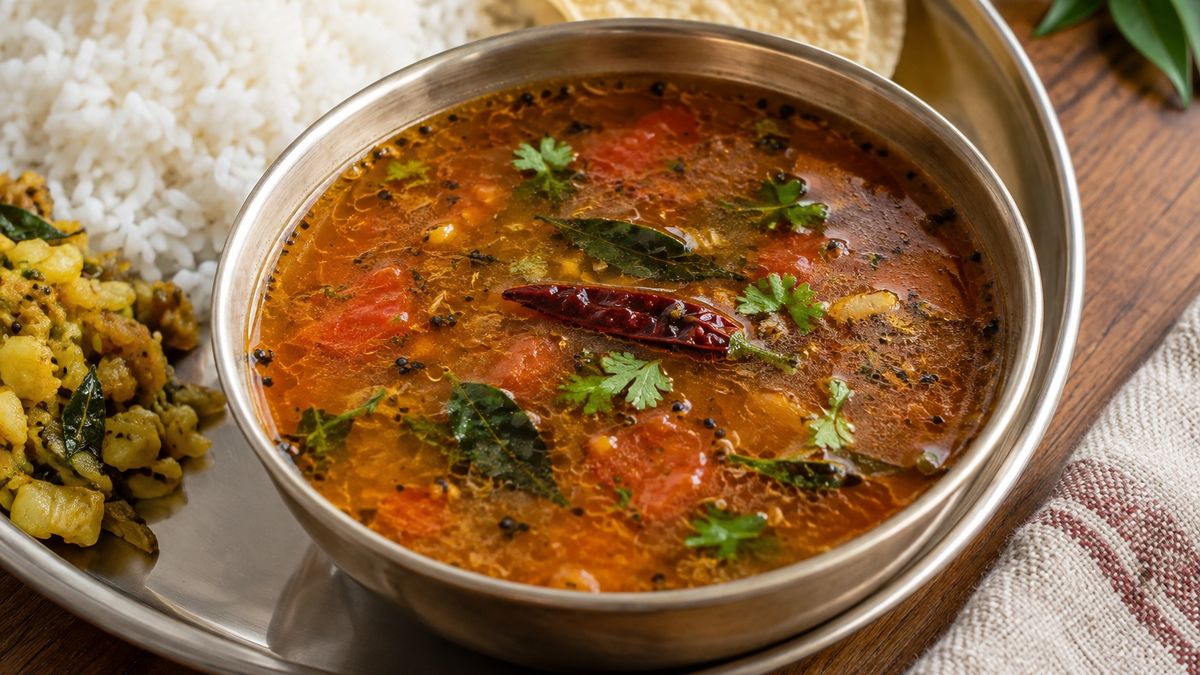
A thin, peppery broth of tamarind, tomato and crushed spices. Drink it from a cup with a cold, or pour it over rice for a light meal.
Ingredients
Tap an ingredient to tick it off while you shop or measure.
- 2 tomatoes
- 2 tbsp tamarind pulp
- ¼ cup cooked toor dal
- 1 tsp rasam powder, or crushed pepper and cumin
- 3 garlic cloves, turmeric, a little jaggery
- Tempering: ghee, mustard seeds, cumin, asafoetida, curry leaves, dried chilli
- Coriander, salt
Method
- Squash the tomatoes by hand and simmer with tamarind, turmeric, salt and 2 cups water.
- Add the rasam powder and crushed garlic, and simmer 10 minutes.
- Stir in the cooked dal and a little jaggery and heat until frothy, but do not let it boil hard.
- Pour over a ghee tempering of mustard seeds, cumin, asafoetida, curry leaves and chilli.
- Finish with coriander and serve over rice or in a cup to drink.
Tips
- Never let rasam boil hard; take it off when it froths.
- Freshly crushed pepper and cumin beat any packet powder.
Storing and reheating
Rasam keeps two days in the fridge and tastes deeper on the second day. In hot weather do not leave it out beyond four hours; despite the tamarind and tomato, the dal in it will sour. Reheat only until frothy. Boiling it hard drives off the fresh aroma and flattens the taste. Add a little hot water if it has thickened.
What you can swap
- No rasam powder? Coarsely pound a teaspoon each of black peppercorns and cumin and mix in half a teaspoon of coriander-cumin powder. Plenty of South Indian homes make pepper rasam exactly this way.
- Two tablespoons of lemon juice can replace the tamarind, but add it only after the heat is off. The sourness will be sharper and less rounded.
- Masoor or moong dal work instead of toor. Rasam can even be made with no dal at all, in which case it comes out thinner and more drinkable.
- If you would rather not use ghee, temper in oil. Coconut oil makes it taste noticeably more South Indian.
What to serve with it
Poured over rice as the first course; in a South Indian meal rasam comes after sambar and before curd rice. It is also drunk from a cup like soup, and is often the first thing offered to someone with no appetite after a fever.
Mistakes to avoid
- Do not leave the tamarind water raw. Simmer it with the tomatoes for at least eight to ten minutes, or the raw tamarind sourness catches at the back of the throat.
- Do not add the rasam powder at the start. Stirred into already-simmering liquid it keeps its aroma; added early, the fragrance cooks away.
- Do not add more than a quarter cup of dal. More than that and you have made sambar, not rasam. Rasam is meant to be thin.
- Crush the garlic rather than making a paste. The rough-crushed cloves are what give rasam its particular smell; a paste makes the flavour heavy and uniform.
Questions people ask
What is the difference between rasam and sambar?
Sambar has much more dal, includes vegetables and is thick. Rasam has only a token amount of dal, no vegetables, and is thin and sharp with pepper and tamarind, meant for pouring over rice or drinking.
Why should rasam froth rather than boil?
As it comes to the boil, particles of dal and tomato rise and form a froth. That froth is the signal that it is ready and the heat should go off. Boil past that point and you lose both the pepper aroma and the brightness of the tamarind.
My rasam is far too sour. Can I fix it?
Add half a teaspoon of jaggery and a quarter cup of hot water, then heat through for two minutes; that settles the sourness considerably. Alternatively stir in two extra tablespoons of cooked dal, which absorbs it.