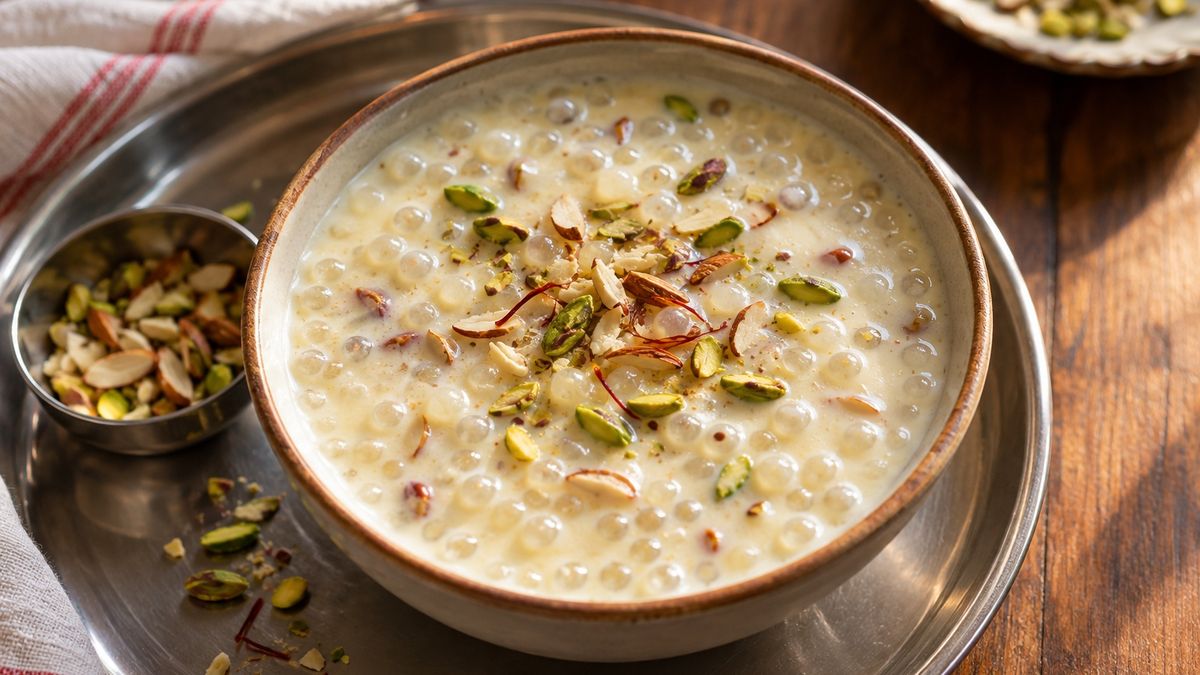
Sabudana Kheerસાબુદાણાની ખીર
Sago simmered slowly in milk with cardamom and saffron. Light and sweet, and the usual way a fasting day ends in a Gujarati home.
Ingredients
Tap an ingredient to tick it off while you shop or measure.
- ½ cup sabudana, soaked 1 hour
- 1 litre milk
- ½ cup sugar
- ½ tsp cardamom powder, a pinch of saffron
- Cashews, almonds, raisins
Method
- Bring the milk to a boil and lower the heat.
- Add the drained sabudana and simmer 15-20 minutes, stirring now and then, until the pearls turn clear.
- Add the sugar and cook 5 minutes more.
- Stir in the saffron, cardamom and dry fruit.
- Serve warm or chilled.
Tips
- Stir now and then or it catches at the bottom.
- It thickens as it cools, so keep it looser than you want it.
Storing and reheating
Covered in the fridge it keeps two days. As it cools the sabudana keeps drinking milk and the kheer sets very thick, almost like halwa, which is normal. Stir in half a cup of hot milk before serving and it comes back. Reheat on low heat, stirring constantly, or it catches on the base. Do not leave it out; it is a milk dish.
What you can swap
- If you want jaggery instead of sugar, switch off the flame and let the kheer cool a little first. Jaggery in hot milk will curdle it.
- No saffron? Leave it out. Nothing needs adding for colour, and the cardamom carries enough fragrance on its own.
- If you only have half a litre of milk, dissolve a quarter cup of milk powder into it. The kheer tastes fuller.
- Chopped dates can replace the raisins, but add them at the end. Cooked long, dates dissolve and turn the kheer brownish.
What to serve with it
A fast-day dish, especially on Ekadashi and Janmashtami. Otherwise it is served chilled after a summer meal and warm in winter. In many homes a small bowl of it goes round on New Year or any auspicious day, simply as something sweet.
Mistakes to avoid
- Do not tip the soaking water into the milk with the sabudana. That water is full of released starch, which makes the kheer gluey.
- Do not add the sabudana to boiling milk. Lower the heat first. Dropped into a rolling boil, the pearls go sticky on the outside and clump together.
- Do not add the sugar before the pearls turn clear. In sweetened milk they take far longer to cook and stay raw in the centre.
- Before you pour the milk in, rinse the pan and leave two tablespoons of water in the base. The milk then does not catch and the kheer never picks up a scorched smell.
Questions people ask
My sabudana never turns transparent. Why?
Either it was not soaked long enough or the sugar went in too early. Soak for a full hour; when you press a pearl there should be no white dot left in the middle. And add the sugar only once the pearls have cooked through.
The kheer keeps sticking to the bottom. What helps?
Use a heavy-based pan and keep the heat low. Once the sabudana is in, scrape the base with the spoon every two or three minutes rather than just stirring the surface. The starch separates and settles straight onto the bottom.
Can this be eaten during a fast?
Yes, sabudana kheer is a traditional farali sweet. Milk, sabudana, sugar, cardamom and dry fruit are generally all allowed. Families differ on things like raisins or saffron, so follow what your household keeps.