Sambarસંભાર
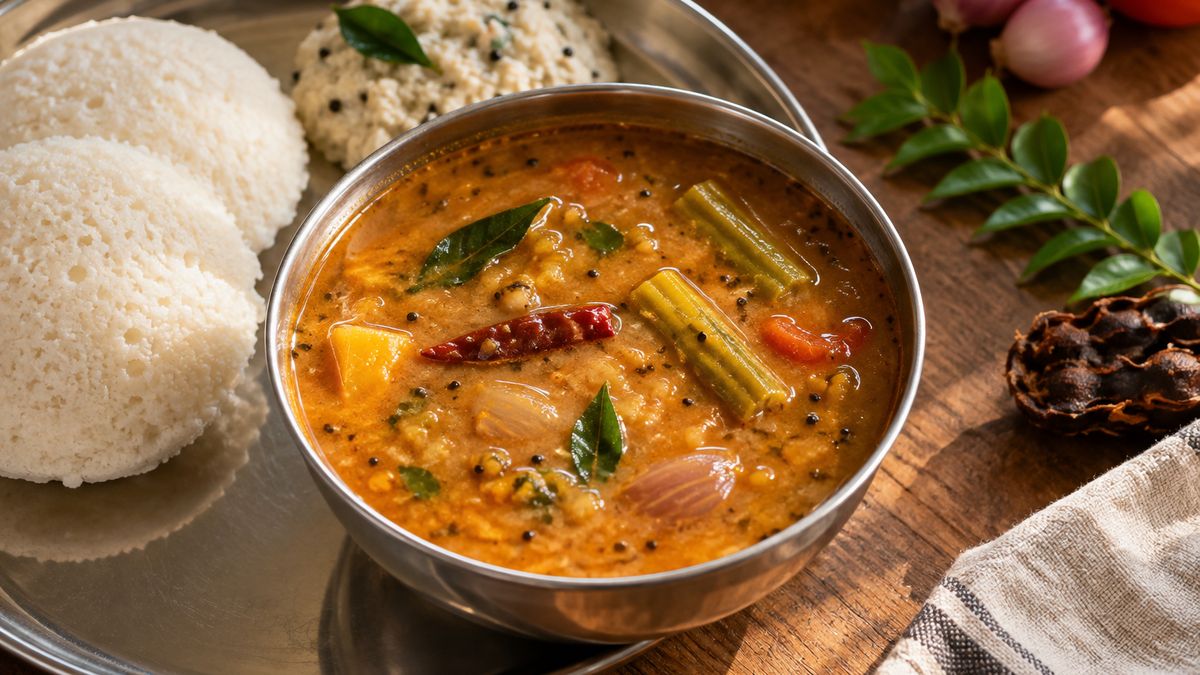
Toor dal simmered with vegetables, tamarind and sambar masala. It goes with idli, dosa, vada and plain rice, which is why it appears at every South Indian meal.
Ingredients
Tap an ingredient to tick it off while you shop or measure.
- 1 cup toor dal
- 1 onion, 1 tomato, 1 brinjal, 1 carrot, a few drumstick pieces
- 2 tbsp tamarind pulp
- 2 tbsp sambar powder, turmeric, salt
- Tempering: oil, mustard seeds, fenugreek, asafoetida, curry leaves, 2 dried chillies
- Coriander
Method
- Pressure cook the dal with turmeric for 4 whistles and whisk it smooth.
- Boil the vegetables in a little water until tender.
- Add tamarind, sambar powder and salt, and simmer 8-10 minutes to cook off the raw tamarind taste.
- Stir in the dal, adjust the water and simmer 5 minutes.
- Pour over a tempering of mustard seeds, fenugreek, asafoetida, curry leaves and dried chillies.
- Finish with coriander and serve with idli, dosa or rice.
Tips
- Always boil properly after adding tamarind, or it tastes raw.
- Drumsticks make a noticeable difference to the flavour.
Storing and reheating
Sambar keeps three days in the fridge and tastes better once the flavours settle. Do not leave it out more than four hours; dal with tamarind sours quickly. It thickens as it cools, so loosen it with hot water and bring it to a proper boil. Repeated reheating turns the vegetables to mush, so warm only what you need. It freezes for a month.
What you can swap
- No sambar powder? Dry roast and grind 2 tbsp coriander seeds, 1 tsp chana dal, ½ tsp fenugreek, 4 dried chillies and a pinch of asafoetida. Freshly ground is more fragrant anyway.
- In place of tamarind, use 2 tbsp kokum water or an extra sour tomato. Do not boil lemon juice in it; it turns bitter.
- Masoor or moong dal can replace toor dal, but they break down faster, so three whistles is enough and the sambar will be thinner.
- No drumsticks? Use pumpkin, bottle gourd, okra or green beans. Sauté okra separately in oil first or the sambar turns slimy.
What to serve with it
With idli, dosa, medu vada and uttapam, and in South Indian homes also poured over rice with a spoon of ghee. In Gujarati kitchens it gets made on the days idli or dosa are on the menu.
Mistakes to avoid
- Do not undercook the dal. It should whisk completely smooth. Half-cooked dal makes a grainy, watery sambar.
- Do not add all the vegetables at once. Carrot and drumstick first, brinjal and tomato later, or the brinjal dissolves while the carrot stays hard.
- Do not make the tempering in advance. Pour it over fresh with the heat off and cover the pot at once so the aroma stays in.
- Keep fenugreek in the tempering to half a teaspoon and do not let it darken. Burnt fenugreek makes the whole pot bitter.
Questions people ask
Should sambar be thin or thick?
Slightly thin with idli and vada so it can be soaked up, slightly thicker with rice. The dal absorbs water as it sits, so finish it a shade thinner than you want.
Why does my sambar taste bitter?
Usually burnt fenugreek in the tempering, or too much fenugreek in the spice mix. The other cause is tamarind that was not simmered long enough. Add the next ingredient the moment the fenugreek turns golden.
Can I make sambar without onion?
Yes, and many households never put onion in it. Increase the asafoetida a little and add an extra tomato to fill out the flavour. If you can get small sambar onions, using them whole gives the best result.