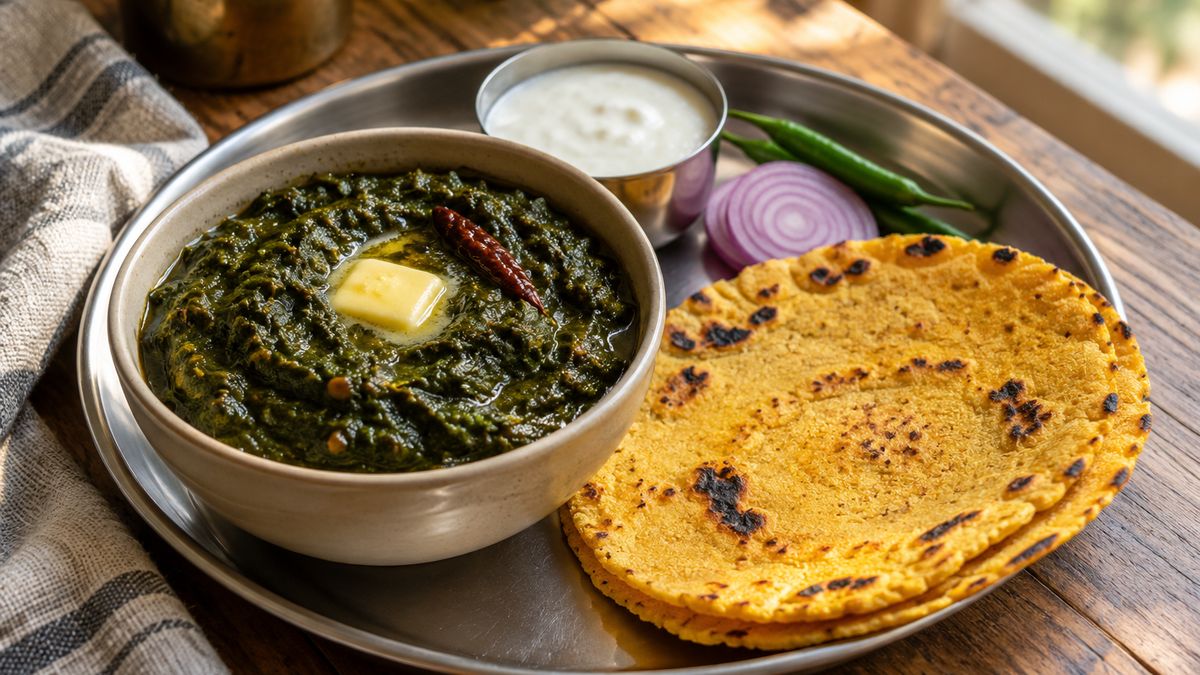
Sarson da Saag & Makki di Rotiસરસોં દા સાગ અને મકાઈની રોટી
The taste of a Punjabi winter: mustard greens and spinach slow-cooked and mashed, served with cornmeal flatbread, jaggery and white butter.
Ingredients
Tap an ingredient to tick it off while you shop or measure.
- 500 g mustard greens
- 250 g spinach
- 100 g bathua, if you can find it
- 2 tbsp cornmeal
- 1 onion, ginger, garlic, 2 green chillies
- Ghee or butter, salt
- For the roti: 2 cups cornmeal, hot water
Method
- Wash and chop the greens, then pressure cook with a little water for 4-5 whistles.
- Cool and mash well with a wooden masher; it should stay slightly coarse, not a purée.
- Add the cornmeal and cook on low for 20-25 minutes, stirring.
- Fry garlic, ginger, onion and chillies in ghee, stir into the saag and cook 10 minutes more.
- Knead the cornmeal with hot water and pat out rotis by hand, then roast on a tawa.
- Top the saag with butter and serve with the roti and a piece of jaggery.
Tips
- Makki roti cannot be rolled; pat it by hand, easiest between two sheets of plastic.
- The saag tastes even better the next day.
Storing and reheating
The saag keeps four or five days in the fridge. It freezes for a month, and it is better frozen before the tempering, with a fresh one added when you use it. Reheat with a splash of water and fresh butter. Makki roti has to be eaten hot; within five minutes of cooling it turns hard and crumbly.
What you can swap
- No bathua? Make up the weight with more spinach, or add a handful of methi leaves, which give the same faint bitterness.
- Without mustard greens this becomes a different dish altogether. Spinach and radish greens together is the nearest thing, but the pungent edge is missing; half a teaspoon of coarsely crushed mustard seed makes up a little of it.
- To thicken the saag without cornmeal, use two tablespoons of gram flour or a tablespoon of rice flour. With gram flour, cook it in for a further ten minutes, as raw besan smells raw.
- If the roti keeps cracking, work two tablespoons of wheat flour or one boiled mashed potato into the cornmeal. It binds better and pats out far more easily.
What to serve with it
In Punjab this is winter eating, when the mustard greens are ready in the fields. The full plate is makki roti, saag with white butter melting on it, a piece of gur, raw onion, a green chilli and cold lassi.
Mistakes to avoid
- Do not cut short the long slow cooking. Mustard greens given less than twenty or twenty-five minutes taste raw and bitter; in this dish the time is the flavour.
- Do not put the greens in a mixer. You get a smooth purée and the saag looks like a spinach sabzi. Mash it with a wooden masher or the back of a spoon.
- Do not drop the cornmeal in as a lump. Sprinkle it in while stirring, or slake it in a little water first, or you end up with pockets of raw flour in the saag.
- Never knead the roti dough with cold water. Cornmeal needs boiling water; cold-water dough will not come together and splits at the edges as you pat it.
Questions people ask
My saag tastes bitter. What now?
Almost always it has not cooked long enough. Give it ten more minutes on low and taste again. If it is still bitter, stir in more spinach and add a fresh tempering of garlic in ghee. Also strip out the thick stalks, which hold a good deal of the bitterness.
Why does my makki roti keep breaking?
Cornmeal has nothing to bind it the way wheat does. Knead with boiling water, work it well while it is still hot, and keep the dough covered, because dough that dries out cracks immediately. Pat it out with your palm on a plastic sheet, one roti at a time.
Can the saag be made in advance?
Yes, and it is the better way, since saag improves overnight. Make it without the tempering, refrigerate or freeze it, and add a fresh garlic and onion tempering in ghee when you serve. The roti, though, has to be made fresh each time.