Sev Khamaniસેવ ખમણી
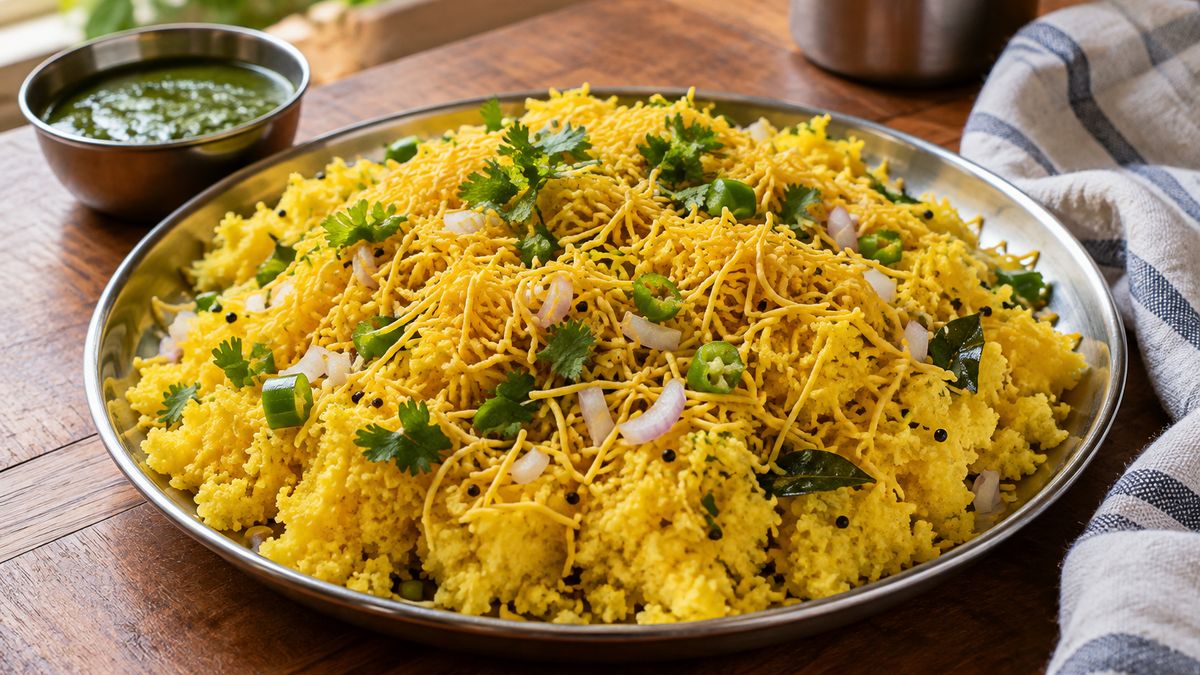
A Surat speciality: steamed chana dal khaman crumbled, tempered again with green chillies and garlic, then piled with sev, pomegranate and coconut. Grainier and far more savoury than ordinary khaman.
Ingredients
Tap an ingredient to tick it off while you shop or measure.
- 1½ cups chana dal, soaked 4 hours
- 1 tsp ginger-chilli paste, ½ tsp turmeric
- 1 tsp Eno, salt
- Tempering: 3 tbsp oil, mustard seeds, sesame, asafoetida, 4 garlic cloves, 2 slit chillies
- 1 tsp sugar, lemon juice
- To finish: fine sev, pomegranate, coconut, coriander
Method
- Grind the soaked dal coarsely with as little water as possible, then mix in ginger-chilli, turmeric and salt.
- Fold in the Eno, pour into a greased plate and steam 15-18 minutes.
- Cool, then crumble it with your hands.
- Temper mustard seeds, sesame, asafoetida, garlic and chillies in oil, add the crumbs and toss 3-4 minutes.
- Stir in sugar and lemon juice.
- Top with sev, pomegranate, coconut and coriander, and serve at once.
Tips
- Grind coarse; a fine paste loses the grainy texture that defines the dish.
- The garlic is what makes it taste Surti, so don't hold back.
Storing and reheating
Once the sev goes on, it has about ten minutes before the sev softens. The tempered khamani mixture, without sev, keeps two days in the fridge. To serve again, warm the mixture on a tawa with a teaspoon of oil for three or four minutes, then add fresh sev, pomegranate and coconut. The steamed cake can also be refrigerated whole, uncrumbled, for three days.
What you can swap
- No Eno? Use half a teaspoon of baking soda with a teaspoon of lemon juice, both stirred in just before the batter goes into the plate.
- If you have no pomegranate, leave it out. It is there for looks and a burst of freshness, not as a base flavour, and nothing needs to take its place.
- If fine sev is unavailable, crush thicker sev by hand. Ordinary spiced sev actually suits this better than plain nylon sev.
- If you avoid garlic, increase the asafoetida in the tempering and raise the ginger-chilli paste a little. You lose the Surti character but it will not taste flat.
What to serve with it
A Surat speciality, eaten at breakfast or with evening tea. In many homes it comes out as farsan when guests arrive, with green chutney and fried chillies alongside. It is eaten on its own rather than as part of a thali.
Mistakes to avoid
- Do not be generous with water when grinding the dal. Two or three tablespoons is enough. A thin batter steams into a dense cake that will not crumble into grains.
- Do not soak the dal for more than four hours. Over-soaked dal starts to sour, and you taste that sourness in the finished khamani.
- Do not stir after the Eno goes in, and get the plate into the steamer straight away. Batter left standing rises and then sinks.
- Do not crumble it in a mixer. Do it with your hands. A mixer reduces khamani to flour and you lose the grainy texture the whole dish rests on.
Questions people ask
What is the difference between sev khamani and khaman?
Khaman is made from gram flour and cut into squares. Sev khamani is made from soaked chana dal, steamed, then crumbled and tempered a second time, with sev on top. They taste and look quite different.
My khamani came out sticky and heavy. Why?
The dal was ground too fine, or with too much water. Grind it coarse with as little water as possible, and pulse the mixer in short bursts so the dal does not heat up. Dal that gets warm in the jar gives a gummy batter.
Can this be made the day before?
The steamed cake keeps three days in the fridge. On the day, crumble it, temper it fresh and add the sugar and lemon. The crumbled, tempered mixture also keeps two days, but the sev and pomegranate always go on at serving time.