Sheeroશીરો
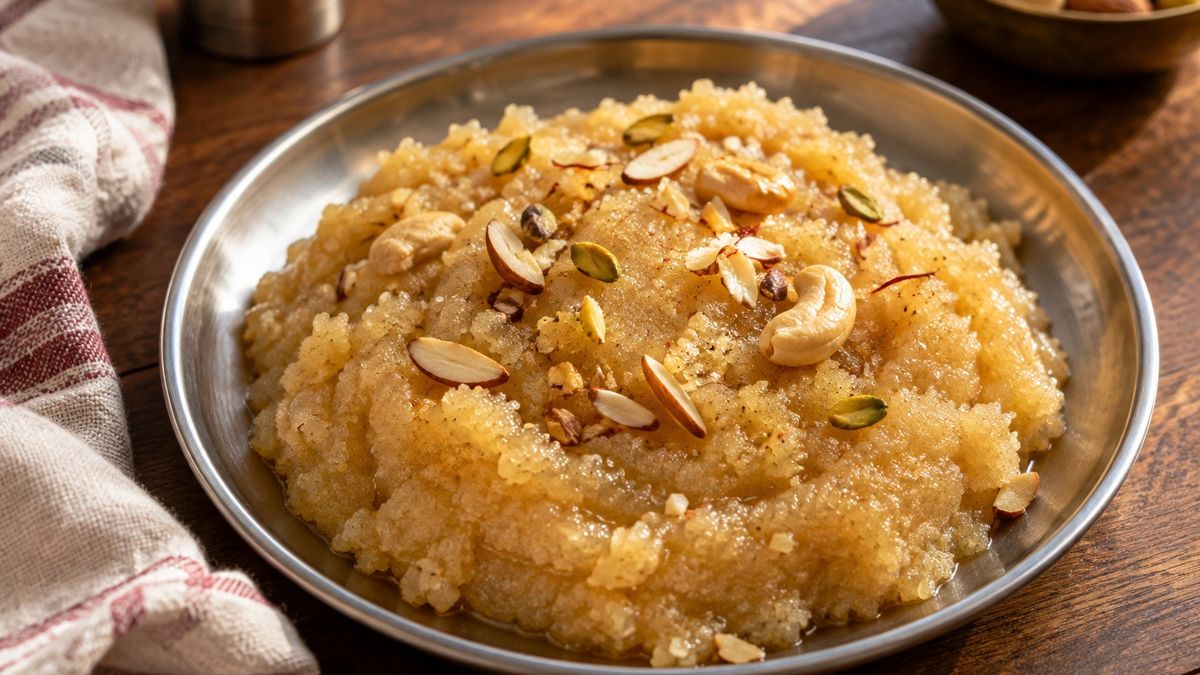
Semolina roasted slowly in ghee, then cooked with sweetened water until it turns glossy. Made for prasad, for festivals, and whenever someone arrives unexpectedly. The secret is ghee and patience.
Ingredients
Tap an ingredient to tick it off while you shop or measure.
- 1 cup semolina (rava)
- ¾ cup ghee
- 1 cup sugar
- 3 cups water or milk
- ½ tsp cardamom powder
- Cashews, almonds, raisins
- A pinch of saffron (optional)
Method
- Fry the cashews and almonds in ghee until golden and set aside.
- In the same ghee, roast the semolina on low heat for 10-12 minutes, stirring constantly, until golden and fragrant.
- Separately boil the water with sugar and saffron.
- Pour the boiling liquid slowly into the roasted semolina, standing back as it spits, and stir constantly.
- Cover and cook on low for 3-4 minutes until the ghee separates.
- Stir in cardamom and the fried nuts, and serve hot.
Tips
- How well you roast the semolina decides the whole dish, so don't rush it.
- Cold liquid makes lumps; it must be boiling.
Storing and reheating
With ghee and sugar in it, sheero keeps reasonably well: a day at room temperature in cool weather and three or four days in the fridge. The ghee sets as it cools and the sheero goes firm. Sprinkle over two spoons of milk or water and warm it covered on low for three minutes, or forty seconds in the microwave, and the softness returns.
What you can swap
- Coarse semolina gives a grainy sheero and fine Bombay rava a smooth one. Both are good; coarse rava just needs two or three minutes more roasting.
- Jaggery can replace the sugar measure for measure. Add it off the heat at the end rather than in the boiling water, or the sheero turns sticky.
- Milk instead of water makes it richer, but it catches on the base more easily and will not keep beyond two days. Half milk, half water is a good middle path.
- No cashews or almonds? Raisins, chironji or sesame work. Fry raisins only until they swell, as burnt ones taste bitter.
What to serve with it
Offered as prasad at a Satyanarayan katha and other religious occasions, alongside bananas and panchamrut. At home it also gets made for guests, on new year morning, or to break a fast. Always serve it hot, with an extra spoon of ghee poured over the bowl.
Mistakes to avoid
- Do not walk away from the pan while the rava roasts. The grains at the edge catch first, so keep stirring and keep the heat low.
- Do not pour the water in all at once. Boiling liquid hitting hot semolina spits violently; add it in a slow stream, stirring with the other hand, and keep your face back.
- Keep the spoon moving across the base and into the corners. As the sheero sets it sticks at the sides and burns, and that smell runs through the whole pot.
- Do not improvise on the proportions. Too little liquid leaves the rava raw and gritty, and adding water later only makes lumps.
Questions people ask
What is the correct ratio of rava, ghee, sugar and water?
The old household measure is one part rava, three-quarters ghee, one part sugar and three parts water. That much ghee is normal for prasad; for everyday cooking you can drop to half a part, which tastes a little lighter.
Why is my sheero gritty and undercooked?
Either too little water went in or the rava was not roasted long enough. Add a little boiling water, cover and cook on low for another five minutes. Use boiling water, not cold, or you will get lumps.
Can I use less ghee?
Yes. Half a cup still makes a good sheero, but you will not see the ghee separate at the end and it tastes a bit dry once cool. A spoon of hot ghee poured over at serving makes up the difference.