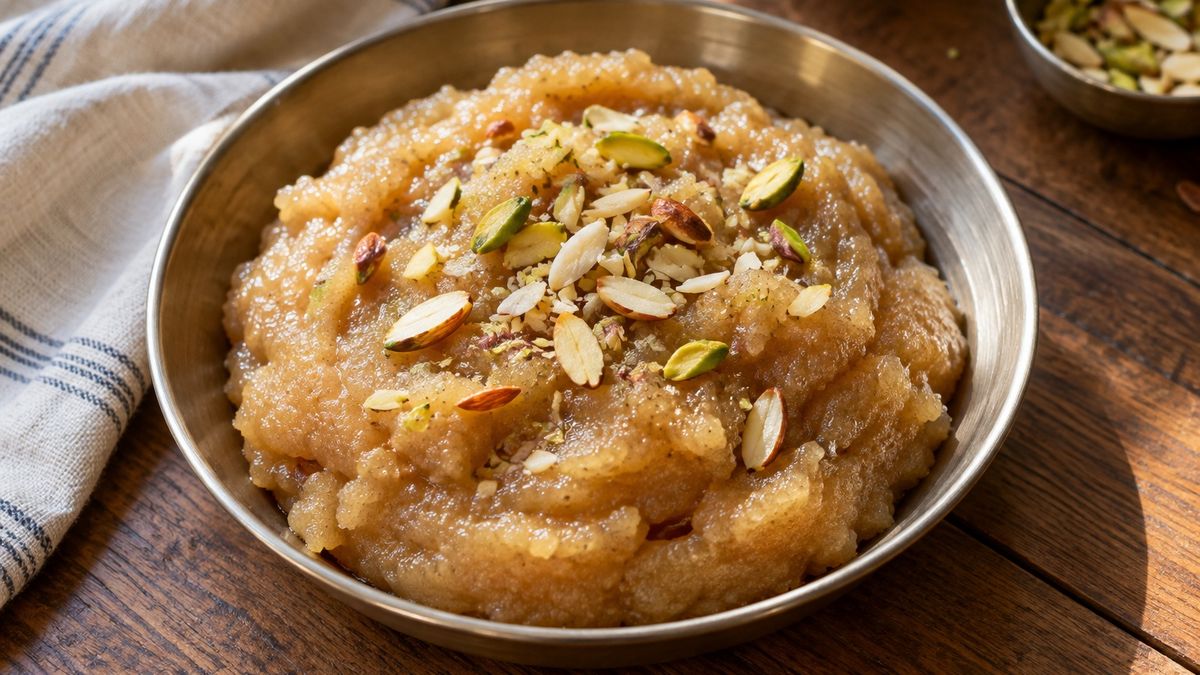
Singoda no Sheeroશિંગોડાનો શીરો
Water-chestnut or rajgara flour roasted in ghee and cooked with sweetened milk. On a fasting day it does the work of both a sweet and a meal.
Ingredients
Tap an ingredient to tick it off while you shop or measure.
- 1 cup water-chestnut (singoda) or rajgara flour
- ½ cup ghee
- ¾ cup sugar
- 2½ cups milk or water
- ½ tsp cardamom powder
- Cashews, almonds, raisins
Method
- Fry the nuts in ghee until golden and set aside.
- Roast the flour in the same ghee on low heat for 8-10 minutes, stirring constantly, until fragrant.
- Heat the milk with the sugar separately.
- Pour the hot milk slowly into the roasted flour, standing back as it spits, stirring all the while.
- Cook 4-5 minutes until thick and the ghee separates.
- Stir in cardamom and the nuts and serve hot.
Tips
- These flours catch faster than wheat, so keep the heat low.
- Cold milk makes lumps; heat it first.
Storing and reheating
Sheero keeps six to eight hours at room temperature and three days in the fridge. As it cools the ghee sets and it firms into a dense block, which is normal. Reheat with two or three tablespoons of milk or hot water, stirring on low heat, and the softness returns. In a microwave, thirty seconds, stir, then another twenty, rather than one long burst.
What you can swap
- Rajgara (amaranth) flour substitutes cup for cup. It tastes a little heavier and drinks slightly more liquid, so have an extra quarter cup of milk ready.
- Water can replace the milk, which also suits anyone who avoids milk while fasting. A water-based sheero is lighter but needs about two extra tablespoons of ghee.
- Jaggery in place of sugar gives a darker colour and a deeper flavour. Dissolve it in hot water and strain it before using.
- No cardamom? A pinch of grated nutmeg, or a few saffron strands steeped in the warm milk, works instead.
What to serve with it
The centrepiece of a fasting-day breakfast or evening meal. With a dry potato sabzi and a bowl of curd it becomes a full farali plate. In many homes the first portion is offered to the deity as prasad on Janmashtami and Ekadashi.
Mistakes to avoid
- Scorch the flour even slightly and the bitterness cannot be fixed by anything you add afterwards, so keep the spoon moving the whole time rather than trusting the clock.
- Do not pour the milk in all at once. Add it in a thin stream while stirring. Dumped in, it sets the surface of the flour and you get lumps.
- Keep your face away from the pan as the milk goes in. Hot liquid hitting hot flour throws up a violent burst of steam. Pour at arm's length.
- Do not roast the sugar with the flour. Dissolve it in the milk. Dry sugar added to roasting flour caramelises into gritty bits.
Questions people ask
My sheero has lumps. Can I save it?
Lower the heat and press the lumps against the pan with the back of the spoon, adding two tablespoons of hot milk if needed. For stubborn lumps, give it one or two seconds with a hand blender while still hot and it will come smooth.
How much ghee does sheero actually need?
Half a cup to one cup of flour is the traditional ratio. You can cut it back, but below a quarter cup the flour does not roast properly and the sheero tastes dry and grainy. Ghee separating at the edges is the sign it is done.
Why does my singoda sheero taste bitter?
Either the flour was scorched, or the flour itself is old. These flours go rancid quickly, so buy fresh and store them in an airtight box in the fridge. Smell the flour before using it; if it smells sour, throw it out.