Thalipeethથાલીપીઠ
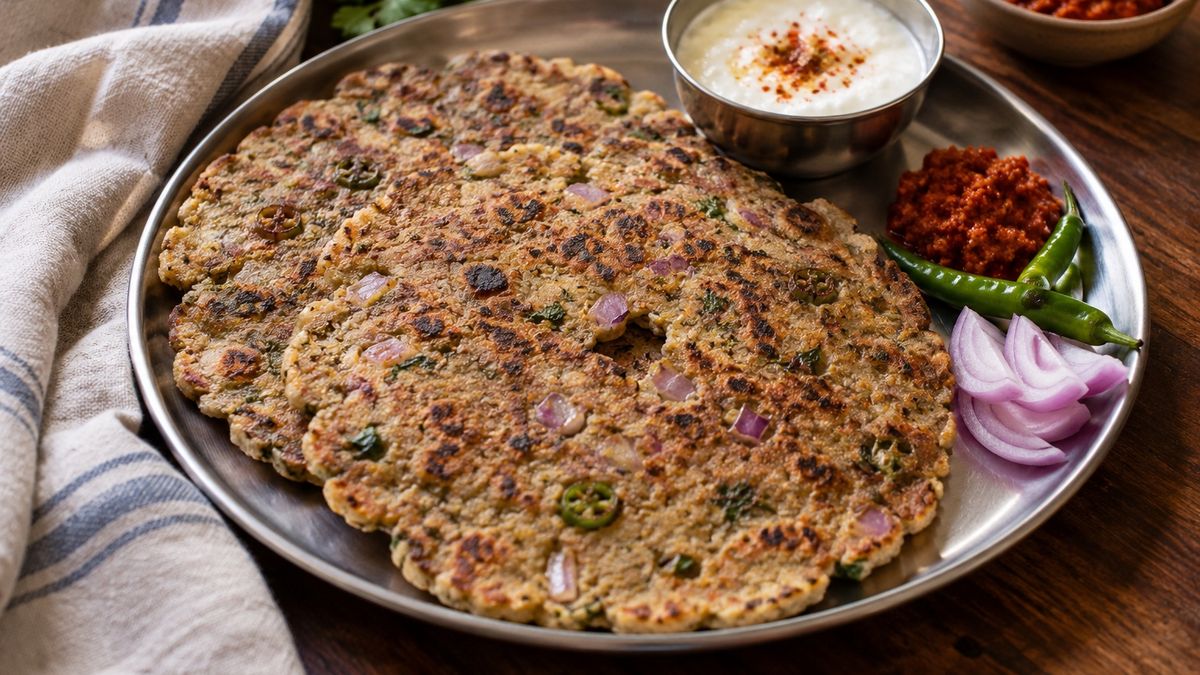
A thick, hand-patted flatbread of mixed flours with onion and spices worked into the dough. Eaten with curd and butter, it is filling without being heavy.
Ingredients
Tap an ingredient to tick it off while you shop or measure.
- 1 cup bajra flour, ½ cup jowar flour, ½ cup wheat flour, ¼ cup gram flour
- 1 onion, finely chopped
- 2 green chillies, coriander, 1 tsp ginger
- 1 tsp coriander-cumin powder, ½ tsp turmeric, a pinch of carom seeds, salt
- Oil or ghee for roasting
Method
- Mix all the flours with the onion, chillies, coriander and spices, and knead a soft dough with water.
- With wet hands, pat the dough directly on the tawa (or on plastic) into a thick round.
- Make a hole in the centre with a finger and pour a little oil into it.
- Cover and cook on low for 3-4 minutes, then flip and cook the other side.
- Serve hot with curd, butter or pickle.
Tips
- It cannot be rolled, only patted, so keep your hands wet.
- The hole in the middle lets the heat through, so don't skip it.
Storing and reheating
Thalipeeth is a hot-off-the-tawa food. Wrapped in a cloth inside a box it stays soft for four or five hours. In the fridge it keeps two days, but because it is largely bajra and jowar it hardens as it cools. Reheat on a tawa with a little ghee on both sides, not in a microwave. Do not refrigerate the kneaded dough: the onion weeps and slackens it.
What you can swap
- No jowar flour? Increase the wheat flour instead. More wheat makes the dough much easier to pat out, though you lose some of the crispness.
- In place of gram flour, work in two tablespoons of mashed cooked rice. It binds the dough and keeps the thalipeeth from cracking.
- If you avoid onion, use grated cabbage, bottle gourd or finely chopped methi leaves. Cabbage and bottle gourd release water, so go carefully with the water while kneading.
- A tablespoon of curd in the dough keeps the thalipeeth softer and stops it hardening quite so much once cool.
What to serve with it
Breakfast, or a simple dinner on its own. It goes with thick curd, a lump of white butter, or garlic chutney. Many homes put pickle and raw onion beside it. It is particularly a winter dish, because bajra and jowar are considered winter flours.
Mistakes to avoid
- Do not knead a stiff dough. Only a soft, slightly tacky dough can be patted out; a stiff one cracks at the edges as you press it.
- Do not pat it thin. Keep it on the thick side. A thin thalipeeth breaks when you flip it and tastes dry.
- Do not raise the heat to speed things up. It has to cook covered on low, or you get a scorched outside and a raw middle, because the thickness takes time to heat through.
- Do not knead the whole batch at once. Mix dough for one or two, cook them, then mix more. Dough left standing draws water from the onion and goes slack.
Questions people ask
My thalipeeth cracks as I pat it out. What helps?
The dough needs more binding. Add two tablespoons of mashed cooked rice, a tablespoon of curd, or a little extra wheat flour. Keep your hands wet, and pat it on plastic or a banana leaf, then invert it onto the tawa. That alone cuts most of the breakage.
Is it better to pat it directly on the tawa or separately?
Patting directly on the tawa is the traditional method and it does not break, but the pan is hot and you can burn your fingers. If you are new to it, pat on a plastic sheet and flip it over onto the tawa. It is easier and safer.
What is the difference between bhakri and thalipeeth?
Bhakri is usually one flour, rolled out, and plain. Thalipeeth mixes several flours and has the onion, chilli, coriander and spices kneaded into the dough itself, which is what makes it a dish you can eat on its own.