Upmaઉપમા
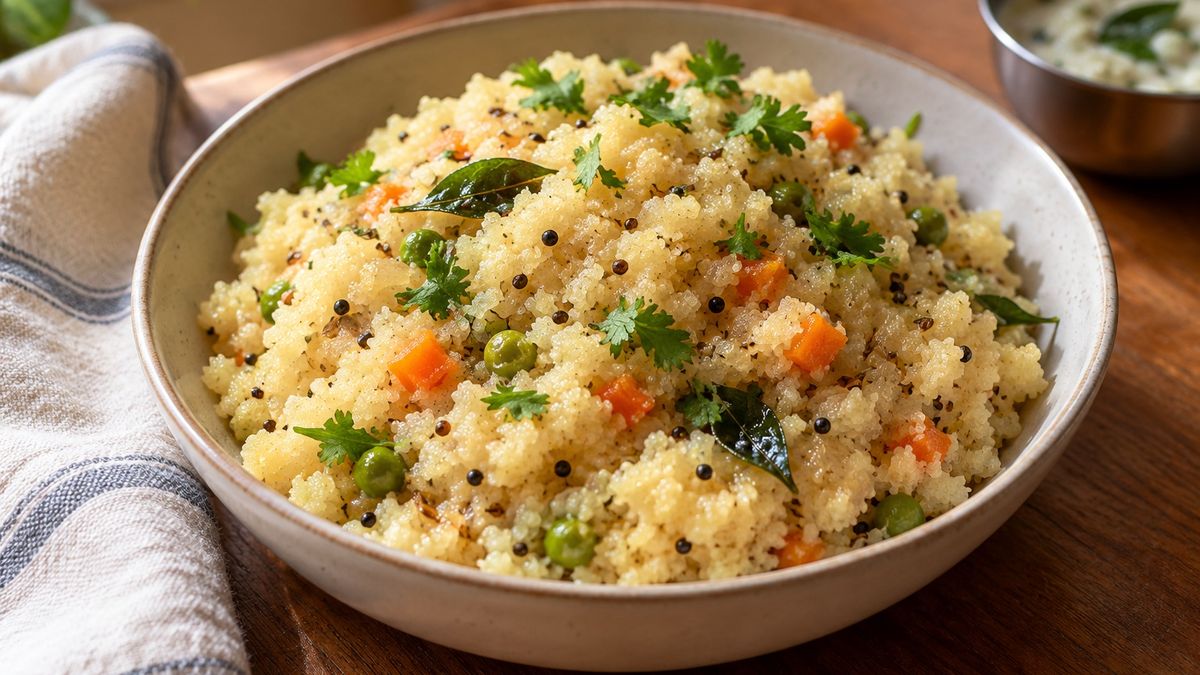
Upma is a quick, filling semolina dish tempered with mustard seeds and curry leaves. Add vegetables and it becomes a light meal rather than just a snack.
Ingredients
Tap an ingredient to tick it off while you shop or measure.
- 1 cup semolina (rava)
- 2 tbsp oil or ghee
- Mustard seeds, cumin, urad dal, chana dal, curry leaves
- 1 onion, 1 carrot, ¼ cup peas
- 2 green chillies, ginger
- 3 cups hot water, salt
- Lemon and coriander
Method
- Dry roast the semolina until golden and set aside.
- Temper oil with mustard seeds, cumin, both dals and curry leaves.
- Sauté the onion, chillies, ginger and vegetables.
- Add the hot water and salt, bring to a boil, then pour in the semolina slowly while stirring.
- Cover and steam 3-4 minutes, then finish with lemon and coriander.
Tips
- Always use hot water, or the semolina lumps.
- Roasting the semolina first keeps the upma fluffy rather than pasty.
Storing and reheating
Upma is best within half an hour. As it cools the semolina drinks up the liquid and sets into a lump. It keeps a day in the fridge; sprinkle two tablespoons of water, cover and steam it on low, then fluff with a fork. Reheating it dry gives you hard grains. Roasted semolina keeps a month in a box, so roasting a batch in advance makes mornings quicker.
What you can swap
- Fine semolina works in place of coarse, but drop the water to 2½ cups or the upma turns pasty.
- The same tempering makes upma from cracked wheat, oats or poha. Cracked wheat needs more water and more time.
- No urad or chana dal? Roasted peanuts give you the crunch, with a slightly different flavour.
- A pinch of amchur can stand in for lemon, but add it off the heat at the end.
What to serve with it
A quick breakfast with tea. In South India it is eaten with coconut chutney or sambar; in Gujarati homes many people top it with sev, pomegranate or a pinch of sugar. It is also the standard answer to afternoon hunger.
Mistakes to avoid
- Keep stirring with one hand while the semolina goes in with the other. Do one without the other and you get lumps.
- Do not roast the semolina to brown. Stop as soon as it smells nutty and the colour has barely changed. Over-roasted semolina will not absorb water and the upma tastes undercooked.
- Do not guess the water. One part semolina to three parts water. Too little gives raw, gritty upma; too much gives porridge.
- Do not leave the vegetables raw after tempering. Give the carrot and peas two or three minutes, because they will not cook through once the semolina is in.
Questions people ask
How do I stop upma going lumpy?
The water must be at a rolling boil and the semolina has to go in as a thin stream while you stir. If lumps do form, lower the heat, cover for two minutes to steam, then press them out with the back of the spoon.
How do I get upma fluffy rather than sticky?
Roast the semolina, measure the water properly, and give it three or four covered minutes of steam at the end. Fluff with a fork rather than stirring it hard. A teaspoon of ghee stirred in at the end also keeps the grains separate.
Is upma semolina the same as sheera semolina?
Same ingredient, but coarse semolina suits upma and fine suits sheera. The real difference is the method: upma is dry roasted and cooked in water, sheera is roasted in ghee and cooked in milk and sugar.