Vada Pavવડાપાંવ
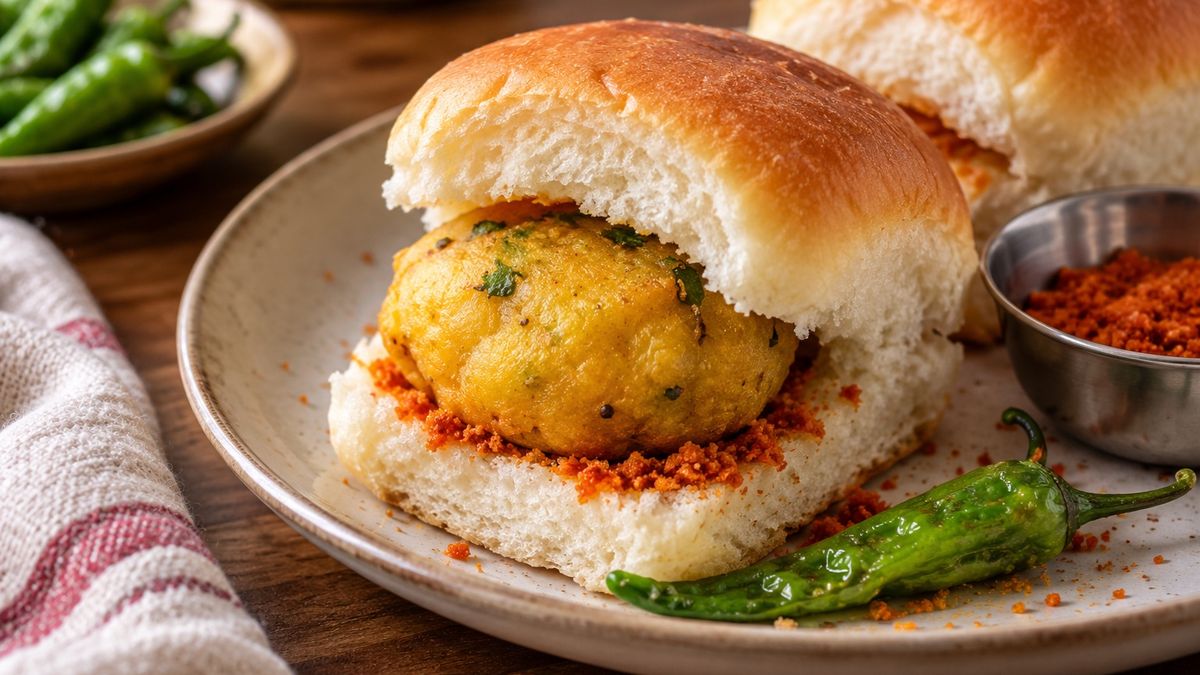
Vada pav came from Mumbai but is now sold on every Gujarati street corner: a spiced potato dumpling in gram-flour batter, tucked into a pav with dry garlic chutney and a fried chilli on the side.
Ingredients
Tap an ingredient to tick it off while you shop or measure.
- 4 boiled potatoes, mashed
- 1 tsp ginger-garlic-chilli paste
- Mustard seeds, asafoetida, turmeric, curry leaves, oil
- Batter: 1 cup gram flour, a pinch of soda, salt
- 4 pav buns
- Dry garlic chutney and fried green chillies
Method
- Temper oil with mustard seeds, asafoetida, curry leaves and the ginger-garlic-chilli paste.
- Add the mashed potato, turmeric and salt, cook 3 minutes, cool and shape into balls.
- Whisk a thick batter from the gram flour.
- Dip the balls in batter and deep fry until golden.
- Split the pav, spread dry garlic chutney, add the vada and serve with fried chillies.
Tips
- A thick batter is what makes the coating stick properly.
- Salt the fried chillies while they are still hot.
Storing and reheating
Eat the vadas within two or three hours of frying, after which the coating goes soft. The potato filling keeps two days in the fridge, and making the filling and shaping the balls ahead, then frying to order, is by far the best approach. Reheat refrigerated vadas at 180C for six or seven minutes; a microwave turns the coating leathery. Dry garlic chutney keeps a month in a jar.
What you can swap
- No pav? Burger buns, thick bread slices or ladi pav all work. With a bun, griddle it with butter first or it eats dry.
- For the dry garlic chutney, dry roast four tablespoons of desiccated coconut, two tablespoons of red chilli powder, six or seven garlic cloves and salt, then crush coarsely. It takes two minutes.
- A pinch of Eno can replace the soda in the batter, but then use the batter straight away. With no raising agent at all, the coating comes out a little harder.
- To cook without garlic, raise the ginger and chilli in the filling and use extra coconut plus sesame seeds in place of the garlic in the chutney.
What to serve with it
At breakfast, or in the evening with tea. It is traditionally eaten with fried green chillies: a bite of vada, then a bite of chilli. Carts in Gujarat usually offer green and sweet chutney alongside, unlike in Mumbai.
Mistakes to avoid
- Do not shape the balls while the filling is hot. Let it cool completely. Warm filling crumbles as you dip it and falls apart in the oil.
- Do not mash the potatoes smooth in a mixer. The filling should be hand-mashed and slightly textured; a smooth paste eats gluey.
- Do not let a dipped ball sit in your hand. Dip and drop it straight into the oil, or the batter drains off and the coating goes patchy.
- Fry no more than four or five at a time. Any more and the oil temperature drops, and the vadas soak it up.
Questions people ask
The batter slides off while frying. What is wrong?
The batter is too thin. Whisk in two more tablespoons of gram flour; it should fall off the spoon in a slow, thick ribbon. The other cause is a damp potato ball, in which case roll each ball in dry gram flour before dipping.
Should the pav be split and griddled?
Either way is fine, but splitting it and giving the cut sides thirty seconds on a buttered tawa makes a real difference. The bread is warm and it does not soak up the oil from the vada.
Can vadas be made without deep frying?
They can be done in an appe pan, but it stops tasting like vada pav, since the crisp gram flour shell is the whole point. For a lighter version, stuff the potato filling straight into the pav and griddle it with butter as masala pav instead.