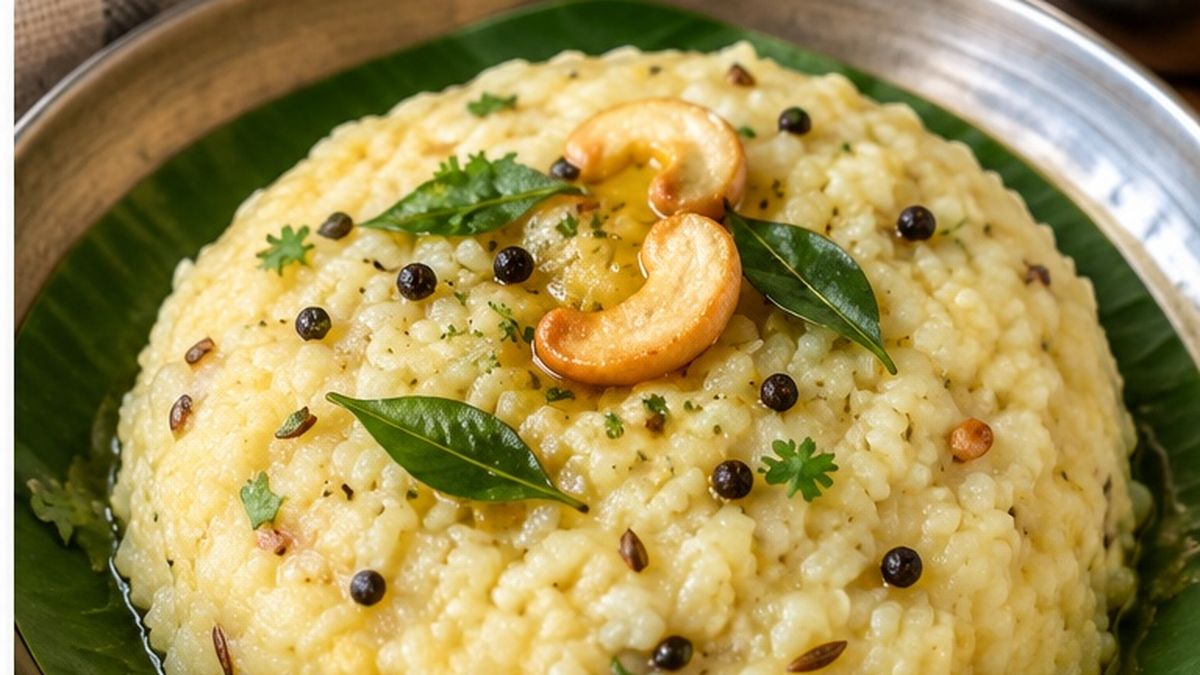
Ven Pongalવેન પોંગલ
Rice and moong dal cooked soft with ghee, pepper and cumin. The most comforting South Indian breakfast there is, and close cousin to Gujarati khichdi.
Ingredients
Tap an ingredient to tick it off while you shop or measure.
- 1 cup rice
- ½ cup moong dal
- 3 tbsp ghee
- 1 tsp crushed black pepper, 1 tsp cumin
- 1 tsp ginger, curry leaves, asafoetida
- 10 cashews, salt
Method
- Dry roast the moong dal lightly until it smells nutty.
- Rinse the rice and dal, then pressure cook with 4 cups water and salt for 4-5 whistles until soft.
- Fry the cashews in ghee until golden and set aside.
- In the same ghee, crackle cumin, pepper, ginger, curry leaves and asafoetida.
- Stir the tempering and cashews through the pongal.
- Top with more ghee and serve hot with sambar or chutney.
Tips
- Pongal should be soft and loose, never dry and separate.
- Crush whole peppercorns yourself for the best flavour.
Storing and reheating
Pongal sets into a solid mass as it cools. It holds three or four hours at room temperature and two days in the fridge. Reheat with a quarter cup of hot water and a teaspoon of ghee, mashing with the spoon over low heat, which is what brings the softness back. Do not freeze it; it thaws slimy and loses all grain definition.
What you can swap
- Do not use toor dal in place of moong dal. It is heavier and makes the pongal gummy. If you cannot find split yellow moong dal, do not substitute another dal.
- Avoid basmati. Use idli rice or any short-grain rice, which breaks down softly, and that softness is the point of the dish.
- No cashews? Fry slivered almonds or peanuts in the ghee instead. The flavour shifts but you keep the crunch.
- If you only have ready-ground pepper, use half a teaspoon and add it at the end. Freshly crushed whole peppercorns give a depth that powder does not have.
What to serve with it
This is a mainstay of South Indian breakfast, served with coconut chutney, sambar or brinjal gotsu. Pongal is also offered as prasad in many South Indian temples. On a cold morning, eaten with extra ghee spooned over, it is at its best.
Mistakes to avoid
- Rinse the dal quickly after roasting rather than leaving it to soak. The aroma you just built up leaches straight out into standing water.
- Do not roast the moong dal to a dark brown. Stop as soon as it smells nutty. Over-roasted dal tastes bitter and refuses to break down in the cooker.
- Do not add the tempering and cashews early. Stir them in just before serving, or the cashews soften in the wet pongal and the fragrance of the pepper disappears.
- Do not skip the asafoetida. Pepper, cumin and asafoetida together are what make ven pongal taste like itself; without it you have plain khichdi.
Questions people ask
My pongal is not soft. How do I fix it?
Add hot water and cook on low for five minutes, mashing as you go. Cold water leaves the grains firm. To get it right from the start, use more water in the cooker and let it go to five whistles, since the grains in pongal are supposed to collapse.
What is the difference between ven pongal and khichdi?
Much the same ingredients, different seasoning. Gujarati khichdi is plain, with turmeric and salt. Ven pongal has no turmeric at all and is built on crushed black pepper, cumin, ginger, asafoetida and a lot of ghee. The dal is also roasted first, which gives it a different aroma.
Can I make pongal without a pressure cooker?
Yes. Put the rice and dal in a pot with five cups of water, cover, and cook on low for forty to fifty minutes, stirring now and then and topping up with hot water if it runs dry. It takes longer than a cooker but the grains break down more evenly.